Guides for creators who run their own deals
70 guides for creators who run their own brand deals, grouped by what you are trying to do: your first deal step by step, earning from content, getting brand deals, pricing and rates, licensing and rights, managing and getting paid, and comparing tools. Straight answers, so you keep 100% of what you charge.
Your first deal, step by step
Short reads — one for each step of the path, with the tool to do it.What UGC and Gifted Deals Actually Are
The two deals on the table when you are starting out, and how to tell which one you are being offered.
Read guideFilm Your First Sample Tonight
One product, one angle, one afternoon — how to film the sample that answers the only question a brand asks first.
Read guideA Portfolio Brands Say Yes To
What a first portfolio actually needs: one sample, one line about you, and a link the brand can forward.
Read guidePick Brands That Work With Small Creators
The four kinds of brand that say yes to a new creator, and the two signals that tell you a brand is already spending.
Read guideWriting a Pitch a Brand Will Read
The six beats of a short pitch, the one line that separates you from the templates, and how DMs differ from email.
Read guideNo Reply? How to Follow Up
Most first deals come from the follow-up, not the first message. The cadence, the two lines, and when to stop.
Read guideA Brand Replied. Now What?
The three replies a first pitch gets, what to send back, and the four things to put in writing before you film.
Read guideWhat to Charge for Your First Paid Deal
The starting bands for a first paid video, what moves you up them, and the lines that should always cost extra.
Read guideStart earning from content
Side income from short videos, with or without an audience.How to Get Free Products to Review (and Get Paid to Do It)
The five channels that put free product in your hands, ranked by how much work each one takes and how likely it is to lead to money, plus the rule that keeps 'free' from becoming unpaid work.
Read guideHow to Get Paid to Post on TikTok (Even With No Followers)
The four ways money moves on TikTok, which three need an audience first, and the one that pays from day one: brands buying videos they run on their own account and in their ads.
Read guideHow to Get Your First Brand Deal With No Followers (Under 1,000)
The zero-follower path to a first paid deal: what brands buy from you instead of reach, the three samples, the page, the ten-a-week pitching rhythm, and what the first deal is worth.
Read guide
Is UGC a Good Side Hustle? An Honest Answer for People With a Day Job
What UGC actually is as a side income, the hours it takes, what a first video pays, the four things you need before the first deal, and who should skip it.
Read guideBuild your UGC portfolio
The page brands open before they say yes, made free.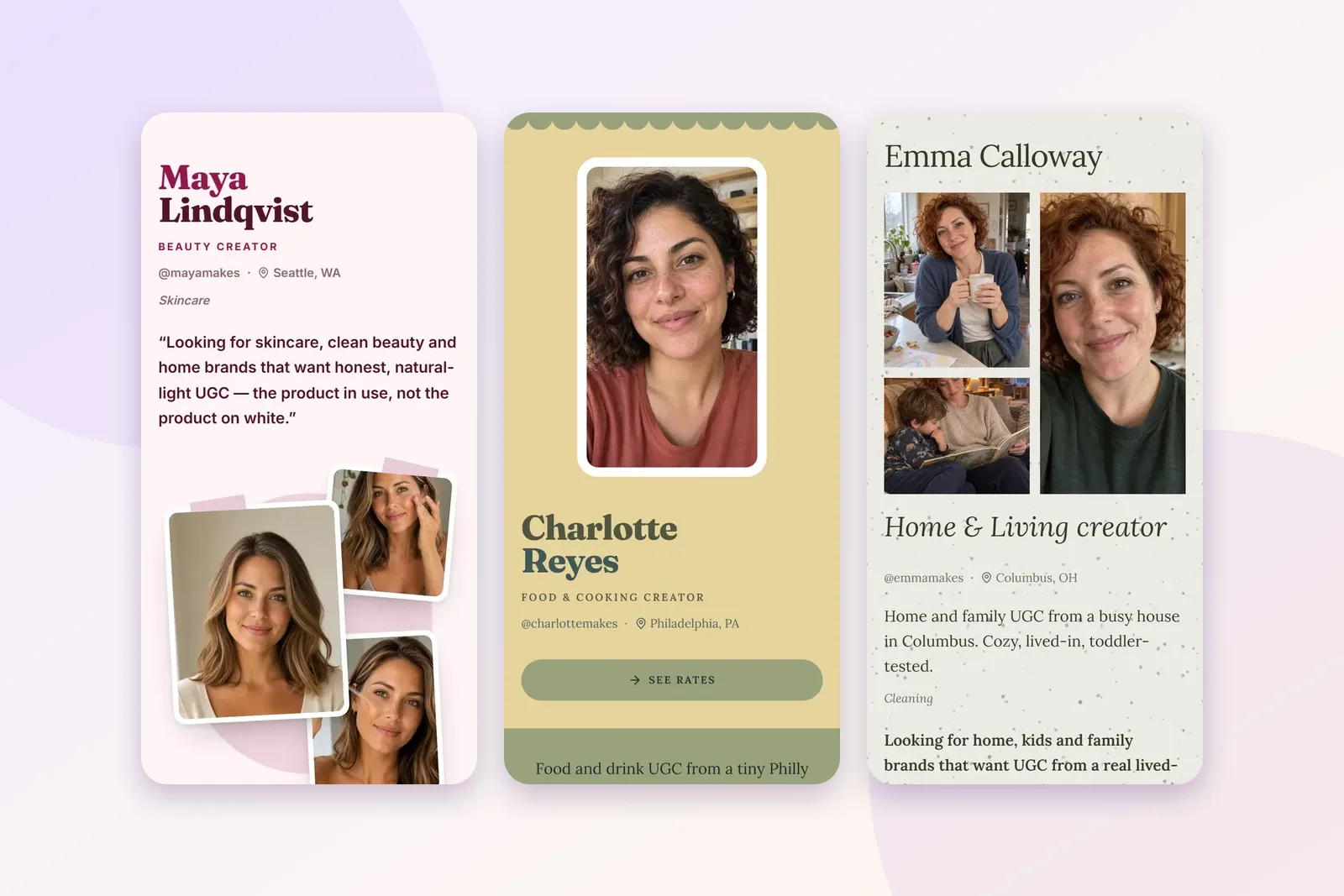
Canva UGC Portfolio vs a Free Plug Pro Page
A fair look at building a UGC portfolio in Canva versus a free Plug Pro page: what each is good at, a side-by-side table, and how to keep a Canva site and still take orders.
Read guide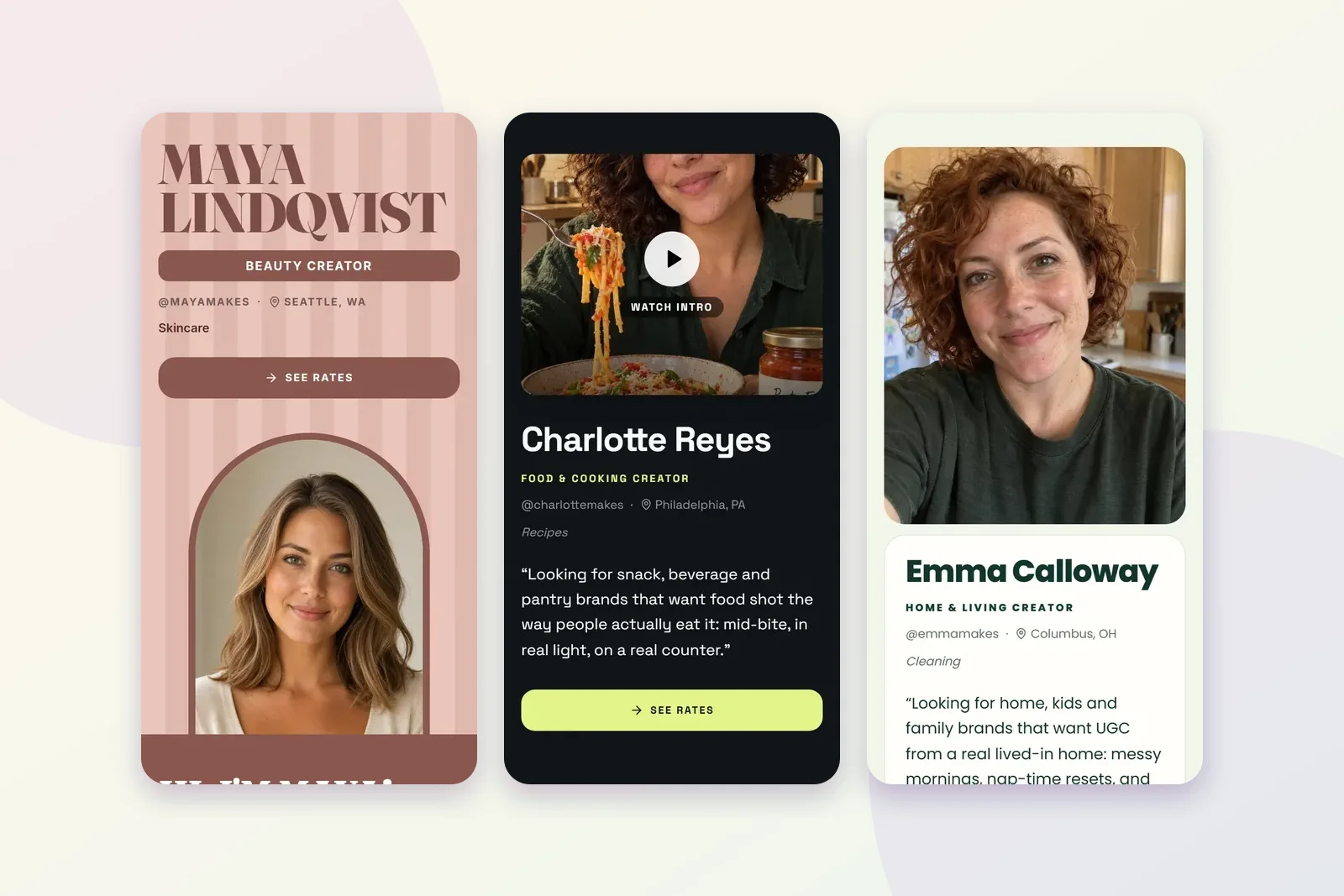
UGC Portfolio vs Media Kit: What's the Difference?
Portfolio or media kit? What each one shows, who needs which, why audience stats matter less for UGC, and what to send when a brand asks for a media kit.
Read guide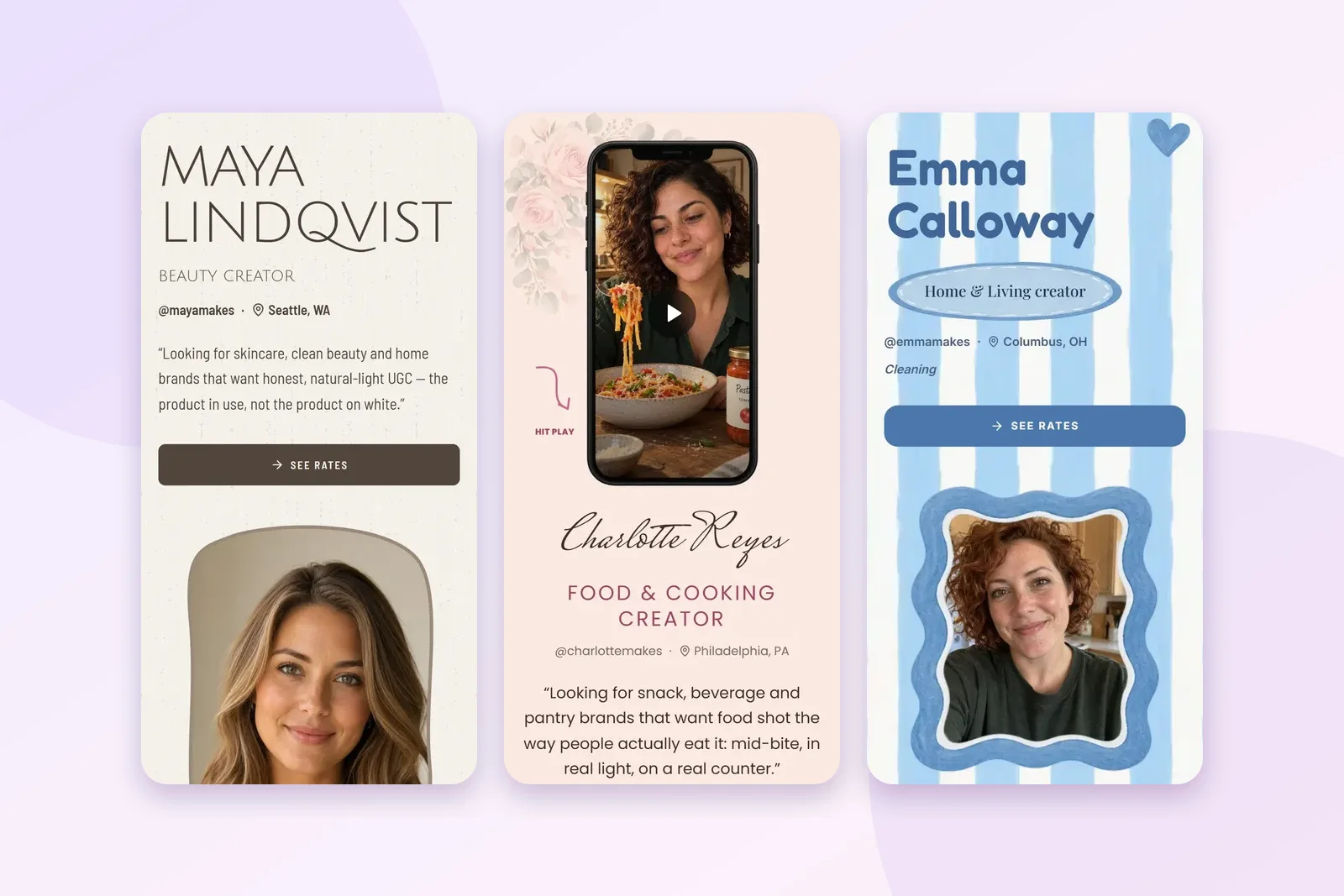
How to Make a UGC Portfolio With No Experience
No clients, no followers, no problem: what spec samples are, three beginner videos you can film this week, the honesty rule, and what to write instead of past clients.
Read guide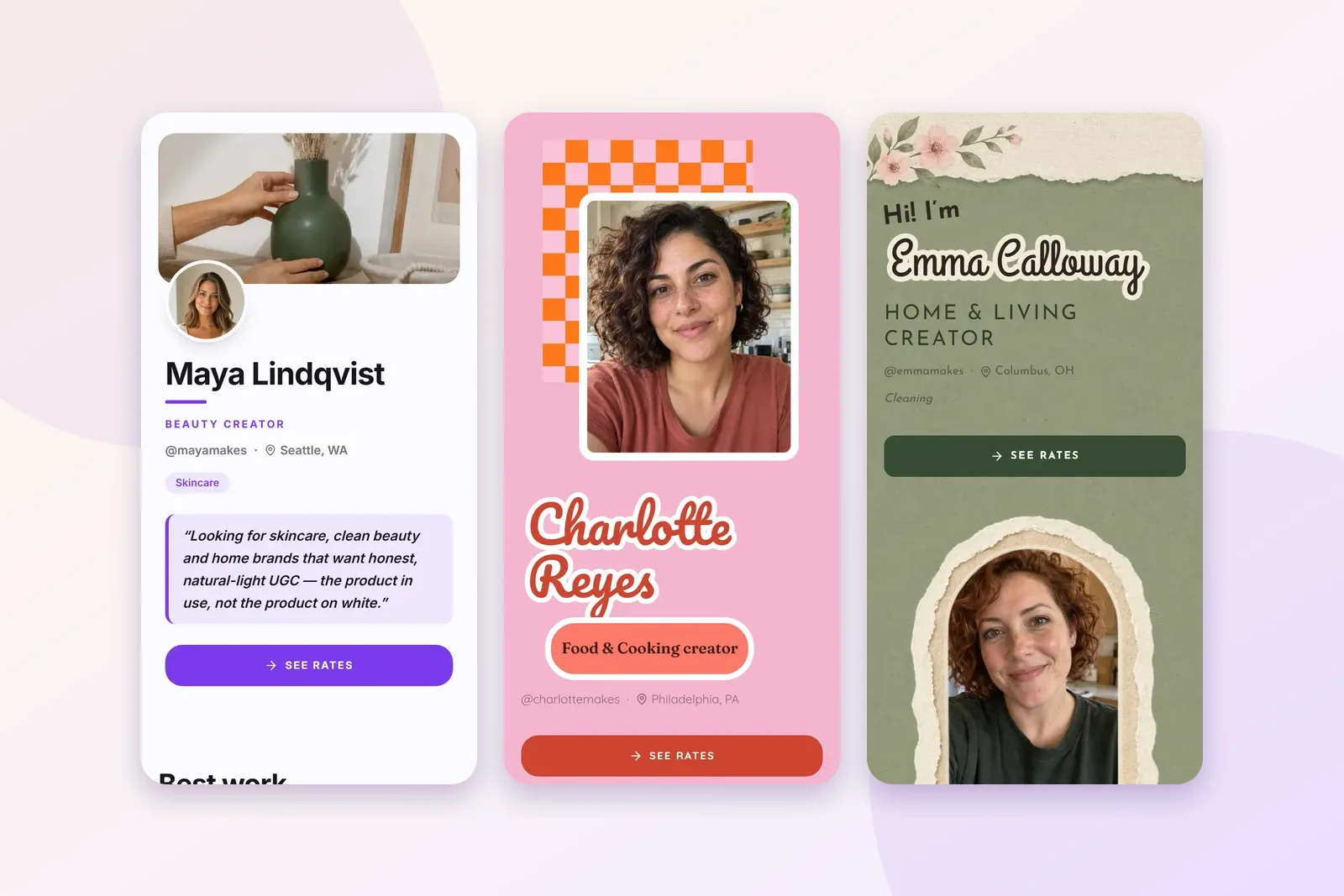
UGC Portfolio Examples, and What to Copy From Each
Three demo creator pages and four layouts, taken apart: what sits at the top, how the work is shown, how a brand books, and what every good one has in common.
Read guide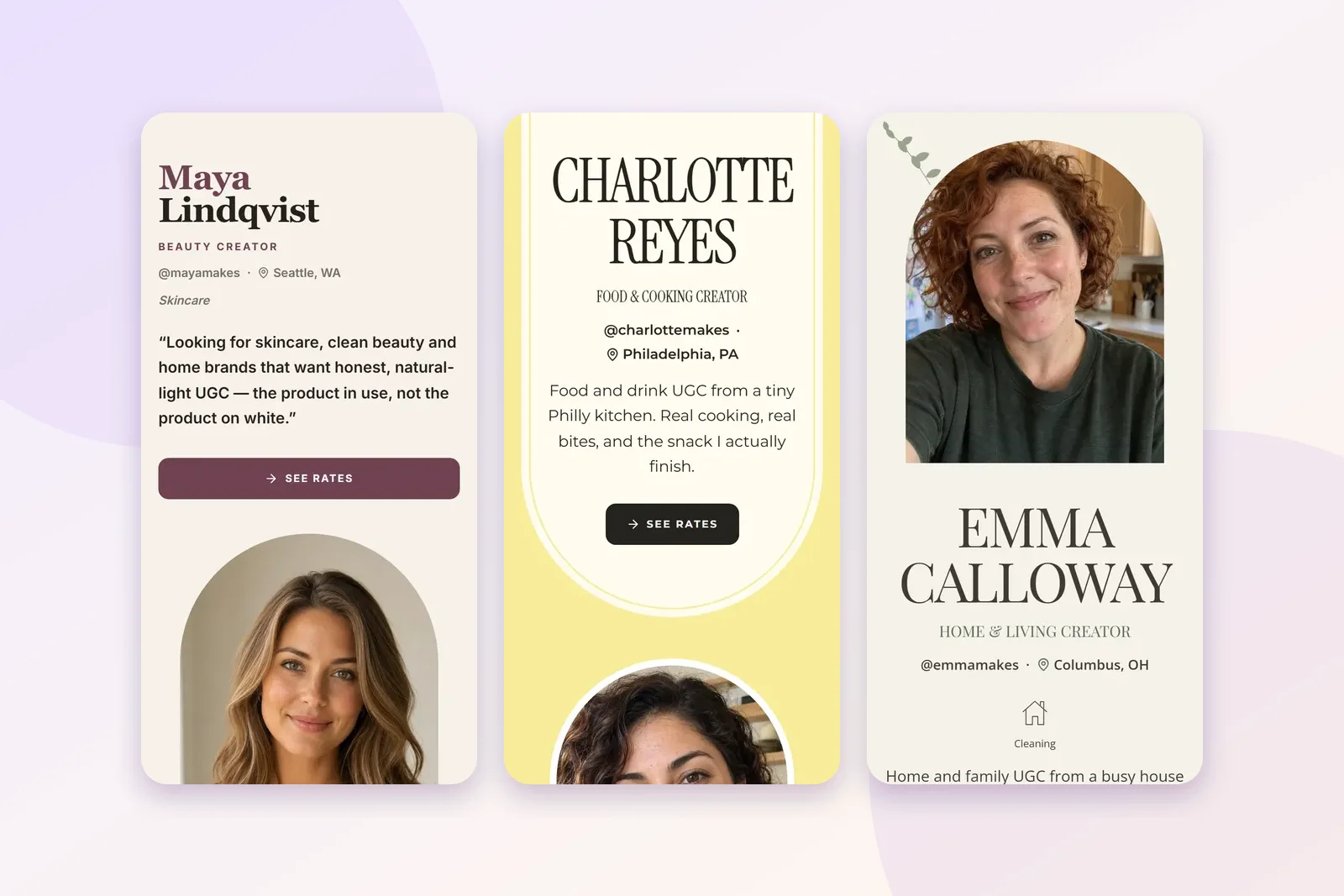
How to Make a UGC Portfolio, Step by Step (Free)
What a UGC portfolio is, what goes on it, and the five steps to build one free: film a sample, pick a layout, write one line, add rates, and publish.
Read guideHow do I get brand deals?
Land the deal in the first place.How to Get Canvas UGC Deals: Source Brands Directly and Keep 100%
A sourcing playbook for canvas UGC — the brand categories hiring, the multi-account tell, a cold pitch that leads with output, and how to keep 100%.
Read guide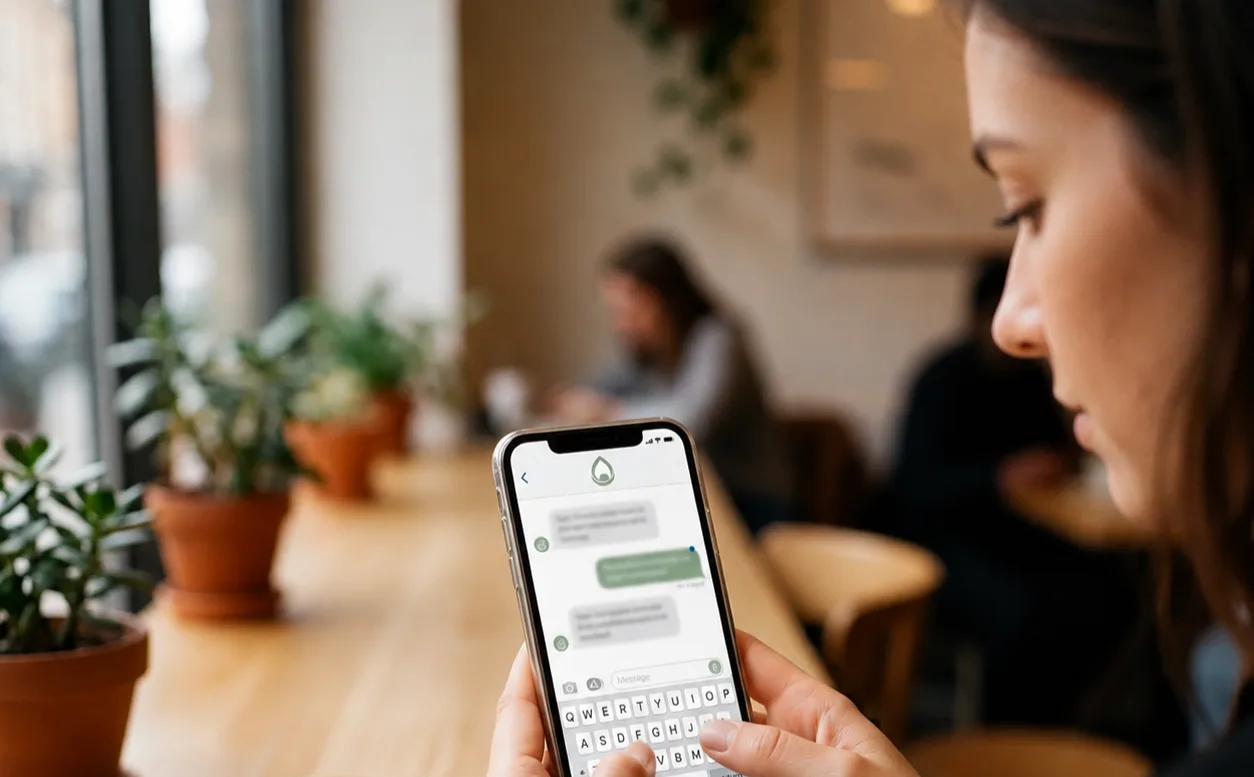
How to DM Brands for Collabs: Instagram and TikTok Scripts That Get Replies
Why most collab DMs die in Requests, the five scripts that get out of there, and the two-step that moves a reply to email, where the budget lives.
Read guide
UGC Creator vs Influencer: The Real Difference (and Which Pays You)
The two jobs get confused constantly. One sells production, the other sells an audience, and the difference changes what you charge, what you need to start, and what a brand is actually buying.
Read guide
Gifted vs Paid UGC: When to Say Yes to Free Product
The decision framework for gifted offers: four tests, the hours math, the terms to set even when no money moves, and the exact sentence that turns a gifted collab into a paid one.
Read guide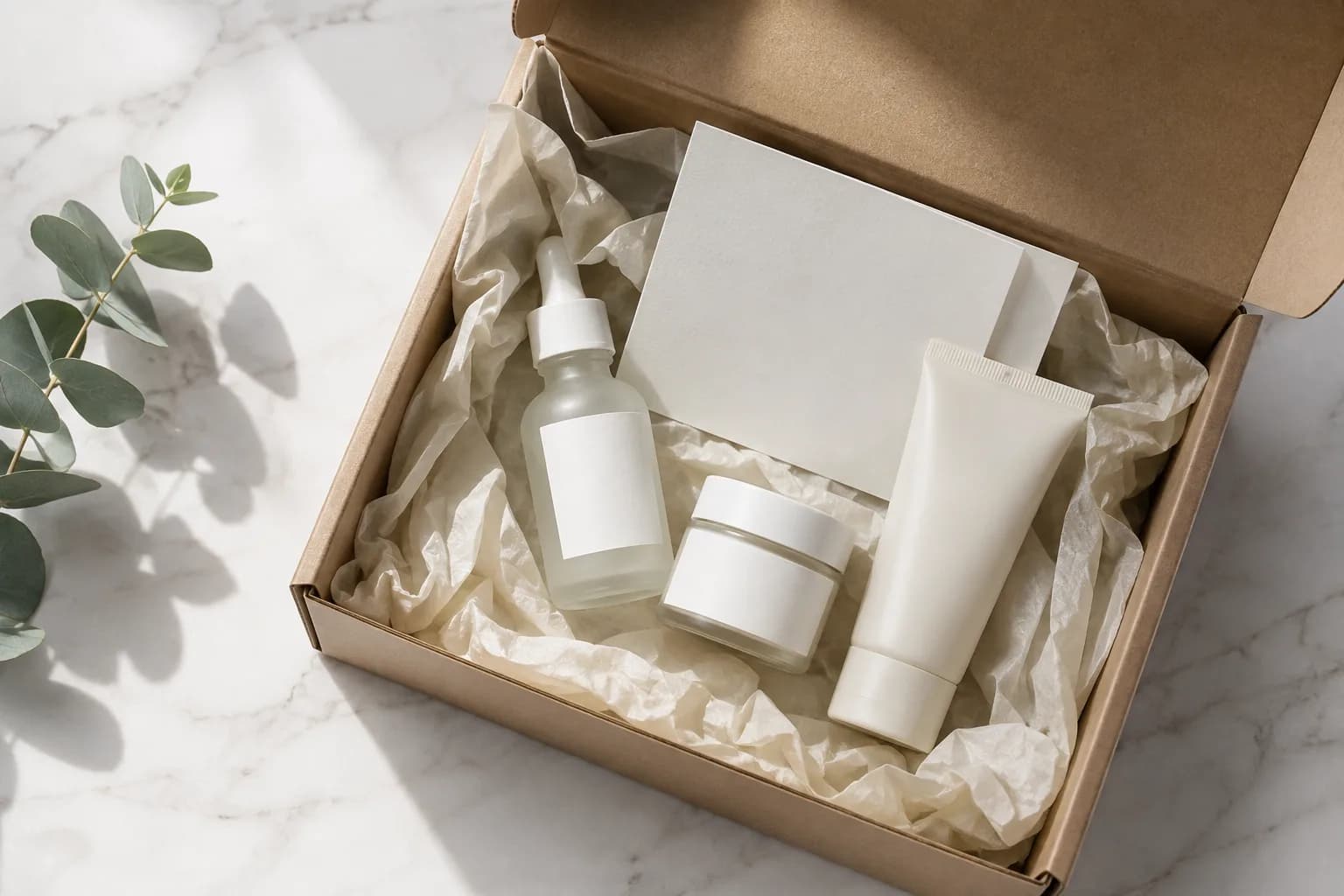
How to Get PR Packages: Get On Brand Seeding Lists in 2026
Where PR lists actually come from, the profile signals that get you on them, the ask that works, and what to do when the box arrives so the next one is paid.
Read guide
What Is Gifted PR? A Creator's Guide to Free Product Collabs
Gifted PR means free product for content, no cash — here's when it's worth it, when to pass, and how to turn a gifted collab into a paying brand deal.
Read guide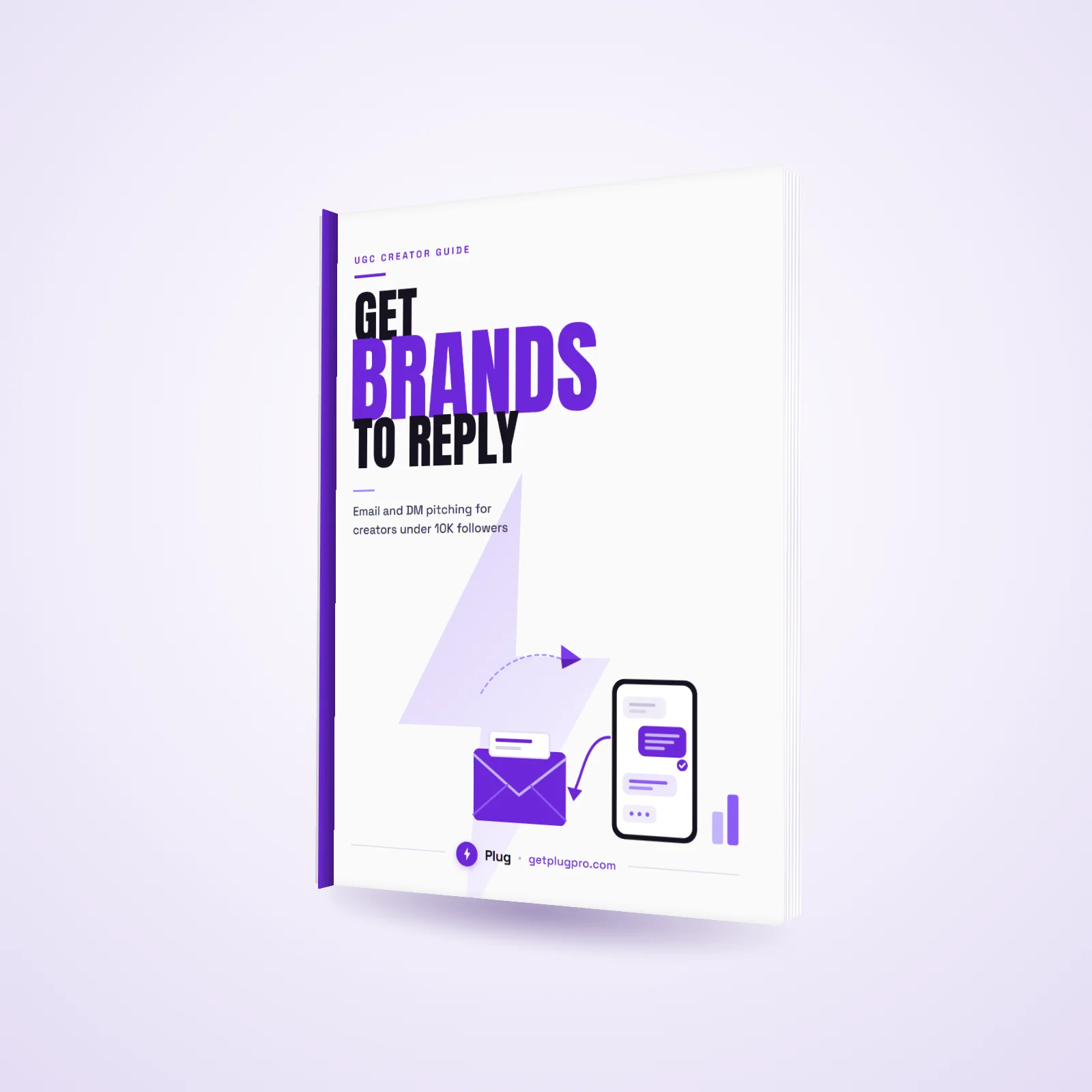
Get Brands to Reply (Free 51-Page Guide to Email and DM Pitching)
Our second free book: the system for getting brands to answer, by email and by DM. Thirty-five pitches, one hour a week, five weeks. Read it here or download the PDF.
Read guide
How to Spot a Brand Deal Scam (12 Red Flags)
The twelve tells that separate a real brand offer from a scam, and the two-minute check to run before you reply.
Read guideAdd an Order Button to Your Own Website (Canva, Squarespace, Anywhere)
Already have a website you love? You don't have to rebuild it on Plug. Add an "Order with Plug" button to your Canva site or portfolio and every order still lands in your Plug pipeline — invoice, email thread, and all.
Read guide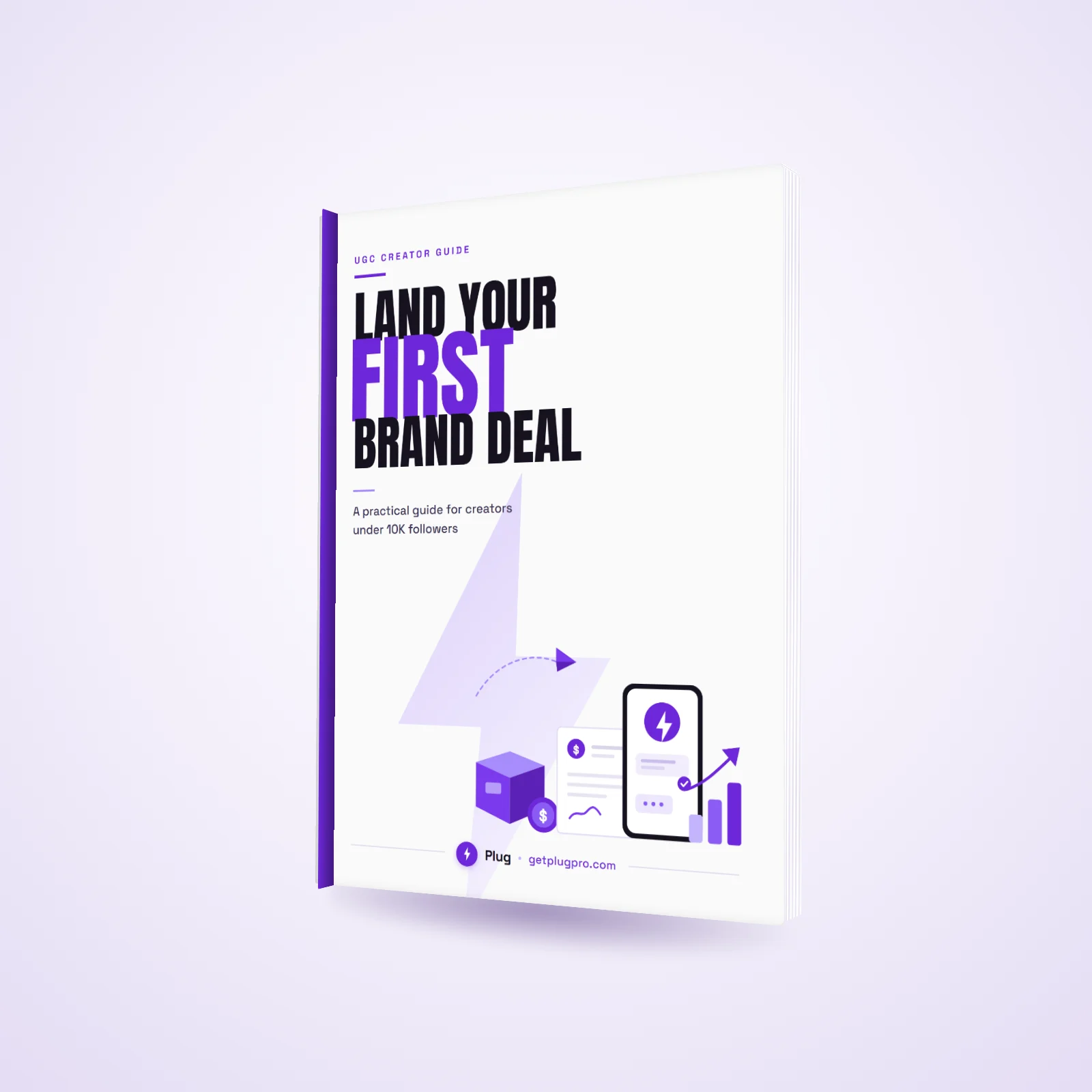
Land Your First Brand Deal (Free 76-Page Guide)
Our complete field guide to getting paid for the first time — finding brands worth pitching, building a portfolio before you have deals, what to charge, and the six-sentence pitch that gets a reply. Free PDF, no email required.
Read guideHow to Start Canvas UGC With Zero Followers
Canvas UGC values content ability over reach — every ambassador account starts at zero followers — so here's how to build proof, pitch brands, and land your first paid engagement without an audience.
Read guideWhat Is Canvas UGC? (And How Creators Get Paid to Run Brand Accounts)
Canvas UGC pays creators to run a fresh, brand-dedicated account at volume — paid by CPM, flat monthly retainer, or a hybrid, with follower count irrelevant.
Read guideBest Tools for Making UGC Videos
A job-by-job roundup of the tools that actually make UGC videos — filming gear, editing and caption apps, and the free templates that keep the deal moving.
Read guideHow to Make a UGC Video (Step by Step)
Pick a concept, write a scroll-stopping hook, shoot it on your phone, edit it tight and native to the platform — plus how to turn one great video into a spec sample that lands paid deals.
Read guideHow to Find Brands to Pitch (Sourcing Guide)
Where to actually find brands worth pitching — seven proven sources, plus how to build and qualify a target list before you send a single email.
Read guideHow to Pitch to Brands (Step-by-Step + Example)
The exact way to pitch a brand and get a reply — prep your link, find the right person, send a short personalized note, follow up, and close. With a copy-ready example.
Read guideHow to Become a UGC Creator (From Zero)
What UGC actually is, the gear you really need, how to build a portfolio from scratch, set your rate, and land your first paid brand deal — no big following required.
Read guideHow to Get Brand Deals Under 10K Followers
You don't need to go viral to get paid. How small creators land real brand deals — what brands look for, and how to prove you deliver.
Read guideWhat should I charge for UGC?
Know your number before you quote it.Canvas UGC Rates: How Much Do Creators Actually Get Paid?
The three ways canvas UGC deals pay — CPM, flat retainer, and hybrid — with worked examples and the red flags that turn a volume deal into free work.
Read guide
How to Charge for Usage Rights (Organic vs Paid vs Buyout)
What to charge on top of your base rate when a brand wants to run your content as an ad, whitelist it, or buy it outright.
Read guide
UGC Creator Rates in 2026: What to Charge Per Video, Pack, and Retainer
The real numbers: what UGC creators charge per video at each experience level, what packs and retainers do to the rate, and which add-ons should cost extra.
Read guide
How to Price Your UGC (Without Underselling)
What to charge for user-generated content — base rates, the add-ons that should cost extra, and what you actually take home after fees.
Read guide
Retainer vs One-Off UGC Pricing: The Math, the Terms, and When to Say Yes
A side-by-side on retainer and one-off pricing, the discount certainty is worth, the five terms a retainer needs, and how to tell when to walk away from one.
Read guide
How to Negotiate Whitelisting and Paid-Ad Rates (With Scripts)
Whitelisting is priced as a separate line from the content. Here is how the negotiation actually goes, lever by lever, with replies you can copy.
Read guideIs Canvas UGC Worth It? An Honest Verdict — Legit, Scam, and the Real Money
A straight verdict on canvas UGC: it's a legitimate model, but performance pay means earnings swing wide — worth it for high-output beginners, not for everyone.
Read guideHow to Price a Brand Deal (The Full Framework)
Every brand deal breaks down into four inputs — deliverables, usage rights, exclusivity, and timeline — and here is how to turn them into a number you can quote with confidence.
Read guideUGC Rates for Amazon Creators (2026)
Amazon UGC runs on a completely different model — priced by deliverable, not creator tier, with usage bundled into the fee.
Read guideUGC Rates for SaaS Creators (2026)
SaaS UGC is its own market — fewer creators can do it well, budgets are bigger, and the format runs longer. All three push rates up.
Read guideUGC Rates for Fitness Creators (2026)
Supplement and fitness-tech brands spend heavily on paid ads — that pulls fitness UGC rates above the general market.
Read guideUGC Rates for Food Creators (2026)
Food is the most gifted-heavy UGC niche — that shapes what "normal" pay looks like, and where the exceptions actually pay well.
Read guideUGC Rates for Skincare Creators (2026)
Skincare pays a premium over general beauty content — here's why, and what it takes to earn it.
Read guideUGC Rates for Beauty Creators (2026)
Beauty is the most crowded UGC niche — here's what that does to rates, and how to still get paid what the work is worth.
Read guideFlat Fee vs Commission — How Creator Platforms Really Get Paid
A percentage sounds small until you run the math at real deal volume. How flat-fee and commission pricing actually compare for a working creator.
Read guideHow to Charge for Whitelisting and Spark Ads
Whitelisting is priced differently from a normal usage add-on — a weekly fee scaled to how much the brand is spending, not a multiple of your content rate.
Read guideHow to Build a UGC Rate Card (With a Free Template)
Stop re-explaining your prices in every DM. What a rate card should include, and how to fill in numbers you can actually hold to.
Read guideLicensing & rights
What a brand can do with your content, and for how long.
What Happens When a Content License Expires?
The end date on a license is a real event. What the brand must do, what you can charge for more time, and how to catch the ones that keep running.
Read guideThe Canvas UGC Contract: The Clauses That Matter and Who Owns the Account
A plain-English, clause-by-clause reference for the canvas UGC contract — account ownership and handover, per-view pay with a floor, quota, view window, kill fee, exclusivity, disclosure, and contractor status, plus a checklist you can paste into an agreement.
Read guideWhat Is a UGC Usage License? (Plain-Language Definition)
The permission a brand buys to use your content — not own it — and the dimensions that decide what it's worth.
Read guideWhat Is a UGC License Certificate (and Why It Protects You)
A written, verifiable record of exactly what a brand can do with your content — and for how long. Here's why that beats a DM thread.
Read guideContent Licensing Explained (Organic, Paid Usage, Buyout)
The rights a brand actually gets when they license your content — and the ones they don't, unless you say so.
Read guideManage & get paid
Contracts, invoices, and staying organized.
Are PR Packages Taxable? What Gifted Product Means for a Creator's Taxes
Where the line sits between a gift and income, how to value a box, what records to keep, and the two questions to bring to an accountant. Not tax advice; the rules by the letter.
Read guide
LLC vs Sole Proprietor for Creators: A Decision Tree
Five questions that decide whether you need an LLC yet, what it actually changes, and the income level where the next step starts to pay for itself.
Read guide
How Many Brand Deals Can One Creator Actually Run a Month?
A calculation, not a hype number. Turn your hours per deliverable and your pitch reply rate into the number of deals you can deliver well in a month.
Read guide
UGC Creator Taxes: 1099s, Quarterly Payments, and What You Can Deduct
What brands report, what you owe either way, when to pay it, and the deductions that come with making content for a living. US-focused.
Read guide
The Brand Ghosted After Delivery. Here Is the 30-Day Playbook.
What to send, and when, in the thirty days after a brand stops replying to a delivered deal, and where your leverage really is.
Read guide
How to Invoice a Brand for UGC (Free Generator)
What actually belongs on a UGC invoice, when to send it, which payment terms to use, and what to do when a payment goes quiet.
Read guideHow to Write a UGC Contract (What to Include)
The parts of a UGC contract that actually prevent disputes — not legal jargon, just the six things worth writing down every time.
Read guideCompare & decide
Spreadsheets, CRMs, and the tools for running deals.Canvas UGC vs Tech UGC vs Traditional UGC: What's the Difference?
Canvas, tech, and high-volume UGC are one dedicated-account model — the real contrast is with traditional UGC, in deal shape, pay, and rights.
Read guideCanvas UGC vs Traditional UGC: Which Model Should You Pick?
Traditional UGC licenses a clip you keep; canvas UGC puts you on the brand's dedicated account. The real fork is who keeps the audience and content when the deal ends.
Read guideFree Tools vs. an All-in-One Deal System
Free tools are perfect for a single task. The gap shows up when you try to run a whole deal across five of them. Here's the trade-off, honestly.
Read guideDo Creators Need a CRM for Brand Deals?
A CRM sounds like heavyweight sales software you don't need. For a creator it just means a system for your deals — here's when it's worth it and what actually fits.
Read guideThe Best Way to Track UGC Deals (and Where the Common Ways Break)
Most creators track deals in whatever's closest — a DM, a note, a spreadsheet. Here's how those hold up, and why a pipeline is the setup that scales.
Read guideManaging Brand Deals in a Spreadsheet vs. a Real System
The deal-tracking spreadsheet is a rite of passage. Here's where it breaks as you scale, and what a purpose-built system does that a grid of cells can't.
Read guidePut it into practice
Start free on Plug Pro and run your next deal your way — keep 100%.