Send a page brands can say yes to.
To DM a brand, keep it to two lines and a link. Plug Pro's pitch library has sixty starters sorted by situation, tone, and channel that fill with the brand's details and yours, and the link opens a pitch page carrying your work, the offer, and the rate. You send the DM yourself, from your own account.


Why send a pitch page instead of a long DM?
- A DM gets skimmedRates, deliverables, and links in a message bubble get scrolled past by whoever runs the account. A page gets forwarded to the person who decides.
- A page has everythingYour work, the offer, the deliverables, the usage rights, the rate, and an Accept button. The brand reads it in a minute and can say yes without a back-and-forth.
- A page tells you it was openedThe page counts its views, so you know whether you are following up on a brand that read it or one that never did. A DM only ever says Seen.
- The DM still does the jobTwo lines and the link. A starter filled with the brand's details, sent from your own account, with the page doing the selling.
What do I write when I DM a brand?
Sorted by the situation you are in, the tone you write in, and the channel you are sending on. Pick a brand and the brackets fill with its details and yours.
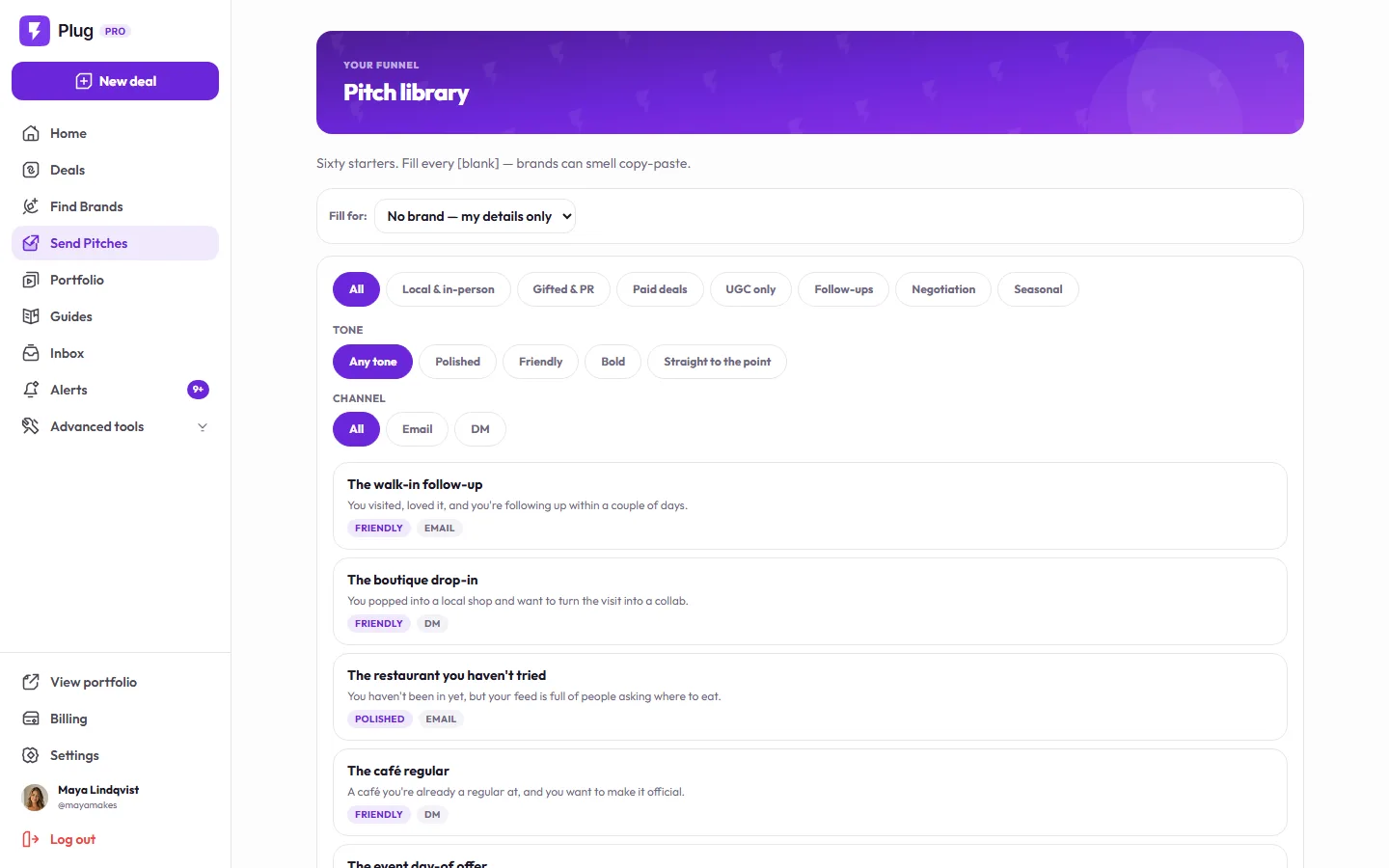
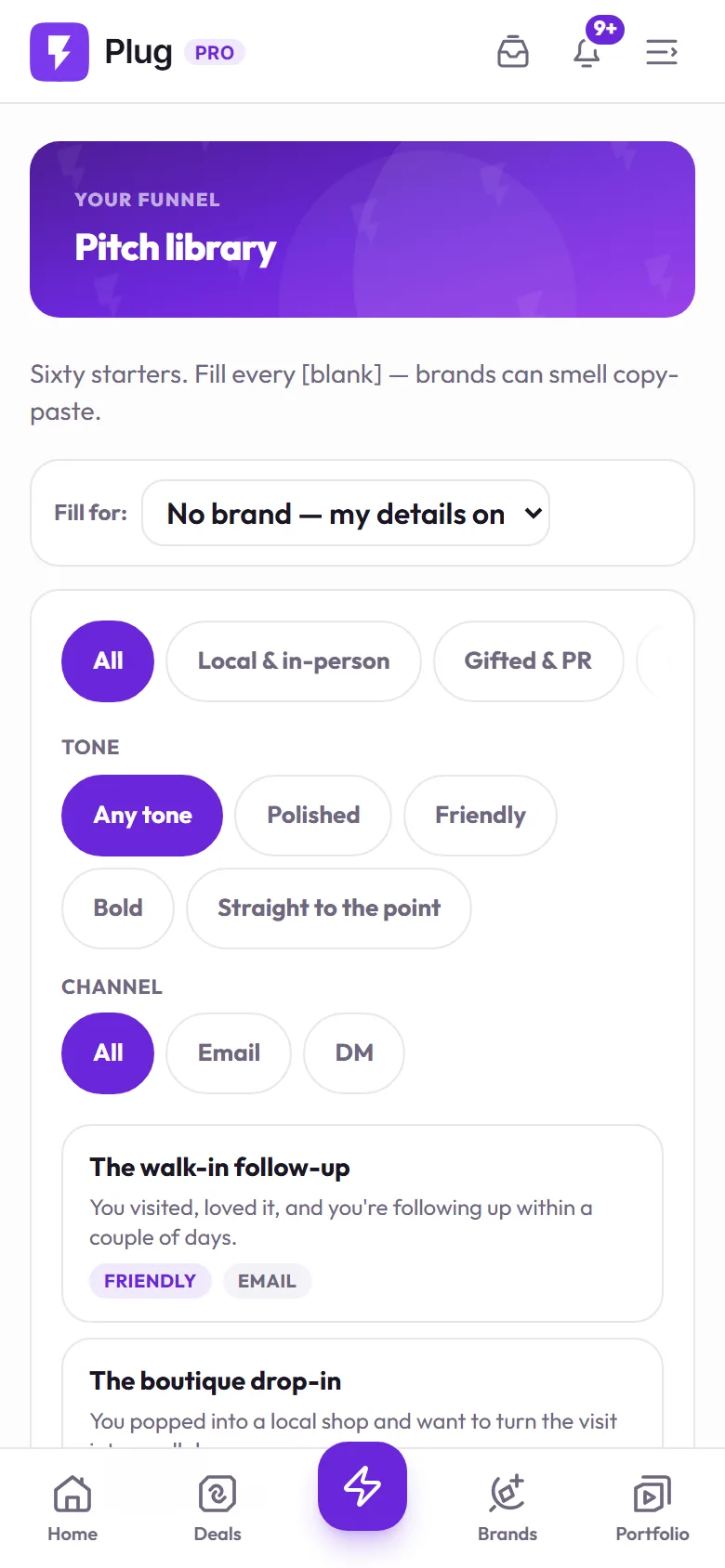
Captured on a demo account. The brands are fictional.
- Local & in-personThe café regular, the boutique drop-in, the event day-of offer
- Gifted & PRTurning a PR box into a paid post, without sounding like you are begging
- Paid dealsThe first paid pitch, the rate conversation, the package upsell
- UGC onlyContent they run on their own pages, no posting on yours
- Follow-upsThe quick nudge, the re-open, the last check-in
- NegotiationHolding a rate, trading scope for price, saying no to exposure
- SeasonalHoliday, launch, and back-to-school windows
The page does the selling.
Your work, a headline for this brand, the deliverables, the usage rights, and the rate, with an Accept button and a Let’s talk button. Written by the AI from your storefront and the brand’s brief, or by hand, and published at a link that reports when it is opened.
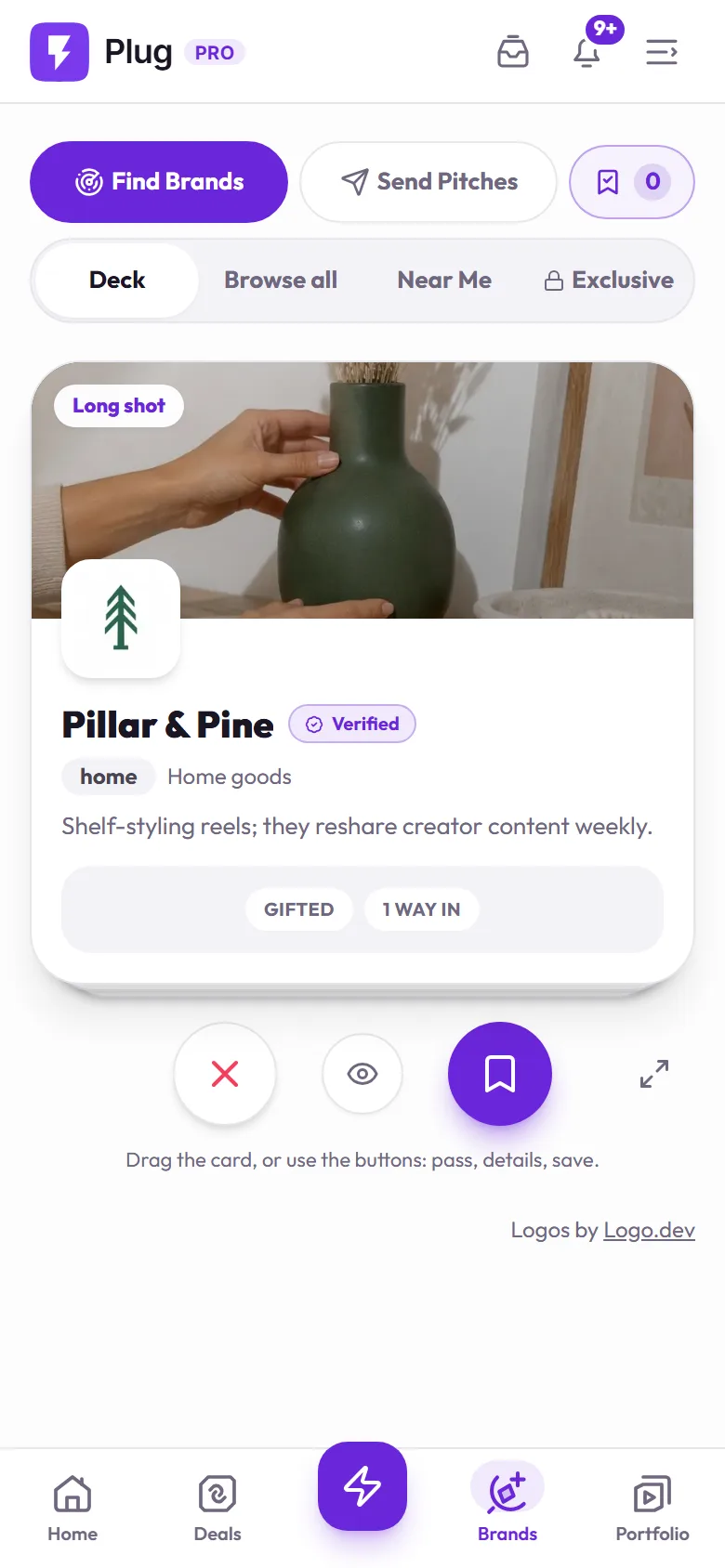
Captured on a demo account. The brands are fictional.
DM questions, answered
What should I say when I DM a brand?
Less than you think. One line on why them, one line on what you make, and a link to a page that carries the rest: your work, the offer, and the rate. Brands can spot a copy-pasted template, so fill every blank with something specific to them, then let the page do the selling.
Should I put my rates in the DM?
Put them on the page, not in the bubble. A rate in a DM gets skimmed, screenshotted, or forwarded without context. On a pitch page it sits next to the deliverables and the usage rights it covers, so the number reads as an offer rather than a demand, and the brand can accept it there.
Are the 60 starters just templates?
They are openers, sorted by situation, tone, and channel, and every bracket fills with real details: yours from your storefront and the brand's from its card. You pick the one that matches the moment, read it as the brand would, and change what needs changing before you send it yourself.
DM or email?
Whichever the brand actually answers. Local businesses and small brands often live in DMs; bigger brands and agencies run on email. The library filters starters by channel, and the pitch page is the same link either way, so you can open on Instagram and move to email when a real person replies.
Does Plug send the DM for me?
No. Plug Pro writes the page and drafts the message, then you send it from your own account, whether that is Instagram, TikTok, or your inbox. Nothing goes to a brand that you did not read and press send on, and the follow-up clock only starts when you mark it sent.