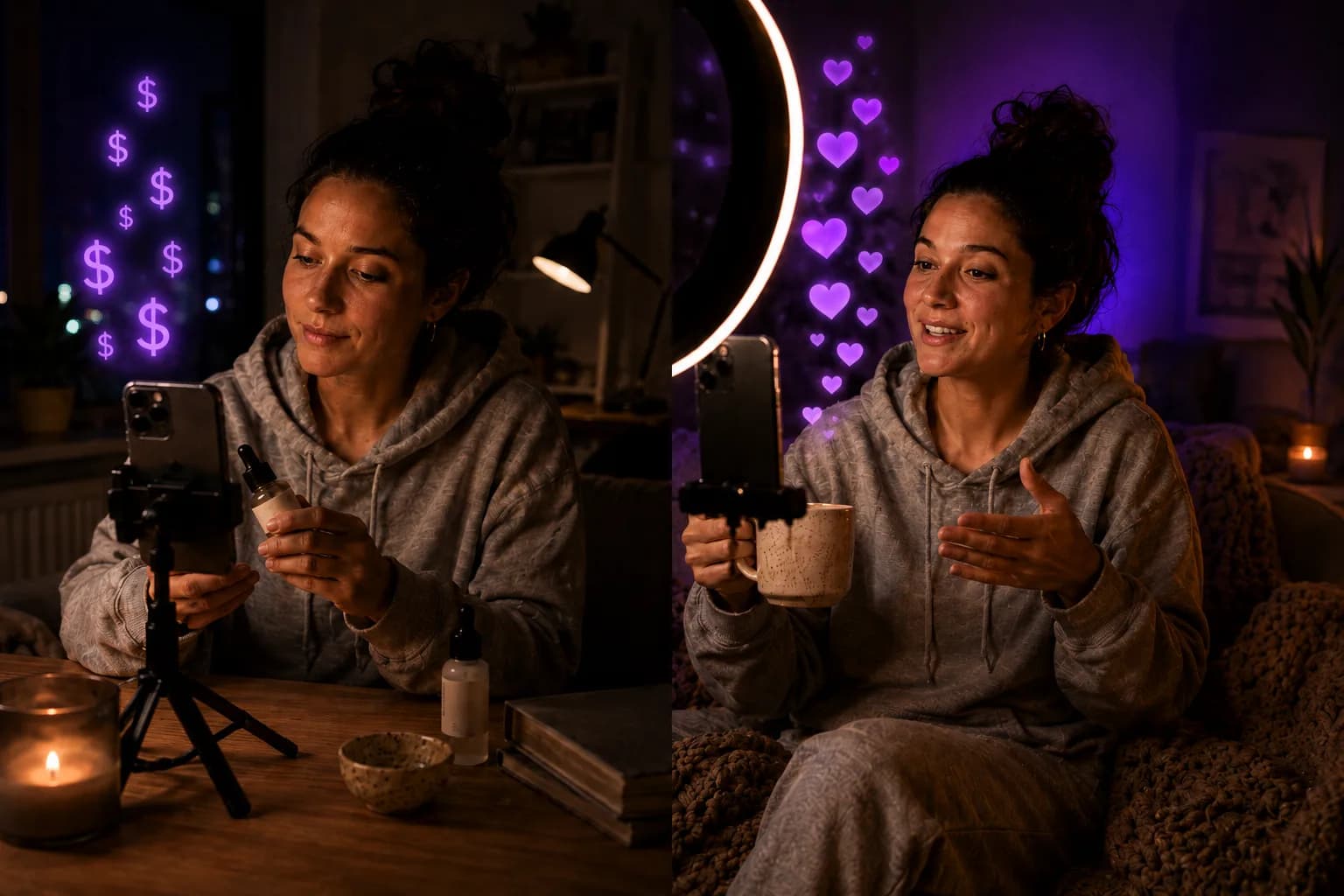
Two words get used as if they mean the same thing, and the confusion costs creators money in both directions: UGC creators who price themselves on followers they do not have, and influencers who hand over usage rights for free because nobody named them. The difference is not the content. It is what the brand is buying.
The one-line version
A UGC creator makes content a brand runs on the brand's own channels, ads, and website. The brand buys production: a believable person using the product, shot well. Your audience is beside the point.
An influencer posts to their own audience, and the brand buys access to that audience. Reach is the product; the content is the vehicle.
Everything else follows from that.
Side by side
| UGC creator | Influencer | |
|---|---|---|
| The brand buys | Content to run themselves | Access to your audience |
| Where it appears | Brand's channels, ads, site | Your feed |
| Follower count | Not required | The whole basis of the price |
| Priced by | Deliverable: per video, pack, retainer | Reach: per post, per view band |
| Typical first deal | $25–$150 for one video | Gifted, or a fee tied to followers |
| Usage rights | Priced on top, by term and use | Priced on top, and often forgotten |
| The portfolio | The work itself, on your storefront | Your feed and its numbers |
| Scales by | Volume, packs, retainers, niches | Audience growth |
The rate bands are the ones the UGC creator rates guide breaks down; the follower-based model is what brand deals under 10K followers explains how to route around.
What a brand is actually paying for
In a UGC deal, the brand is replacing a production shoot. A studio day, a model, an editor. Your value is that you look like a real customer and shoot like a competent one. That is why the brief matters more than your bio, why editing and raw footage are add-ons, and why the same video can be sold with different usage rights at different prices.
In an influencer deal, the brand is replacing ad spend. It could pay a platform to reach 50,000 people; instead it pays you, because your 50,000 trust you. That is why the price tracks followers and views, why exclusivity is expensive, and why the brand cares about the caption.
Neither is the better job. They are different products, and the honest question is which one you have to sell today. On TikTok specifically, get paid to post on TikTok lays out all four ways money moves.
Which one to start with
If you have under 10K followers and want to get paid this quarter, UGC. It needs three to five clean example videos, a page that shows them with a rate, and a list of brands to pitch. The how to become a UGC creator guide is the step-by-step, and the free storefront on Plug Pro is the page.
If you already have an audience that a brand would pay to reach, you can sell both, and you should price them as two lines: the content, and the post to your feed. The bundle is worth more than either alone.
The one rule that applies to both: usage rights are a separate product from the content or the post. A boosted post, a whitelisted ad, a video on the brand's homepage, each is a right with a price. The usage rights guide has the grid.
The hybrid most creators end up running
The line blurs on purpose once you are established. A brand books three UGC videos for its ads, then asks you to post one of them to your feed. Now you are doing both jobs in one deal, and the quote should show it: the content rate, the posting fee, and the usage term for the ads. Creators who keep those lines separate on the invoice earn more from the same afternoon of filming than creators who quote one number.
Whichever side you start on, run the deal the same way: a written scope, a rate per line, a usage term with an end date, and an invoice from a record you keep. That is the part of the job the two words have in common.