Read the whole thing right here, no email, no signup, nothing to fill in. Or download the PDF and keep it forever.
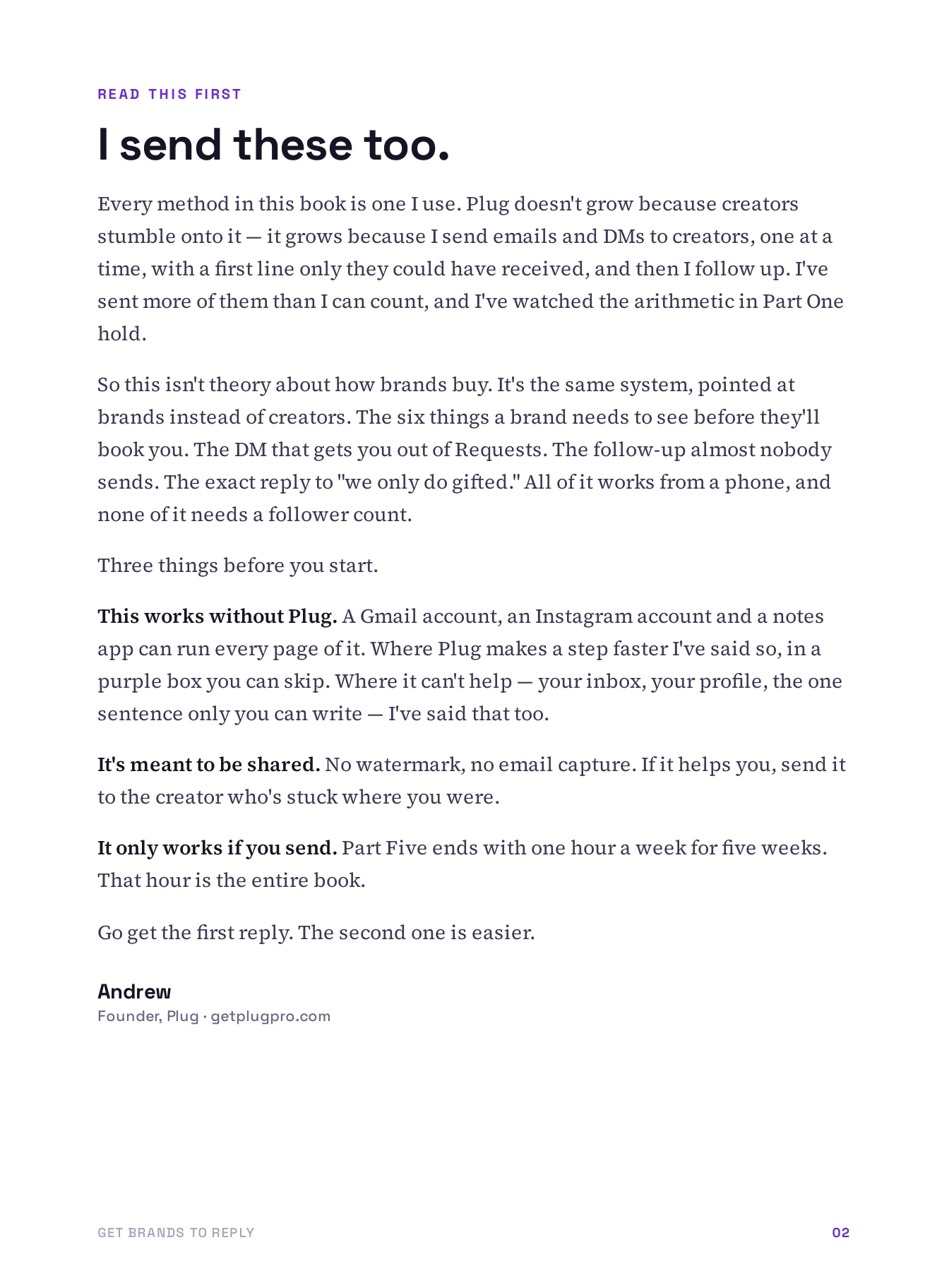
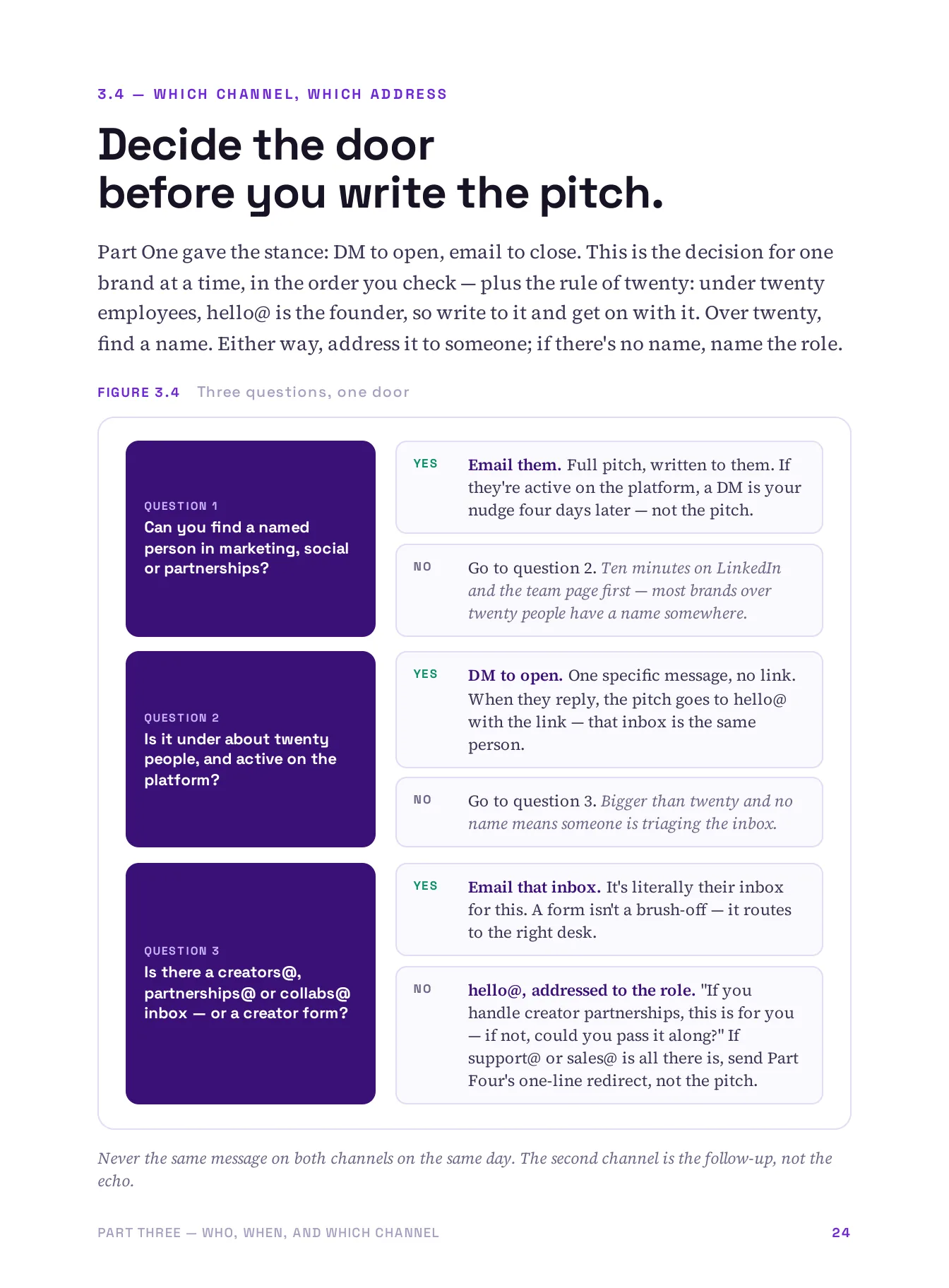
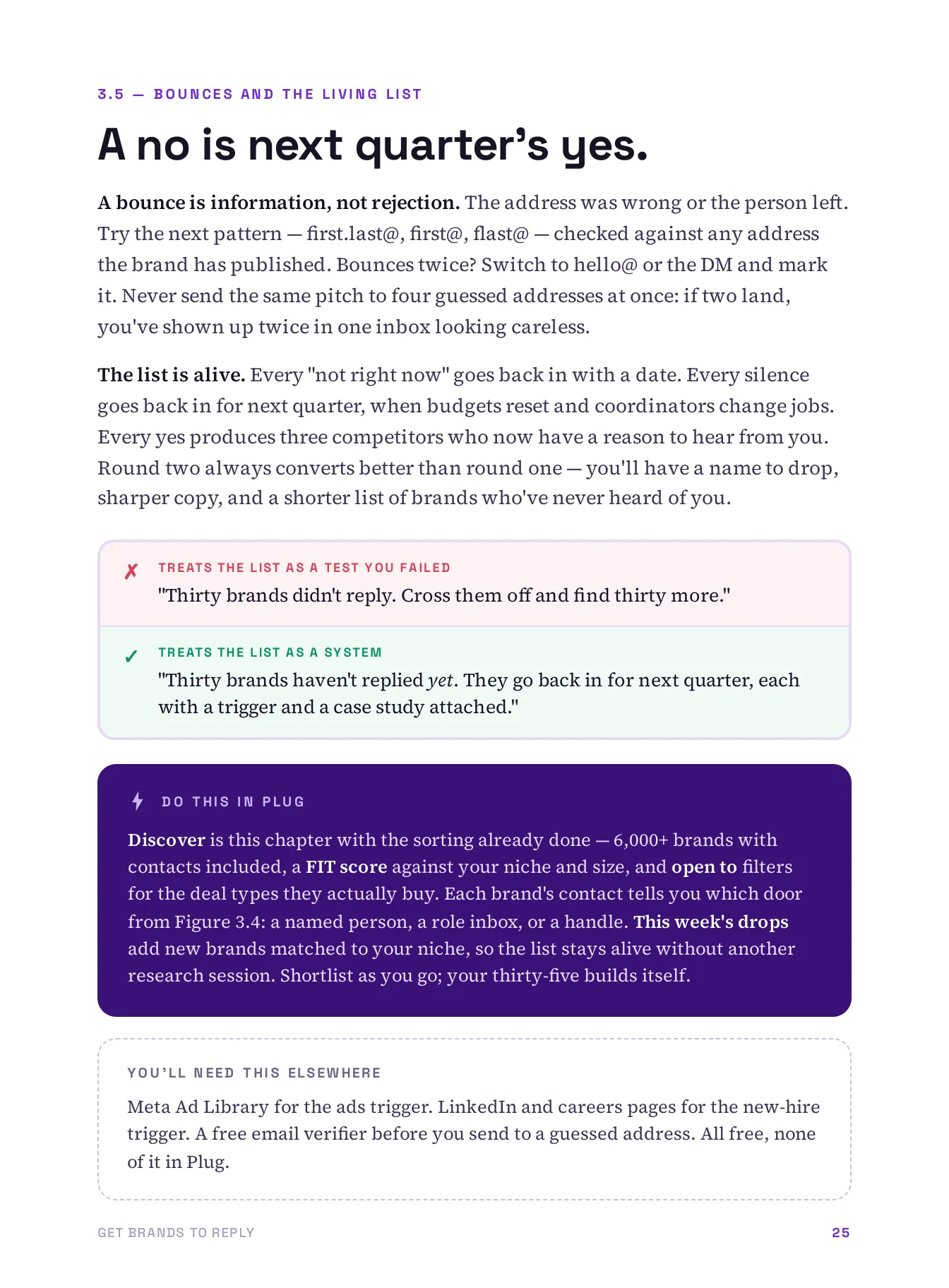
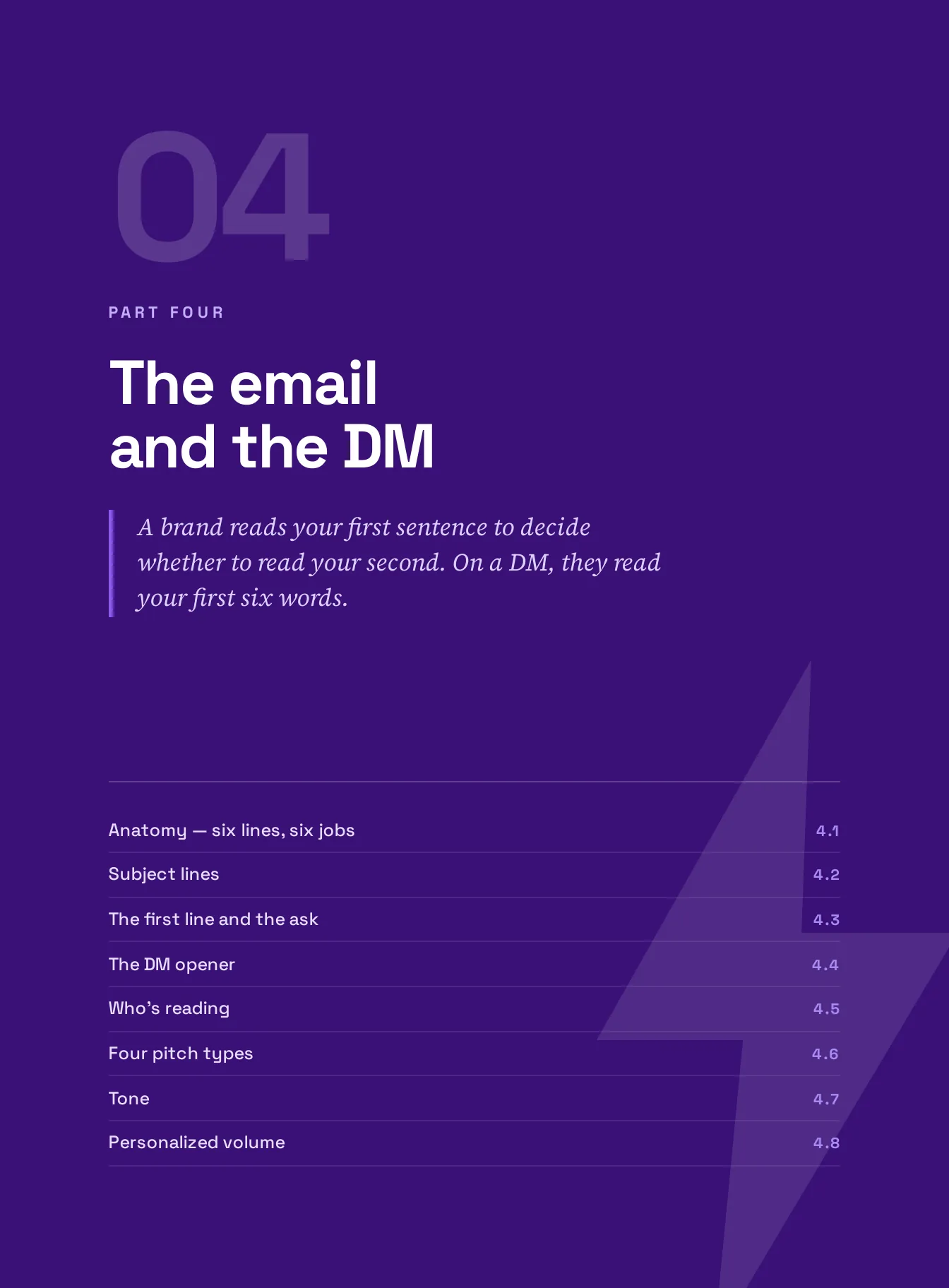
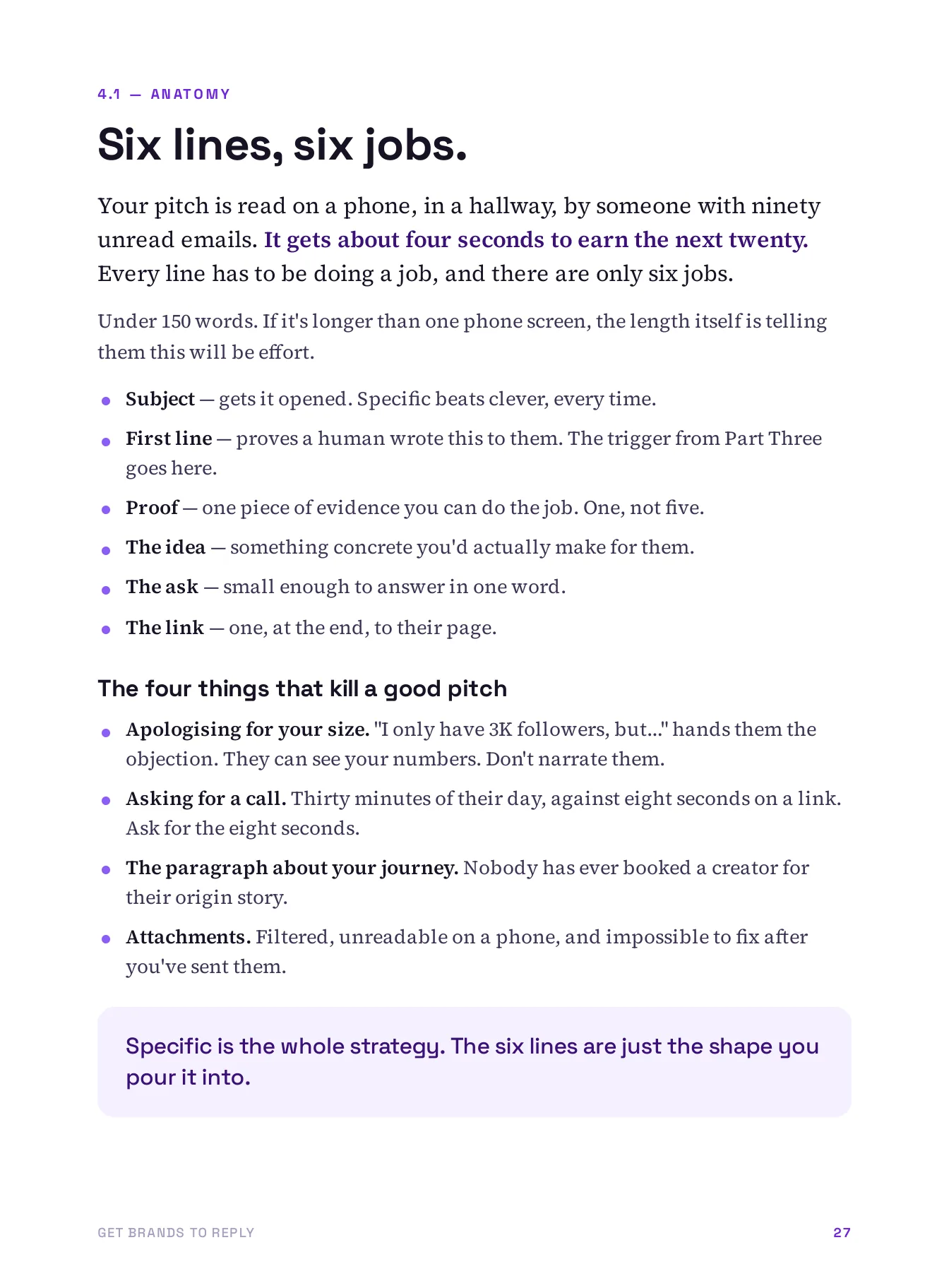
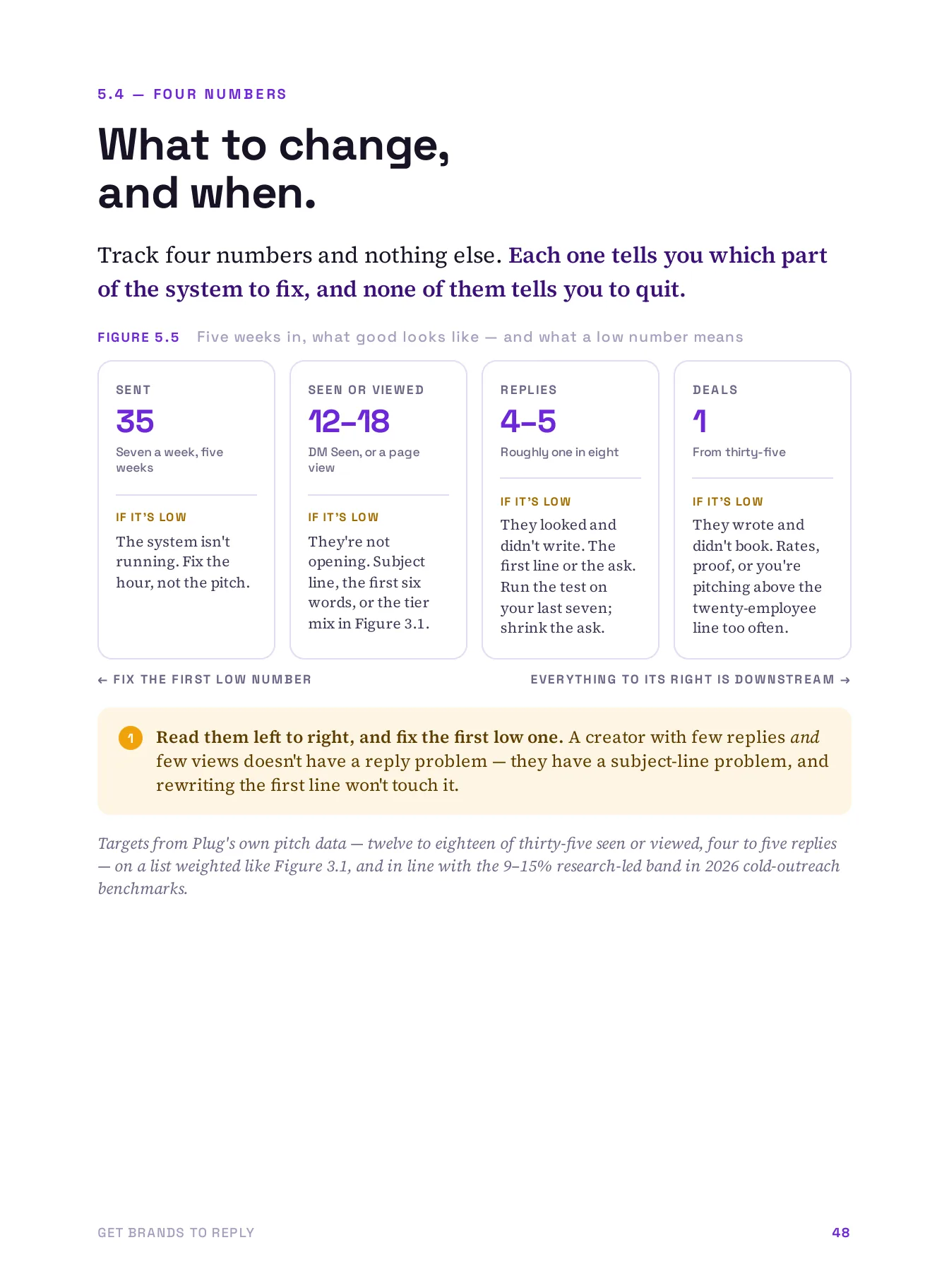
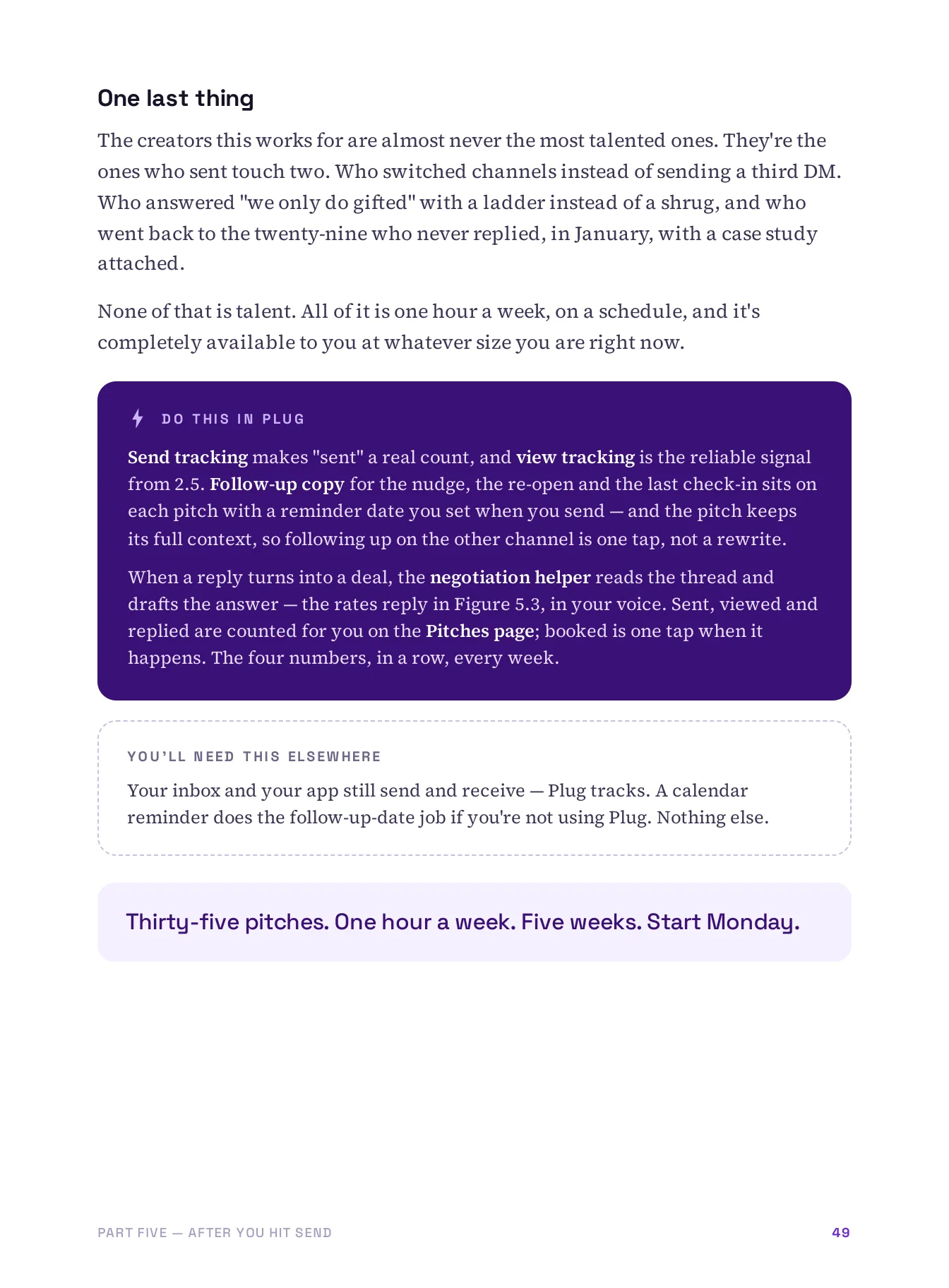
The first book covered the whole path to a first deal. This one goes deep on the part most creators get stuck at: the message. Who to send it to, which channel, what the six lines are, what to do when nobody answers, and what to say when somebody does.
Every method in it is one the founder uses to grow Plug itself, pointed at brands instead of creators. It works from a phone, it works without Plug, and it needs no follower count.
Who it is for
Creators who have a portfolio and a rate and are not getting replies. If you have never pitched, start with Land Your First Brand Deal; this book assumes you have something to send and shows you how to send it so it gets answered.
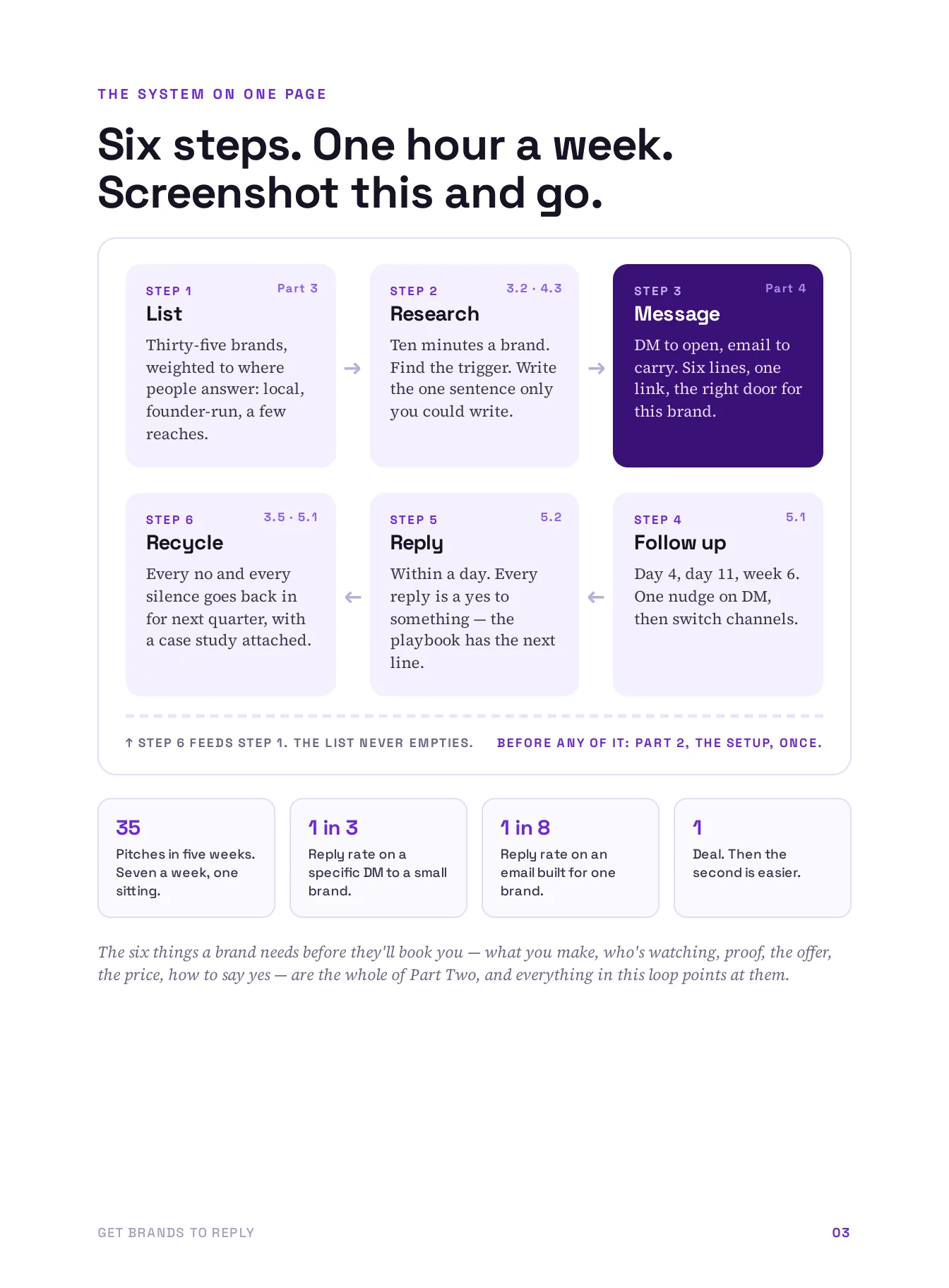
The system on one page
Six steps, one hour a week, five weeks:
- List. Thirty-five brands, weighted to where people answer: local, founder-run, a few reaches.
- Research. Ten minutes a brand. Find the trigger. Write the one sentence only you could write.
- Message. DM to open, email to carry. Six lines, one link, the right door for this brand.
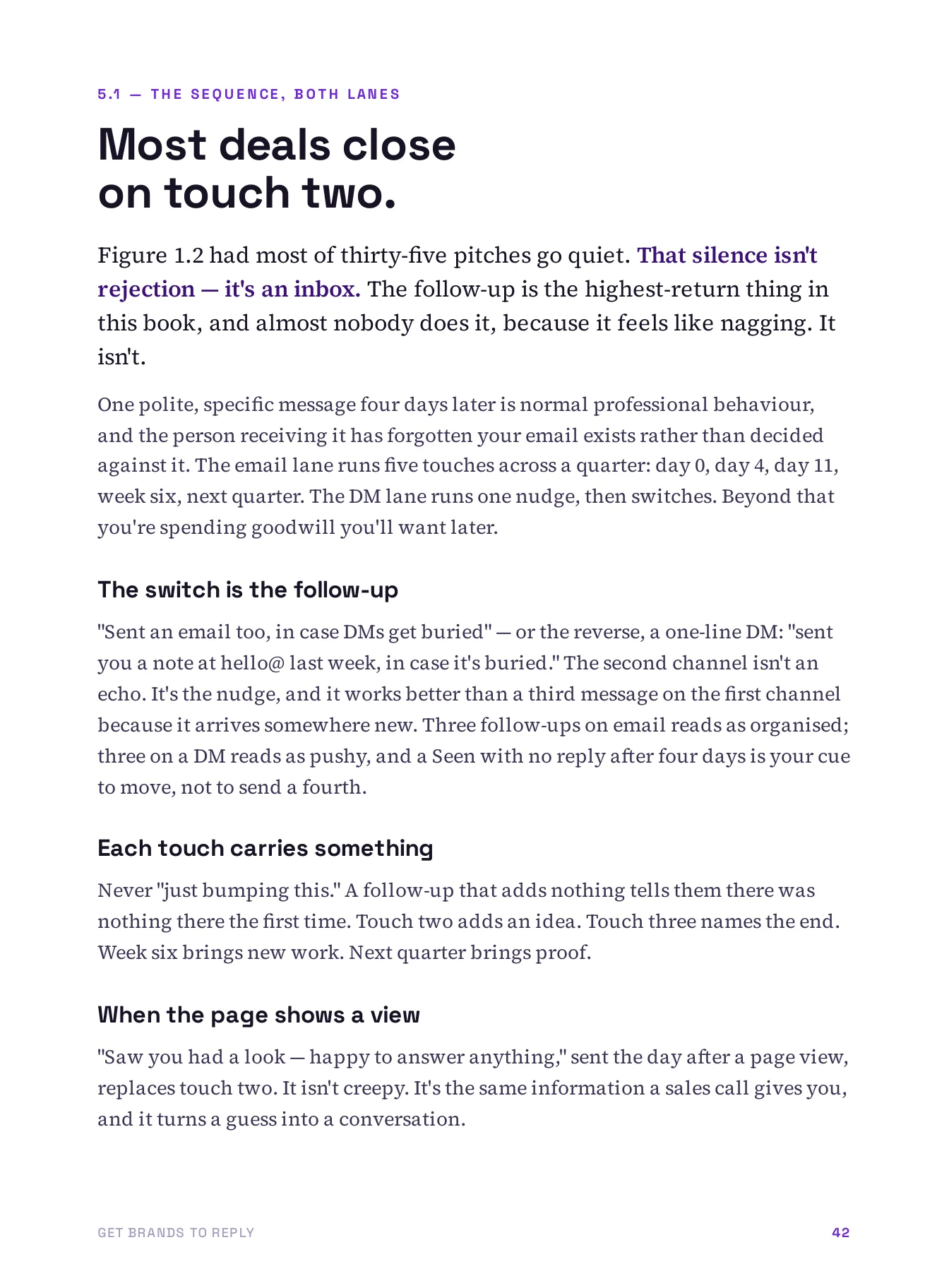
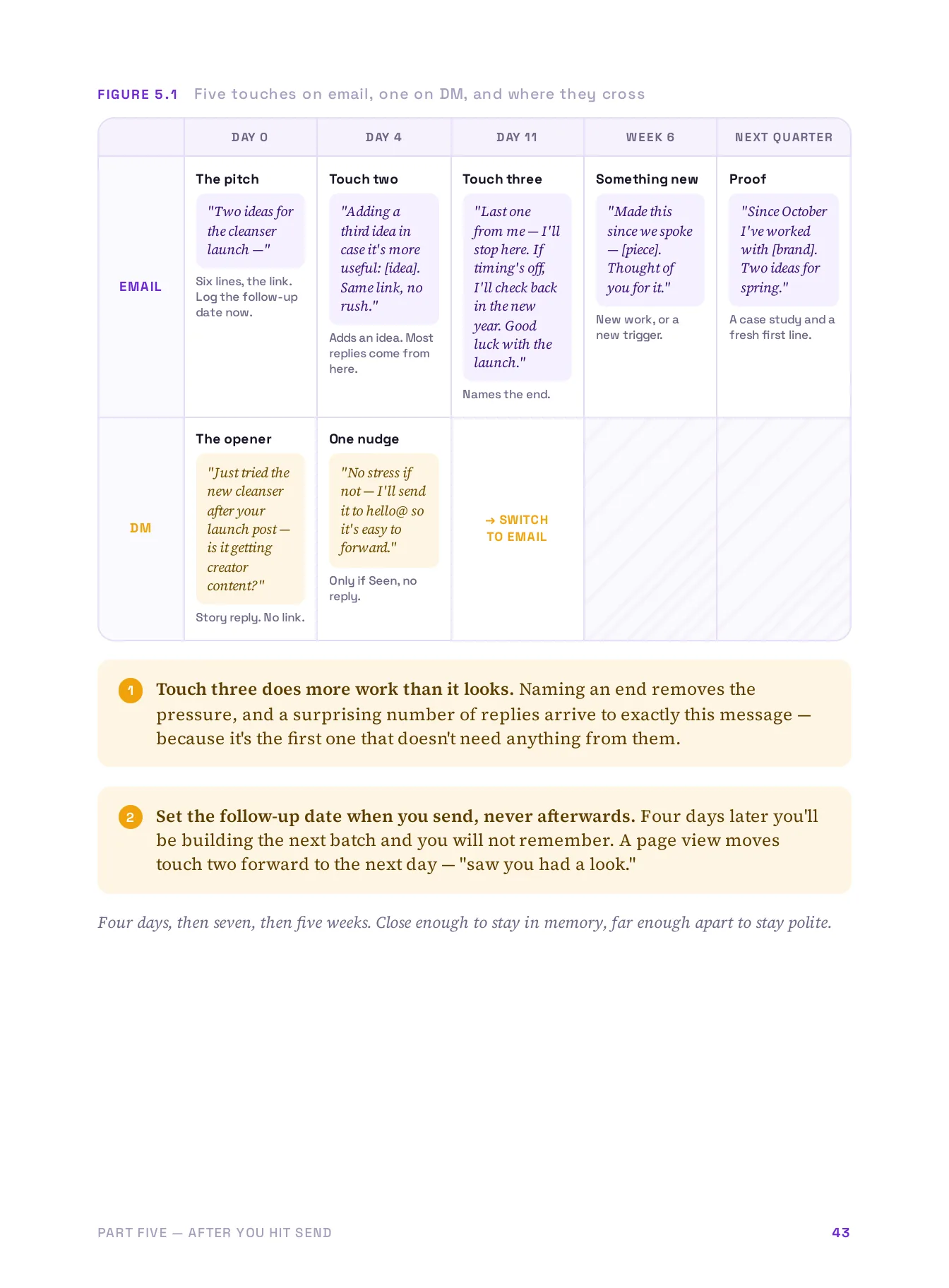
- Follow up. Day 4, day 11, week 6. One nudge on DM, then switch channels.
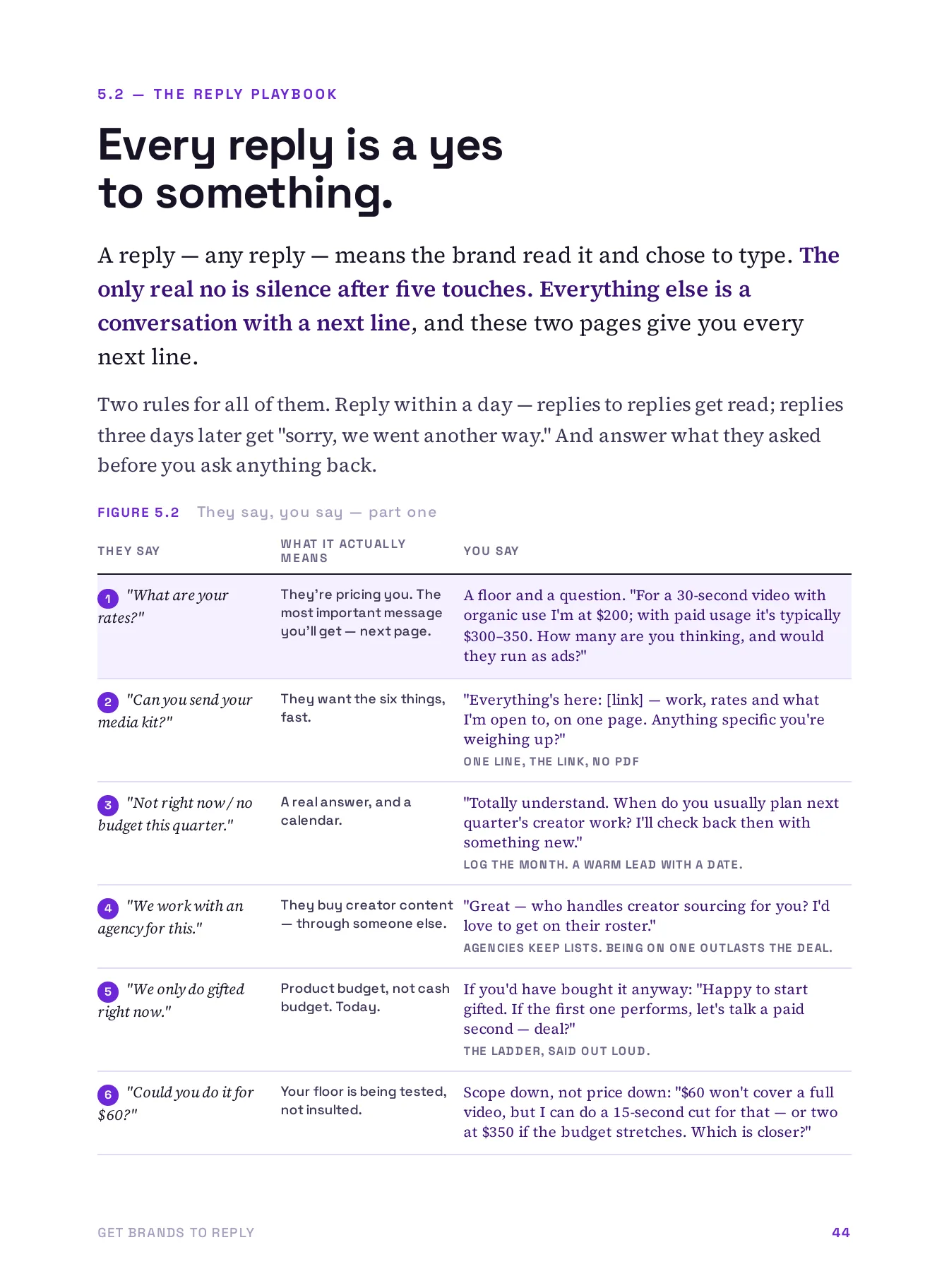
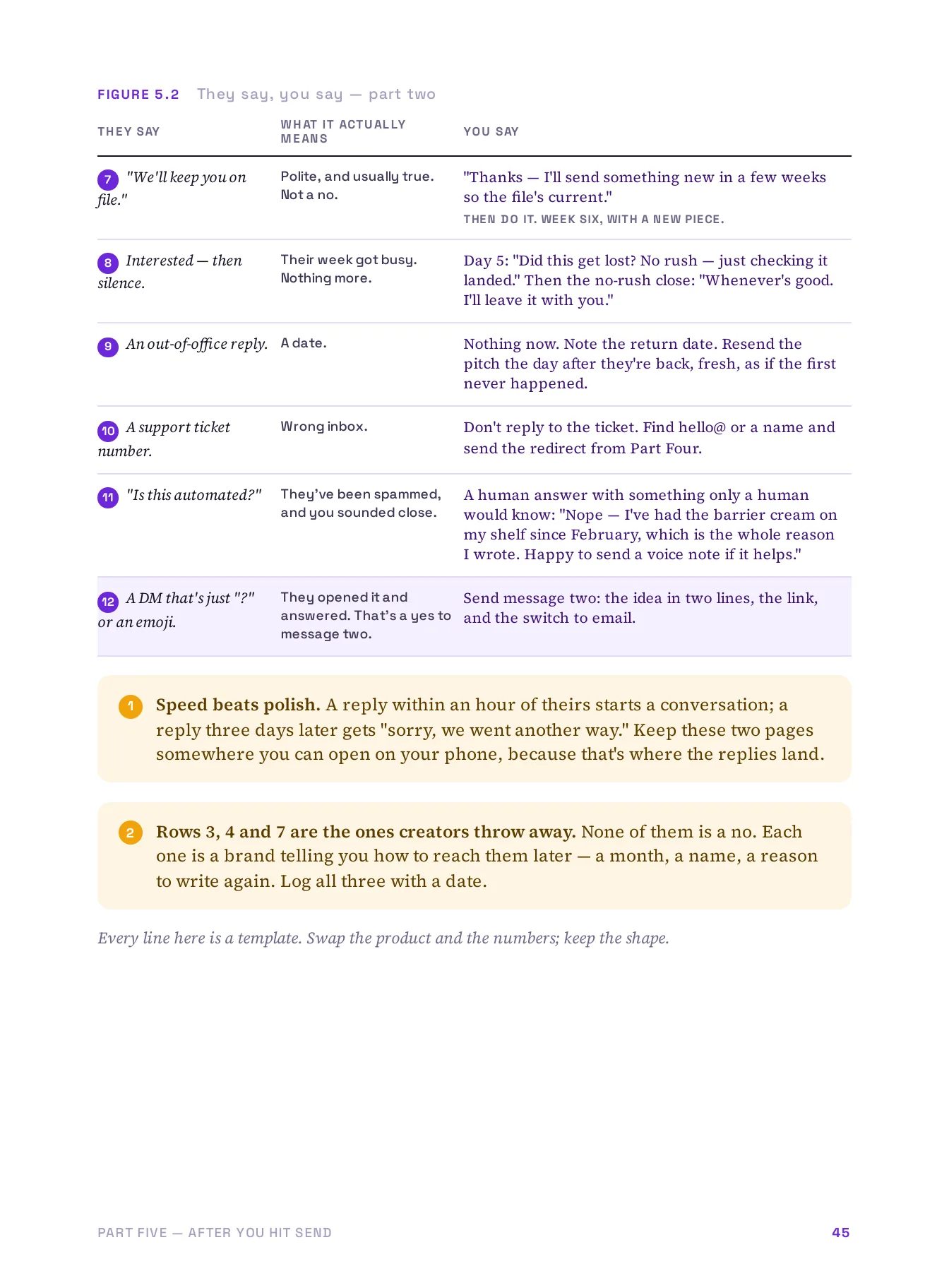
- Reply. Within a day. Every reply is a yes to something; the playbook has the next line.
- Recycle. Every no and every silence goes back in for next quarter, with a case study attached.
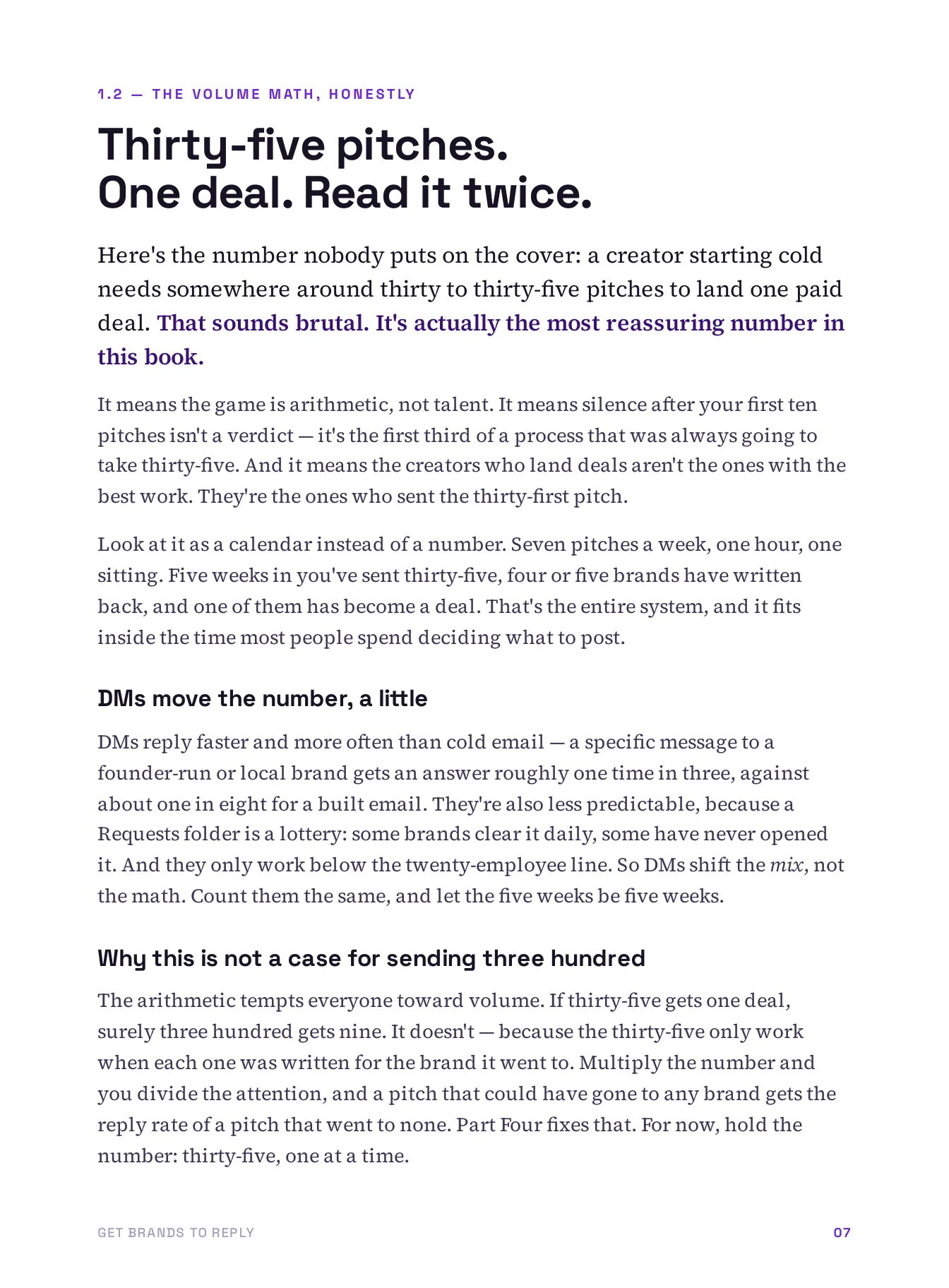
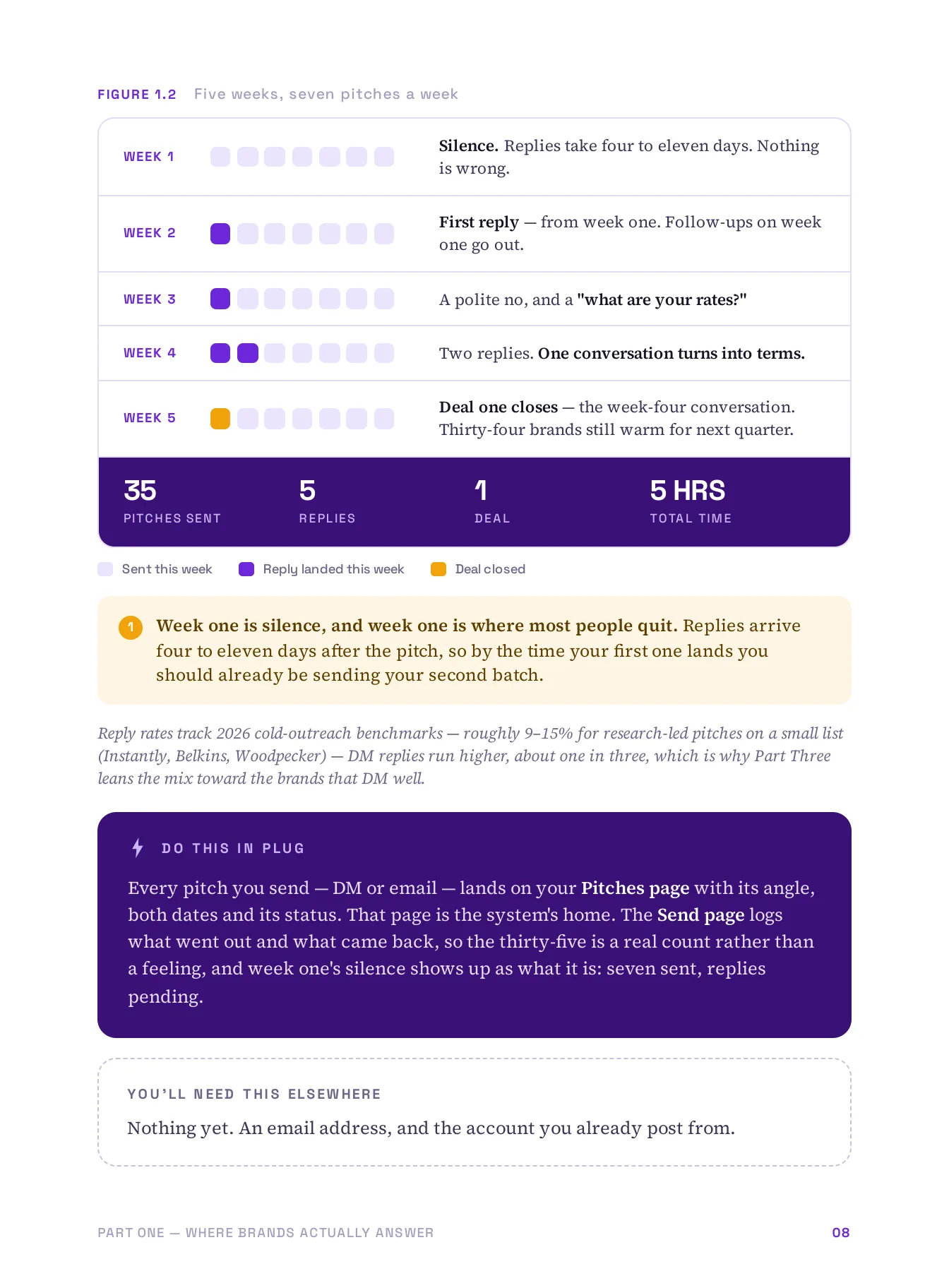
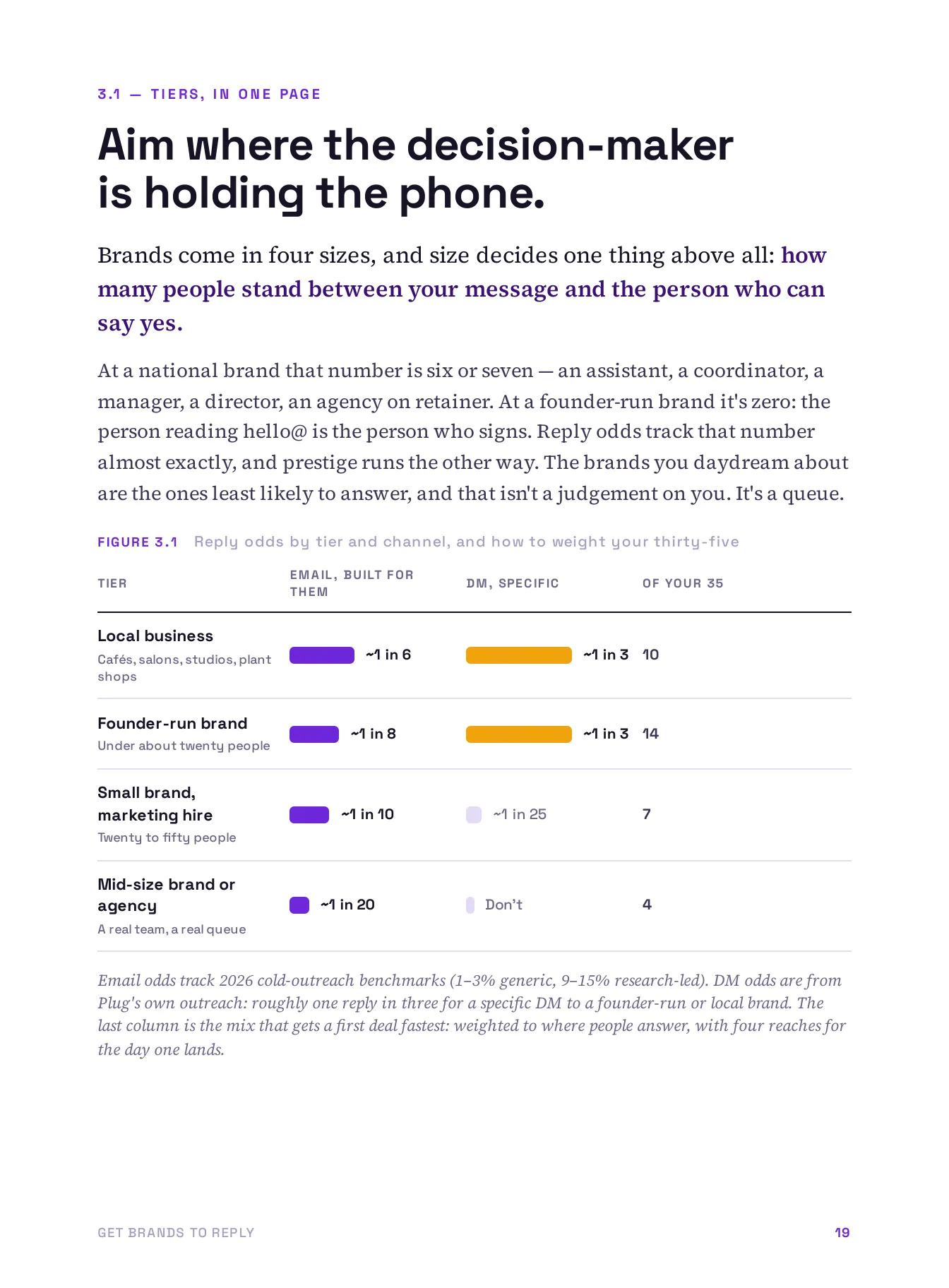
Thirty-five pitches. Roughly one in eight replies to an email built for one brand, one in three to a specific DM to a small brand. One deal. Then the second is easier.
What is inside
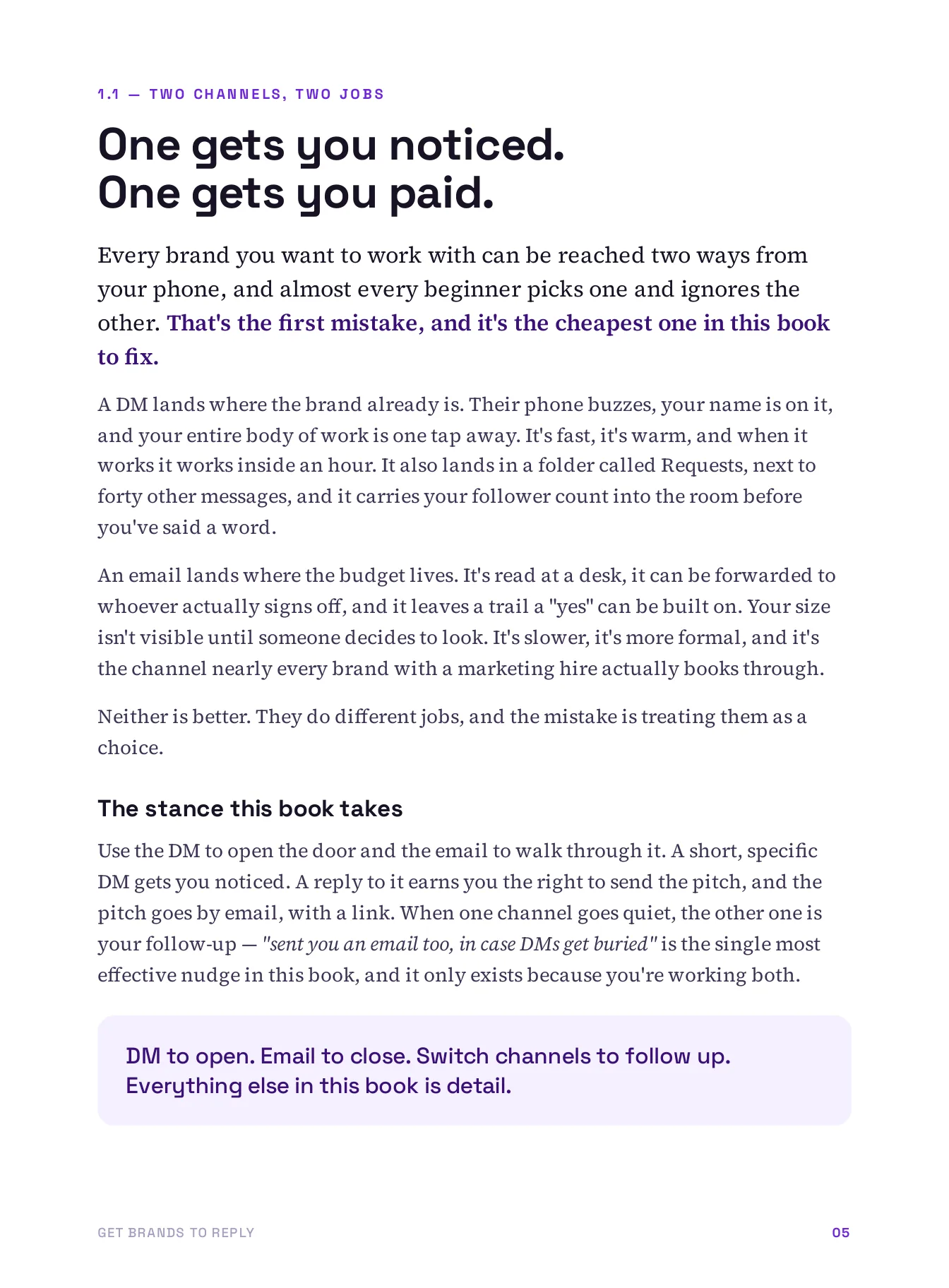
Part one: where brands actually answer. Two channels, two jobs. A DM gets you noticed; an email gets you paid. The volume math, honestly: thirty-five pitches, five weeks, one deal, and why that is the most reassuring number in the book.
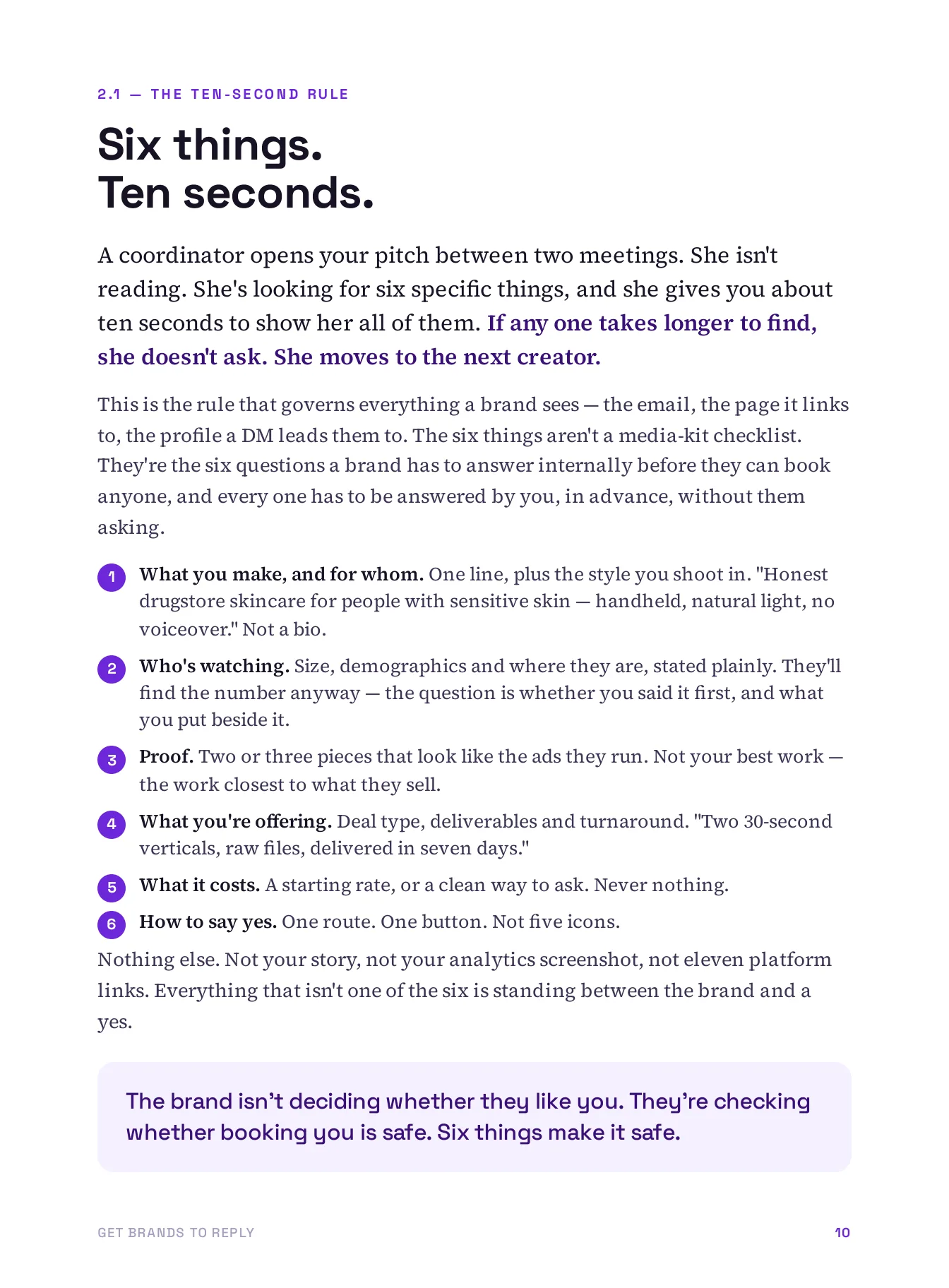
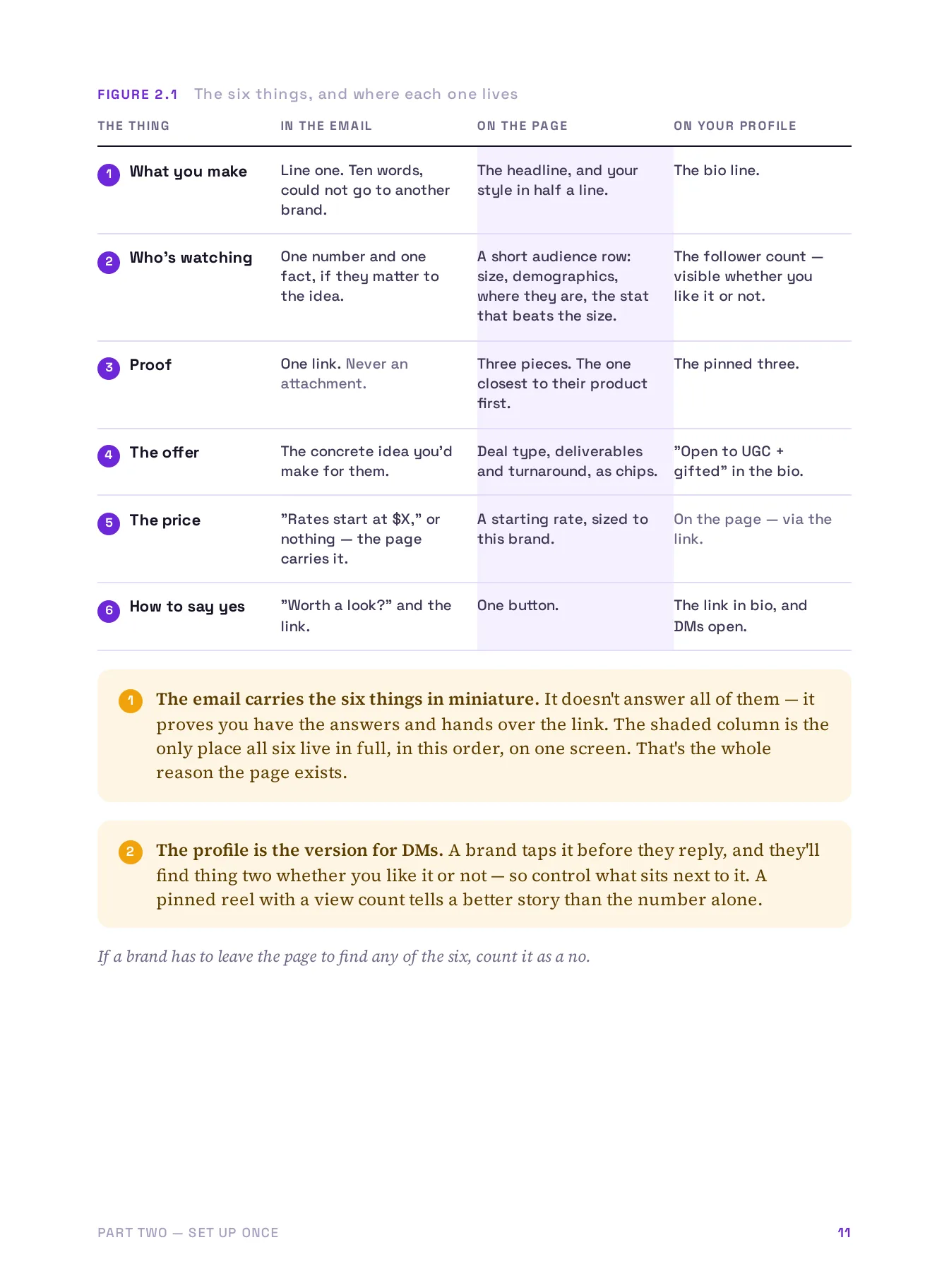
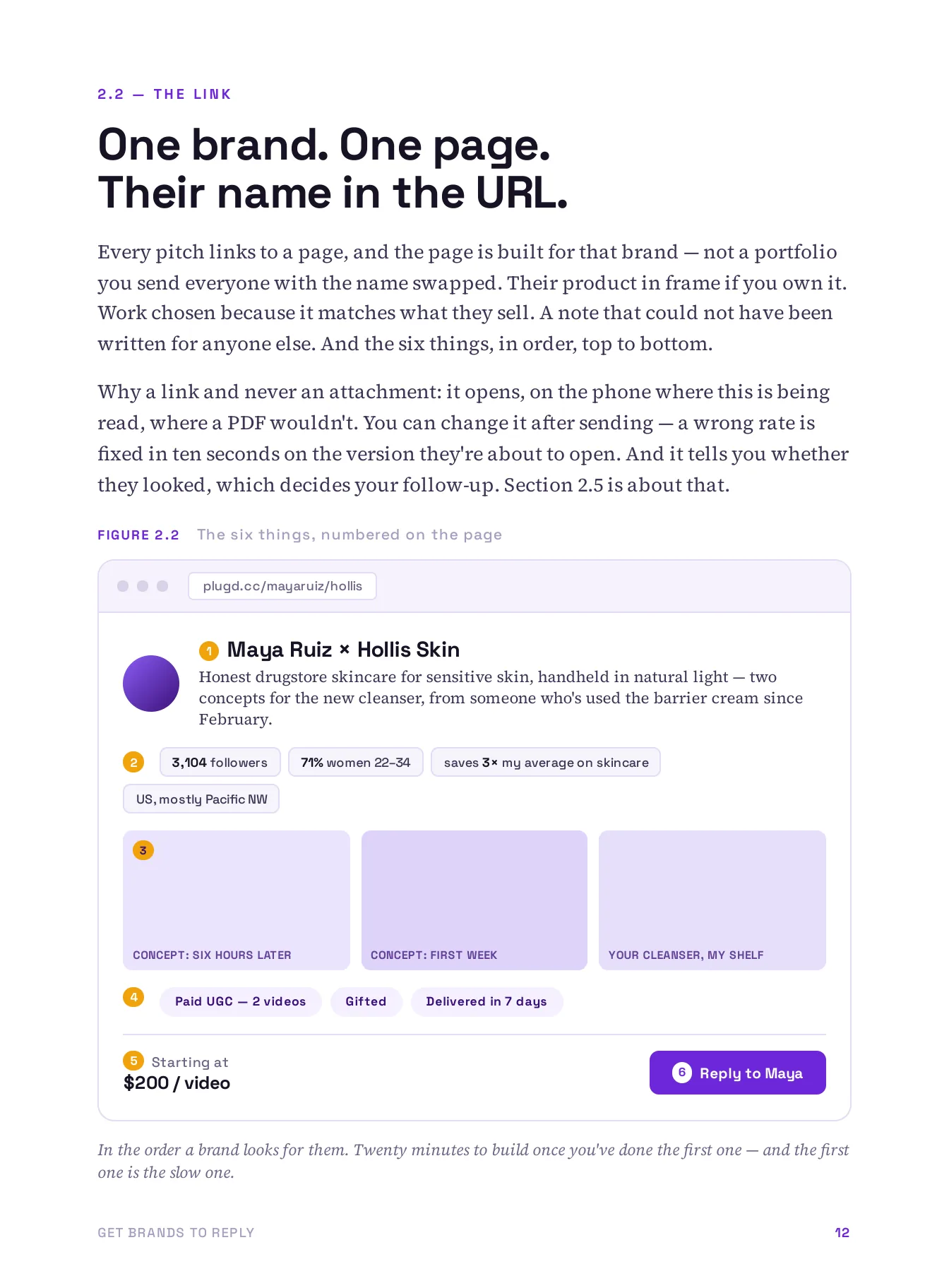
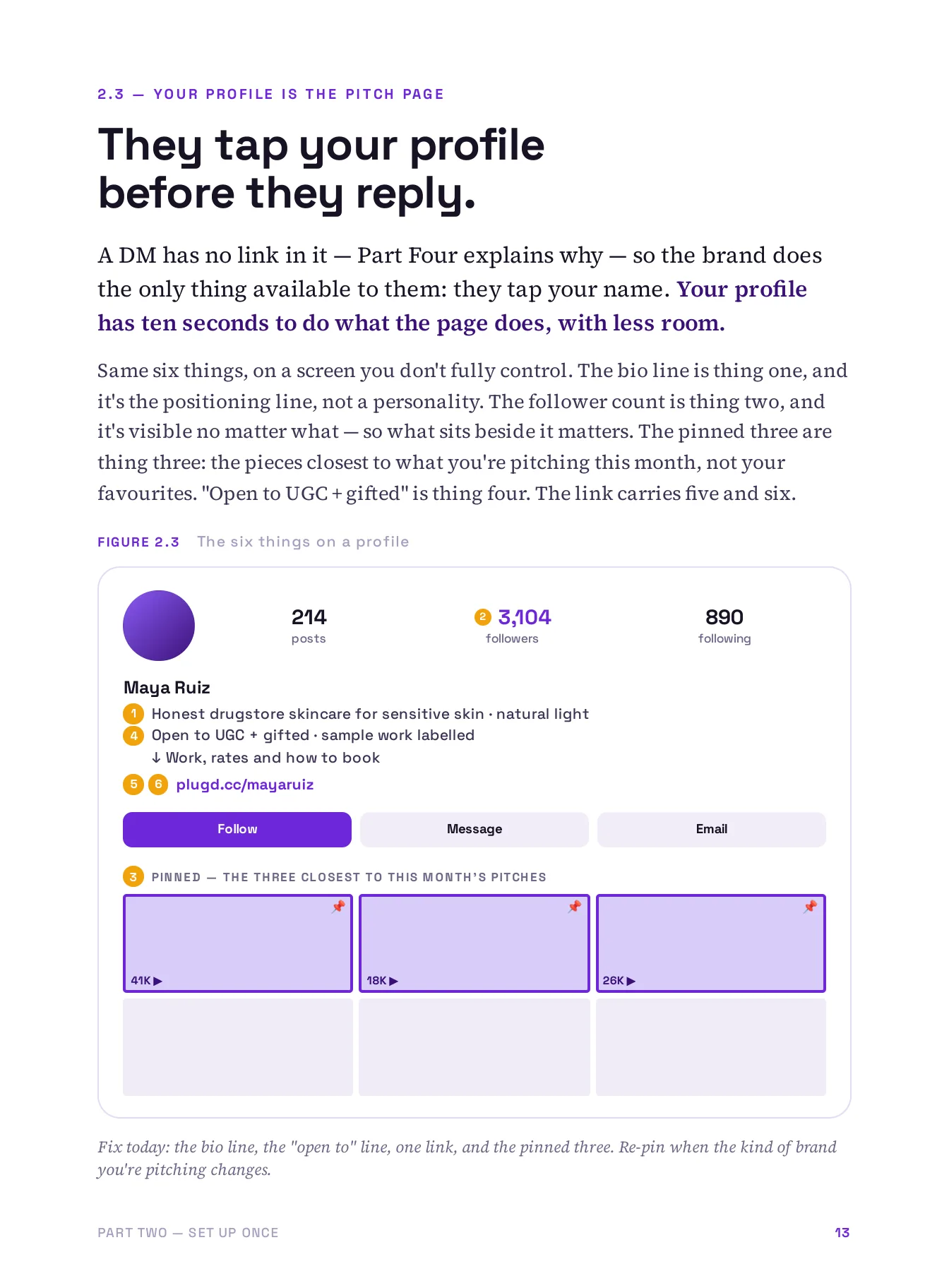
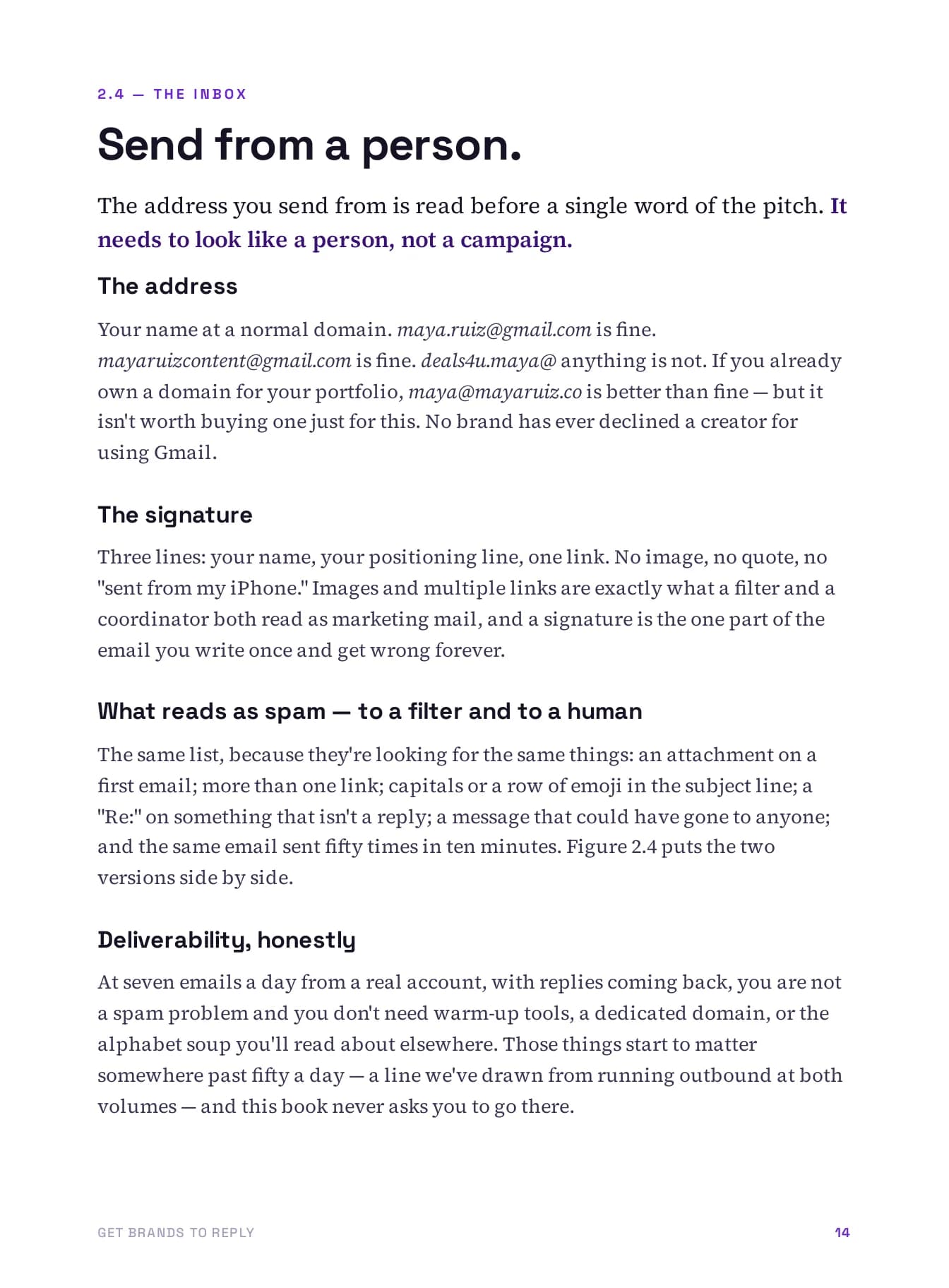
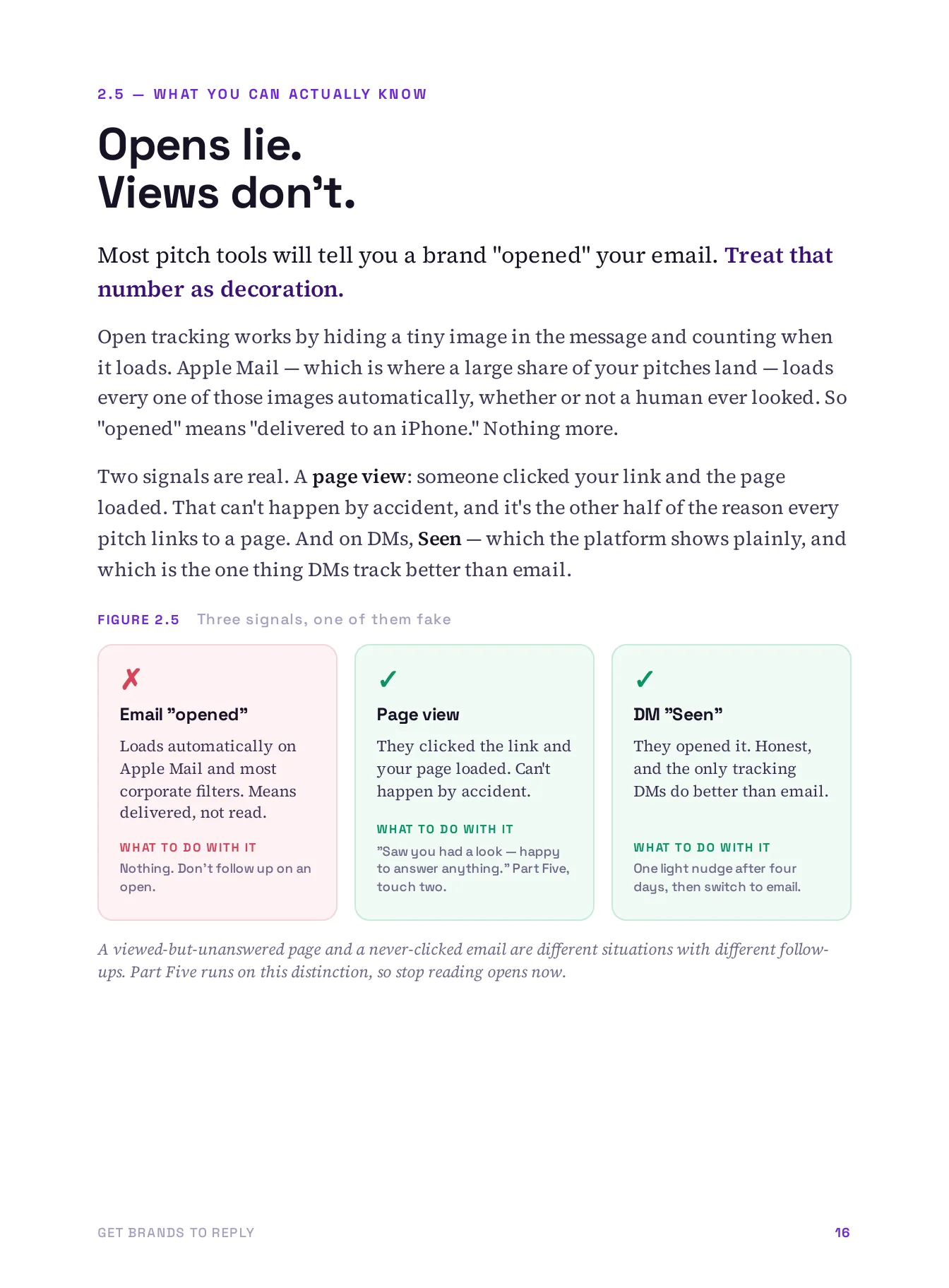
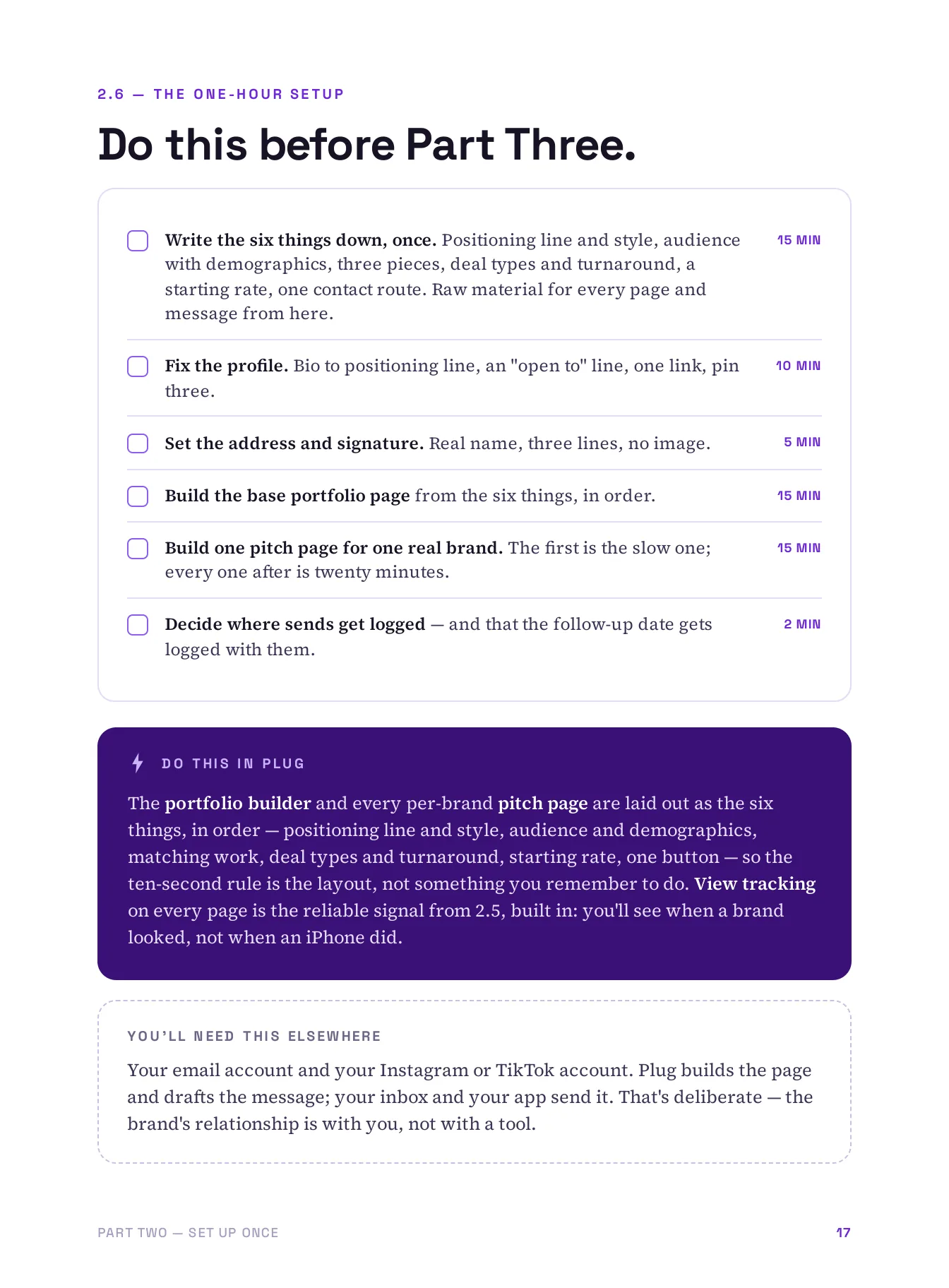
Part two: set up once. The six things a brand needs to see in ten seconds, and where each one lives in the email, on the page, and on your profile. One page per brand with their name in the URL. Why to send from a person, not a campaign. Why email opens lie and page views do not. The one-hour setup.
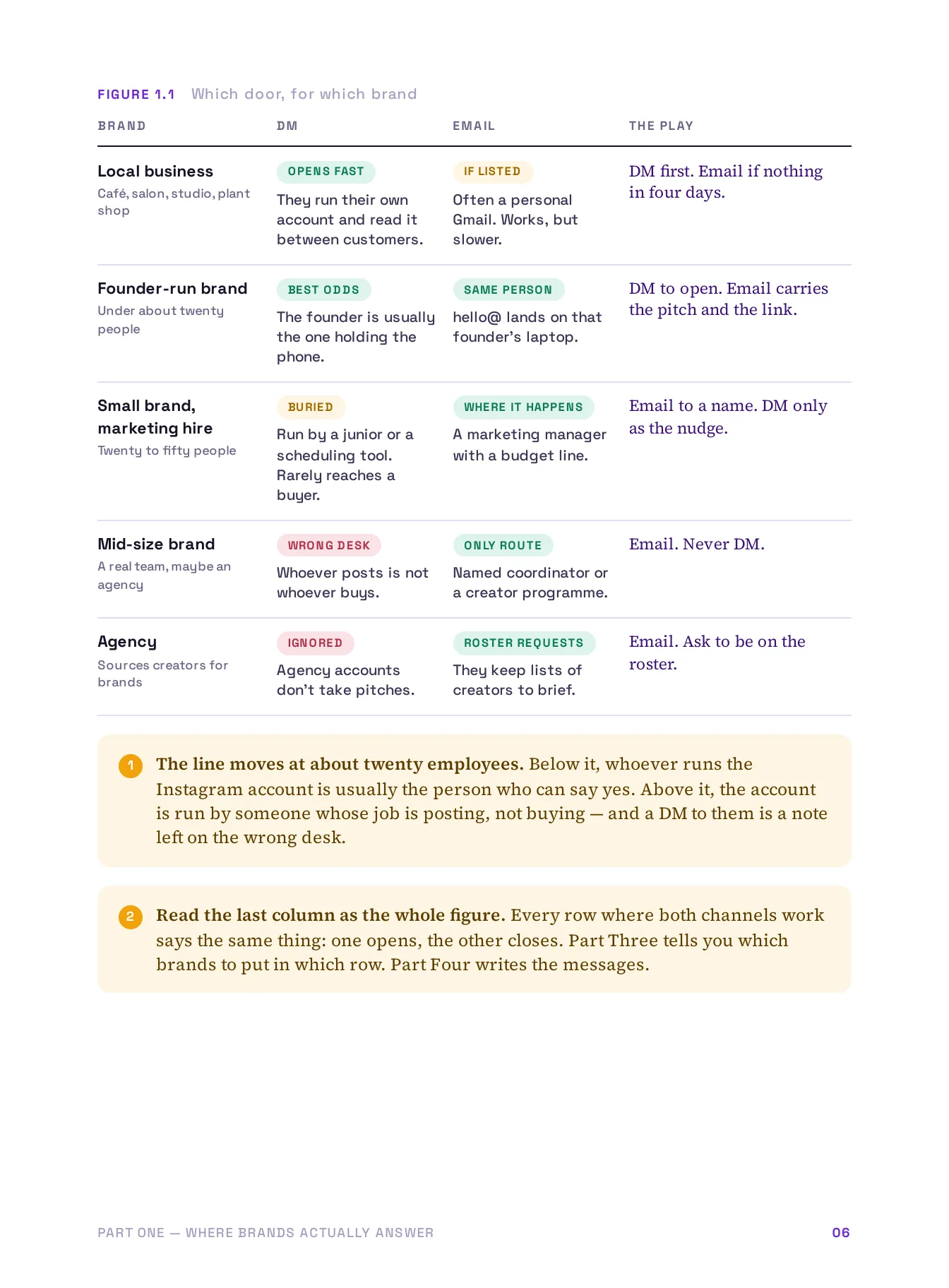
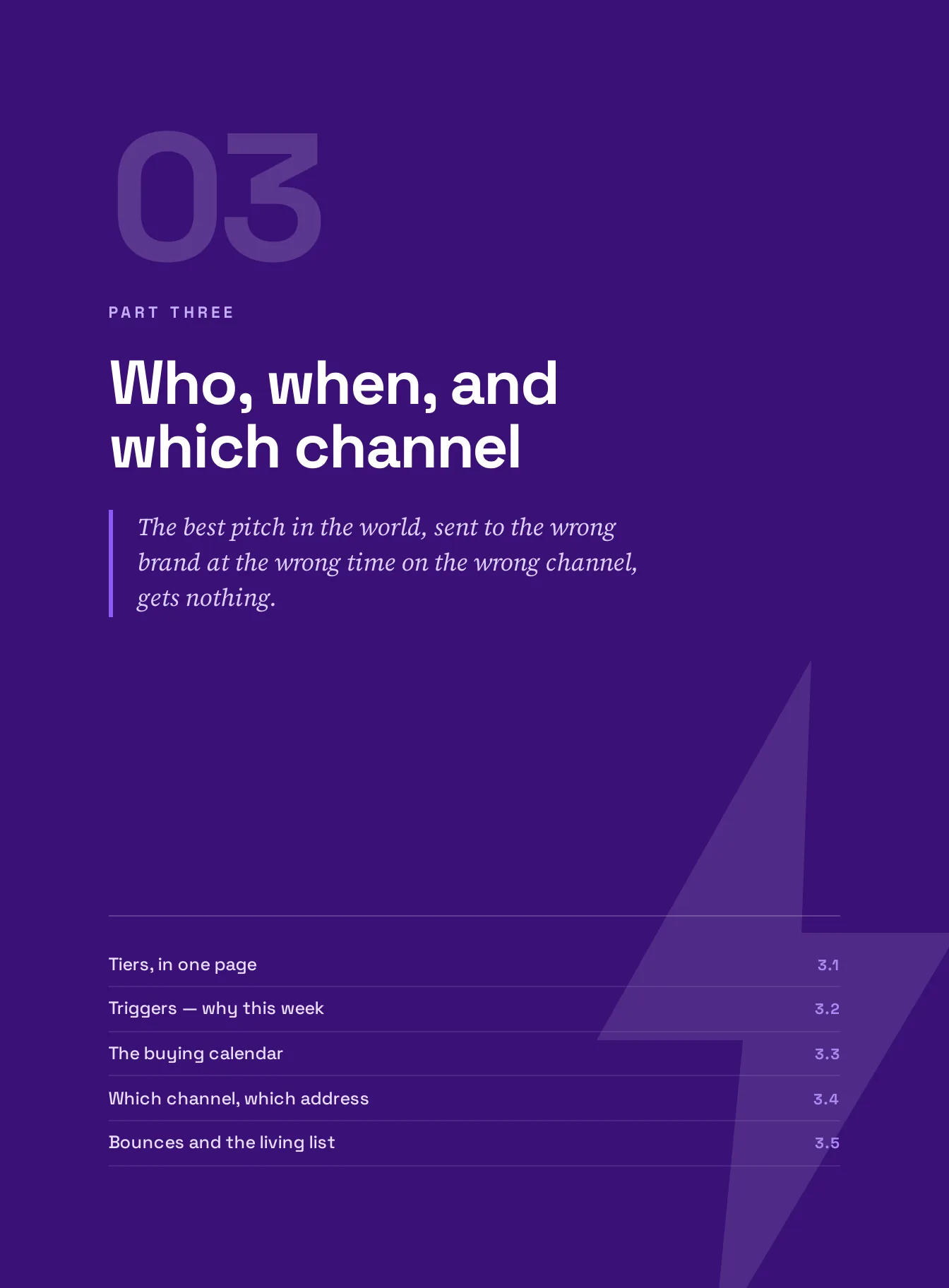
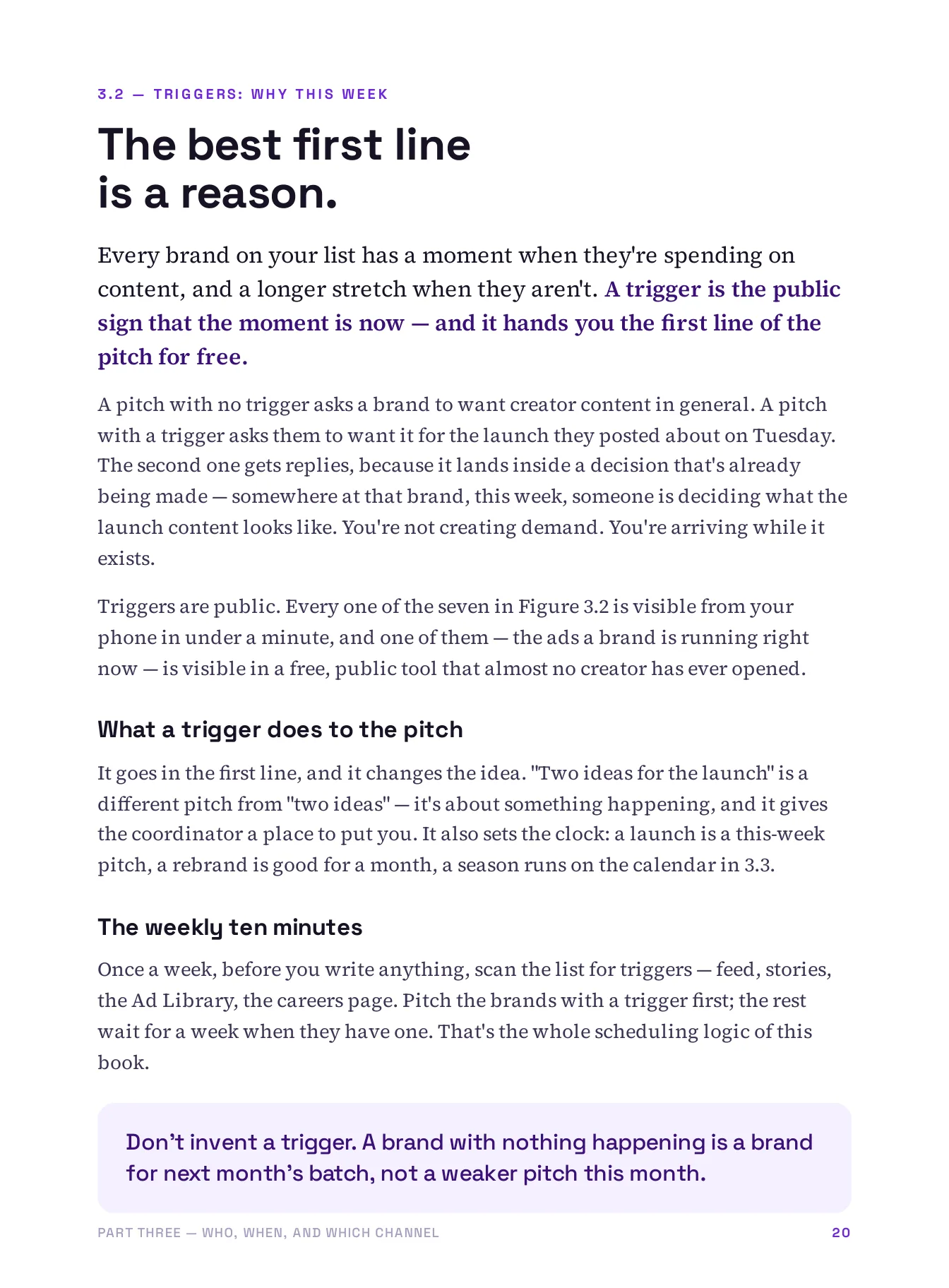
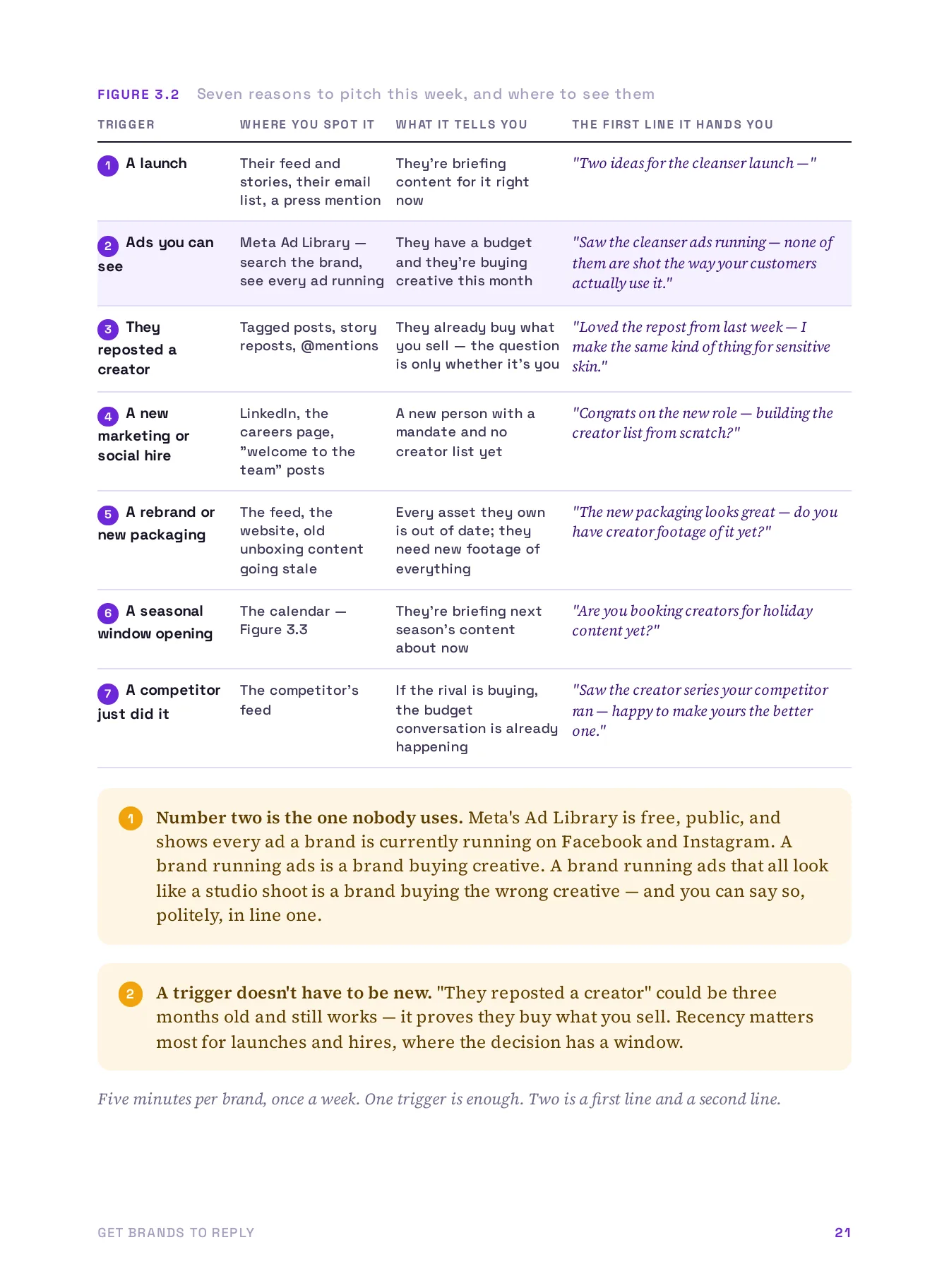
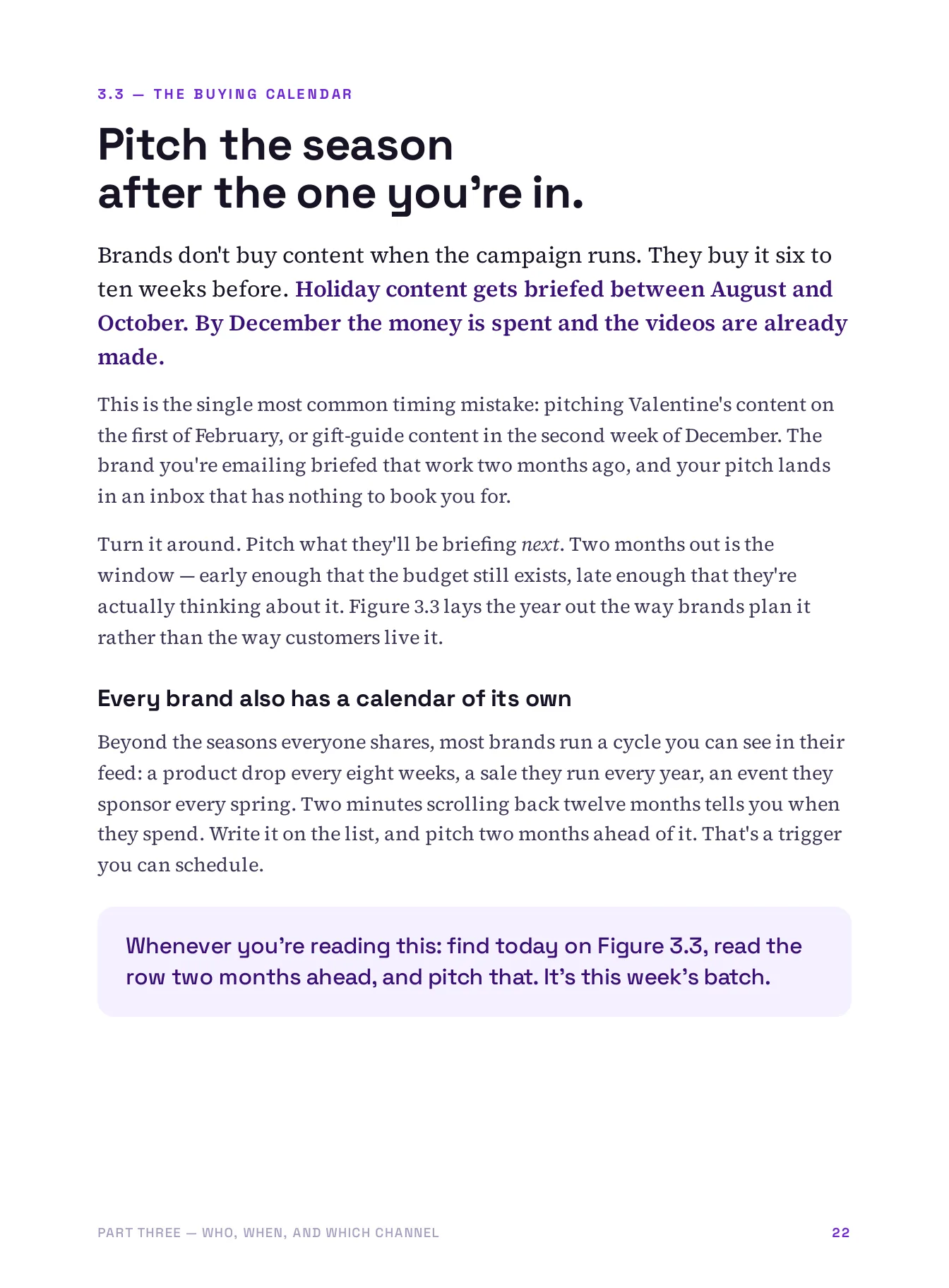
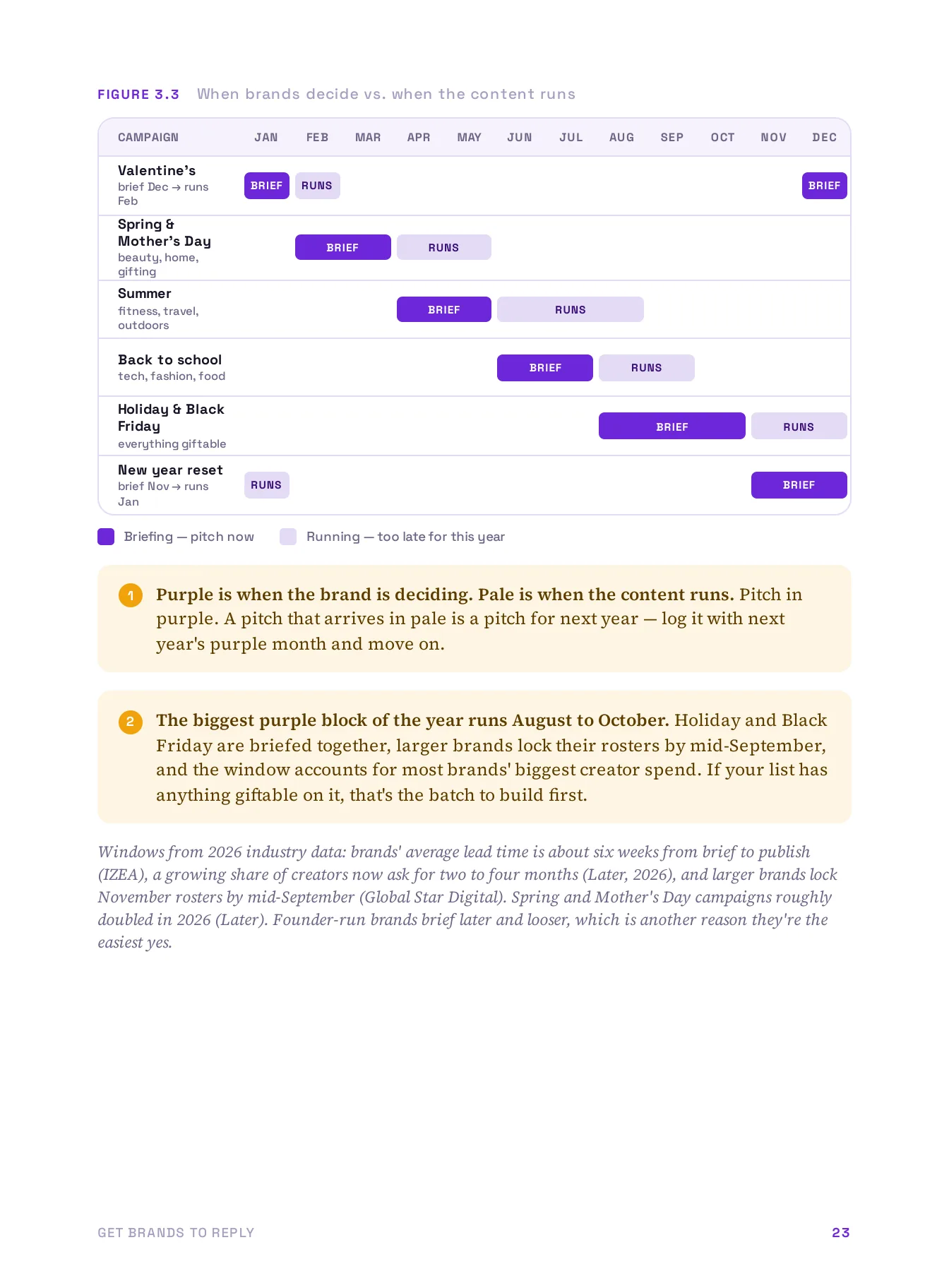
Part three: who, when, and which channel. Reply odds by brand size and how to weight your thirty-five. Seven triggers that hand you the first line, including the free ad-library tool almost nobody opens. The buying calendar: pitch the season after the one you are in. Three questions that decide the door. Bounces, and why a no is next quarter's yes.
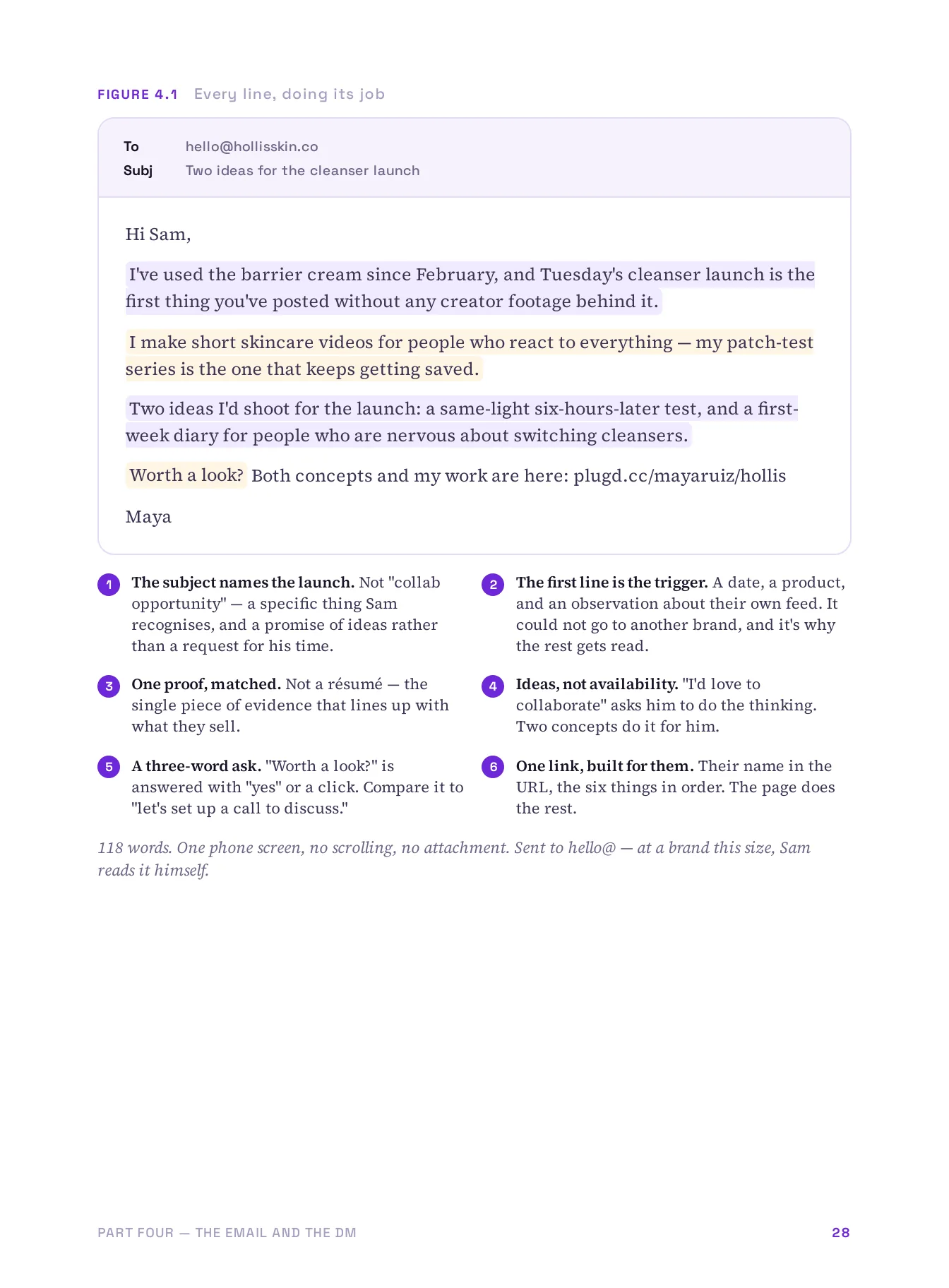
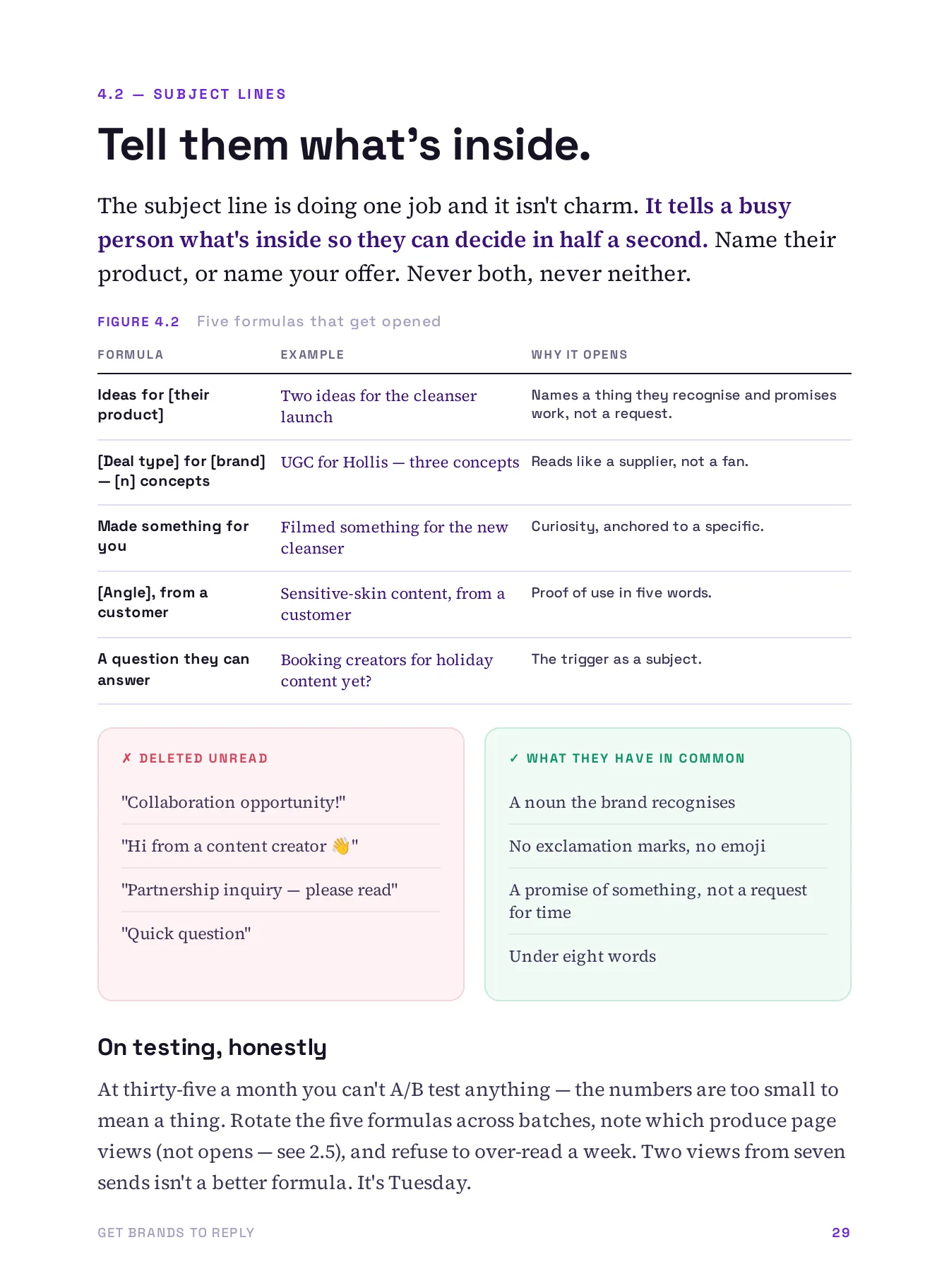
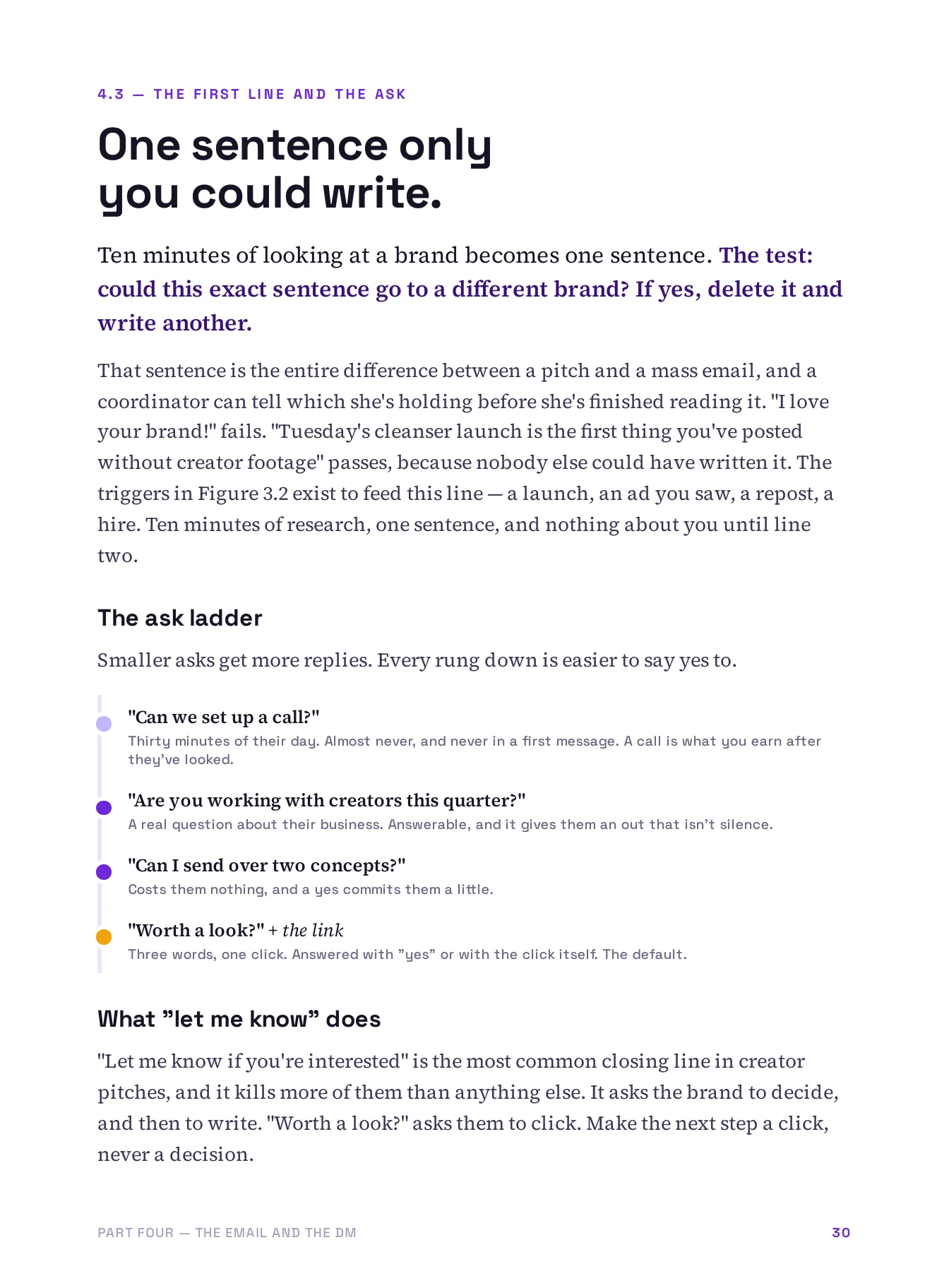
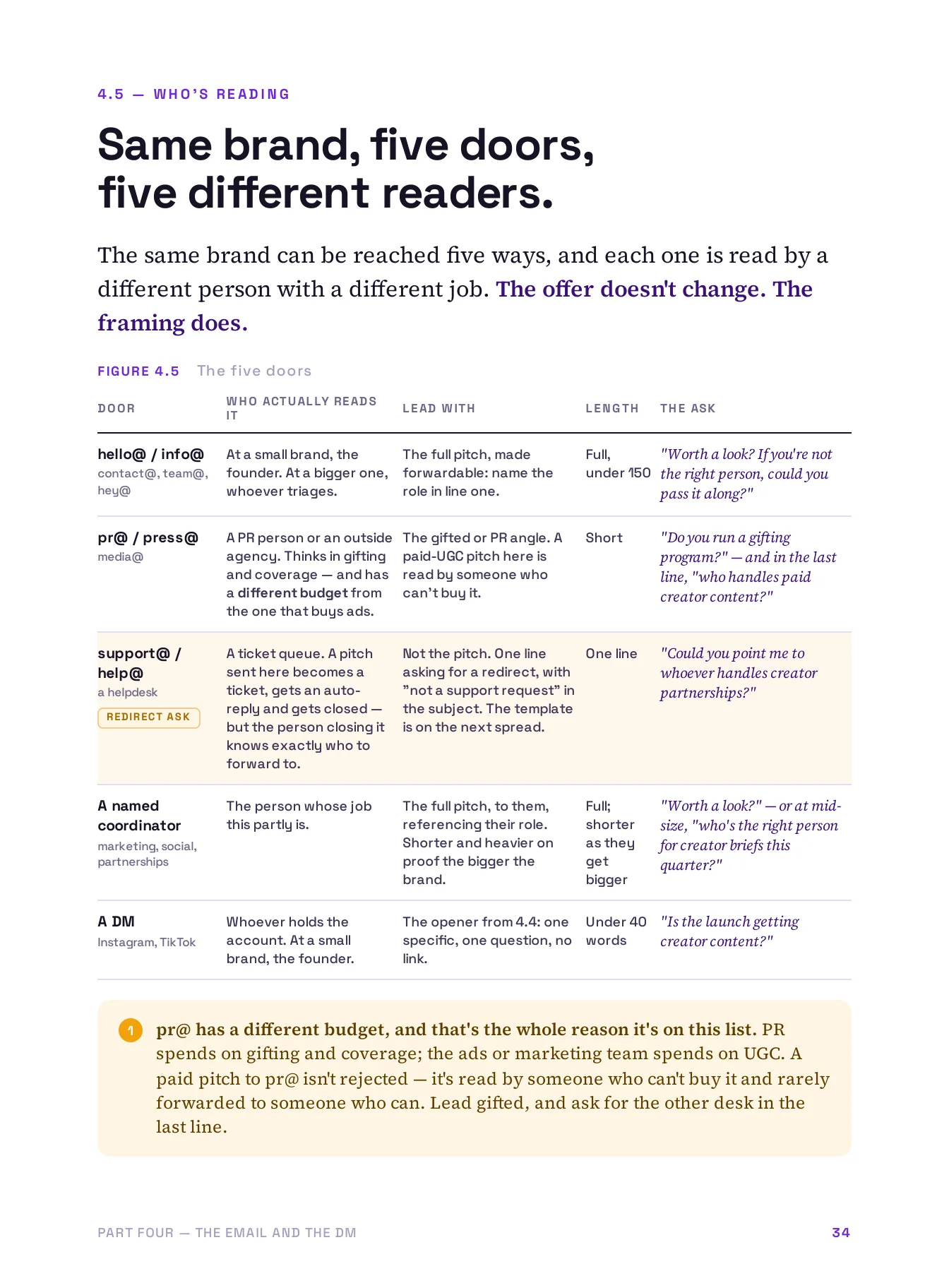
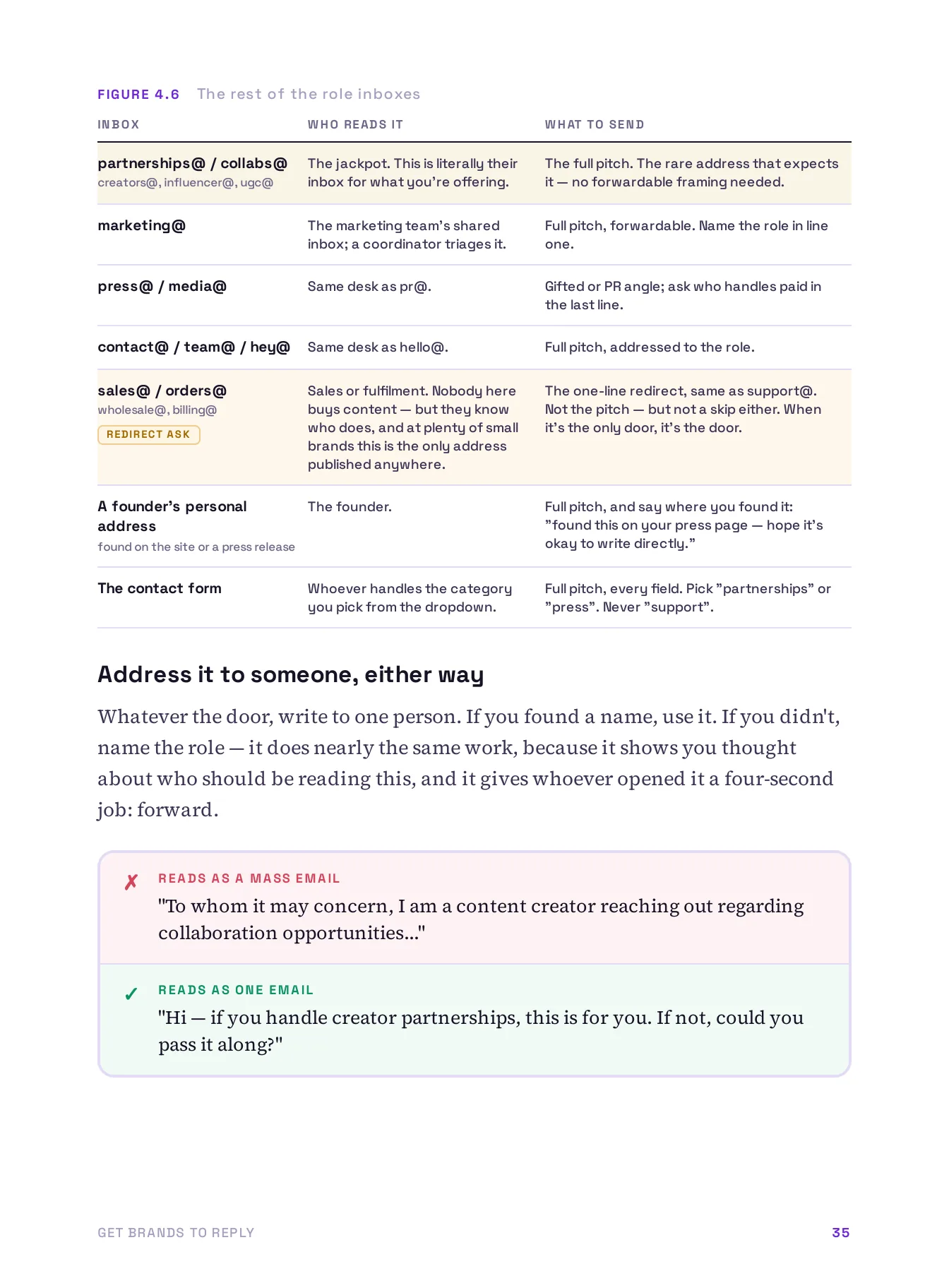
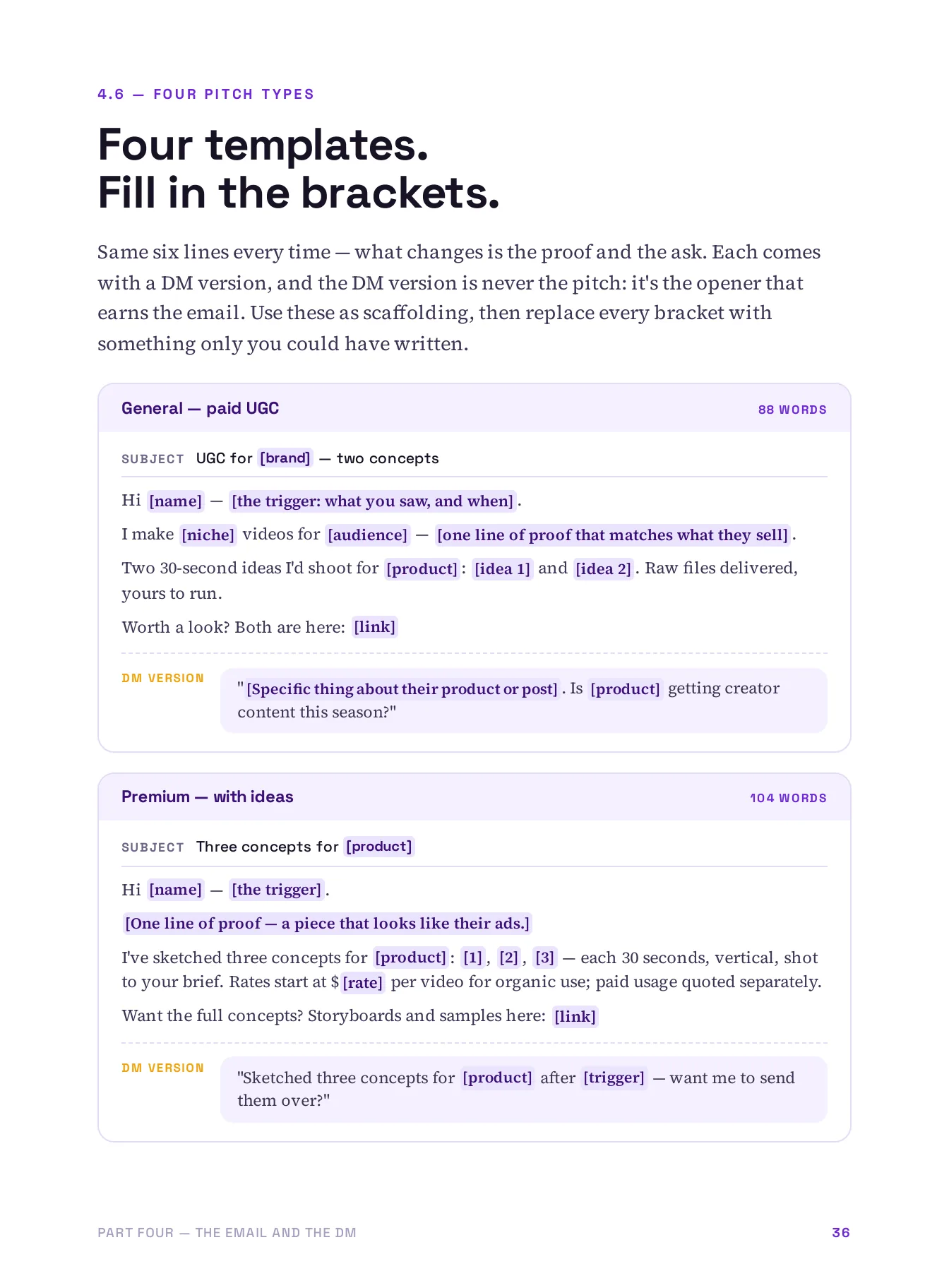
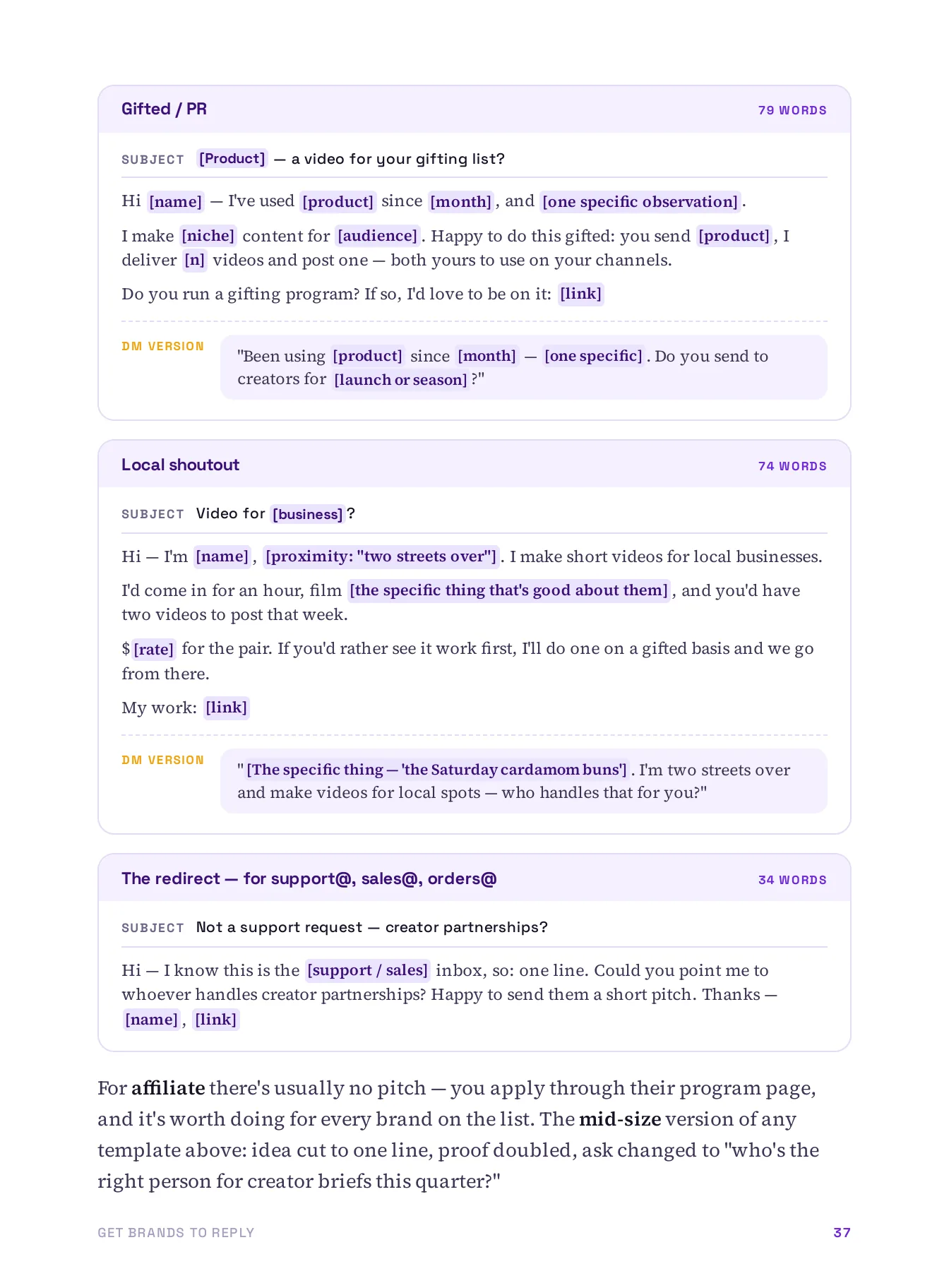
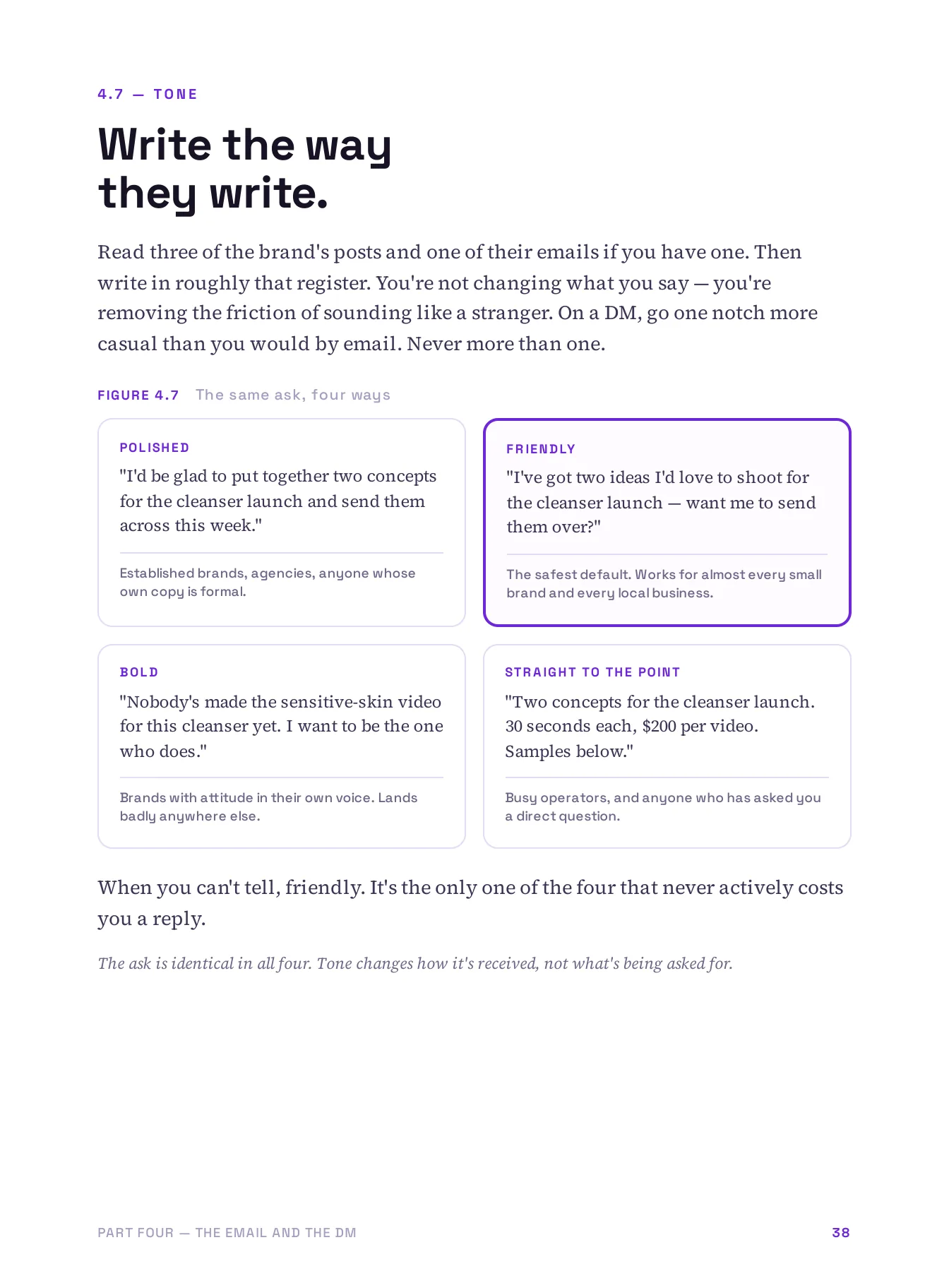
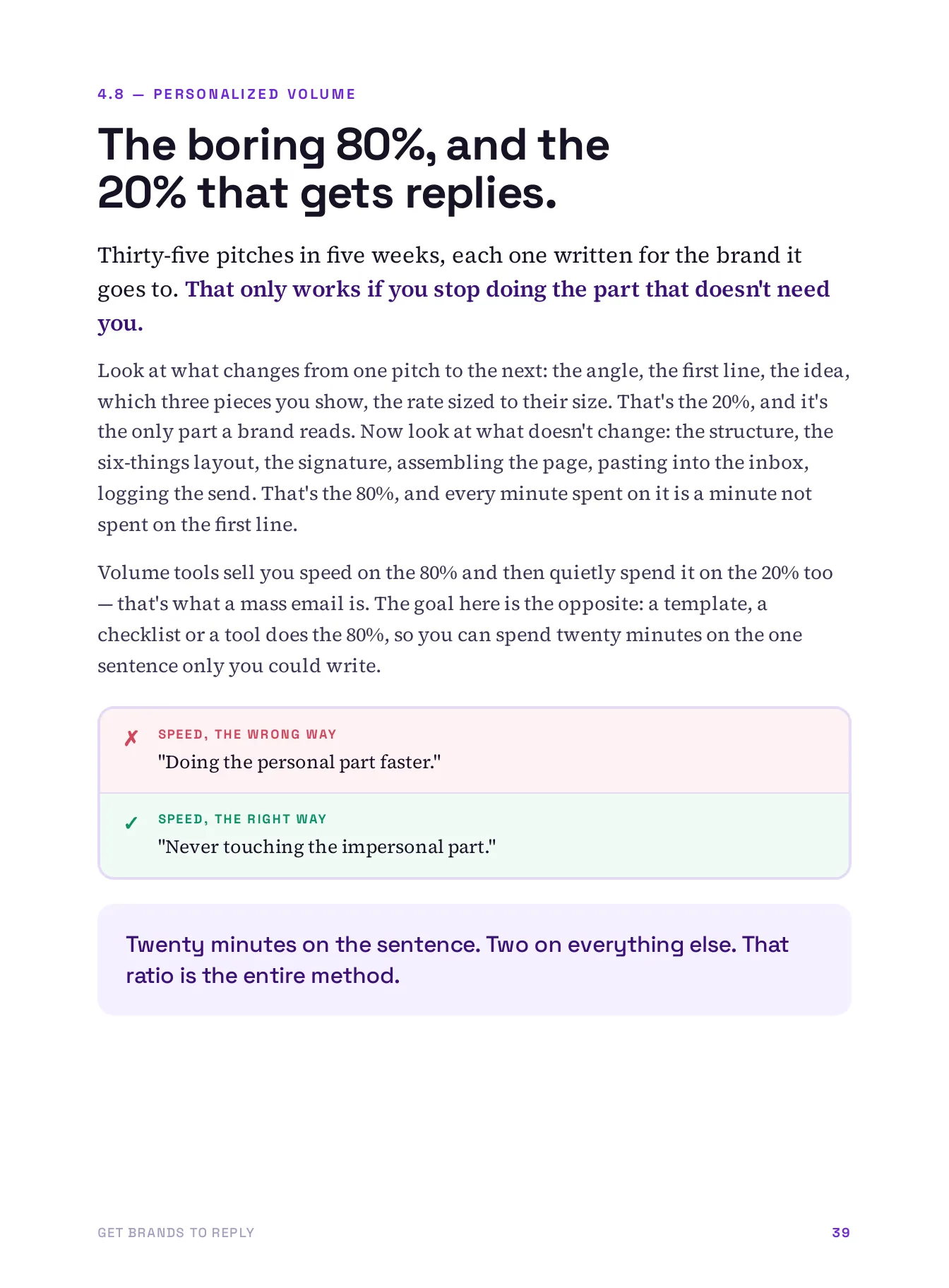
Part four: the email and the DM. Six lines, six jobs. Five subject-line formulas. The first-line test and the ask ladder. The DM opener with no link and the two-step that moves it to email. Five doors, five readers, and what to send to each inbox. Four templates with DM versions, the four tones, and the boring 80 percent a tool should do so you can spend twenty minutes on the sentence that gets the reply.
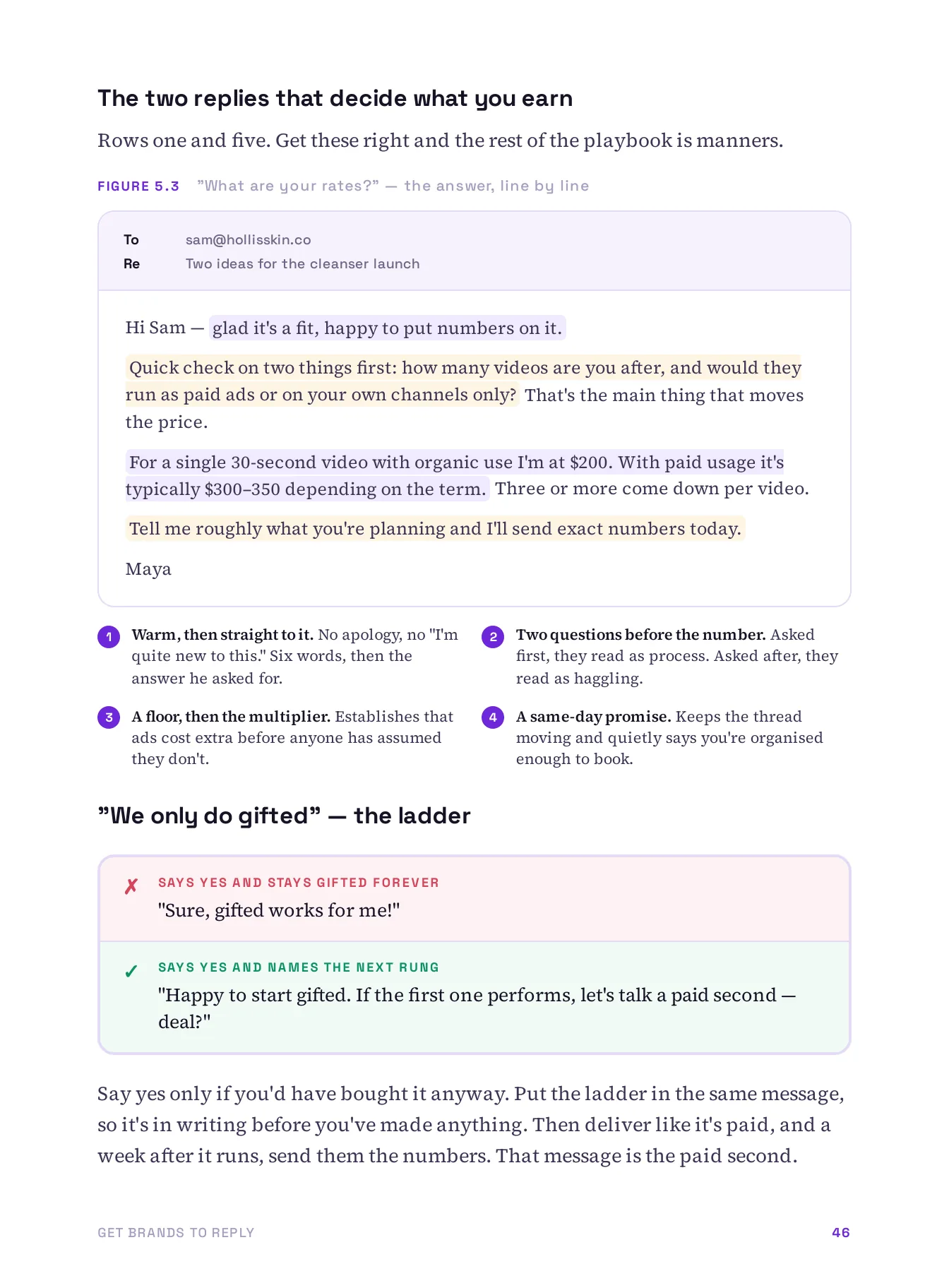
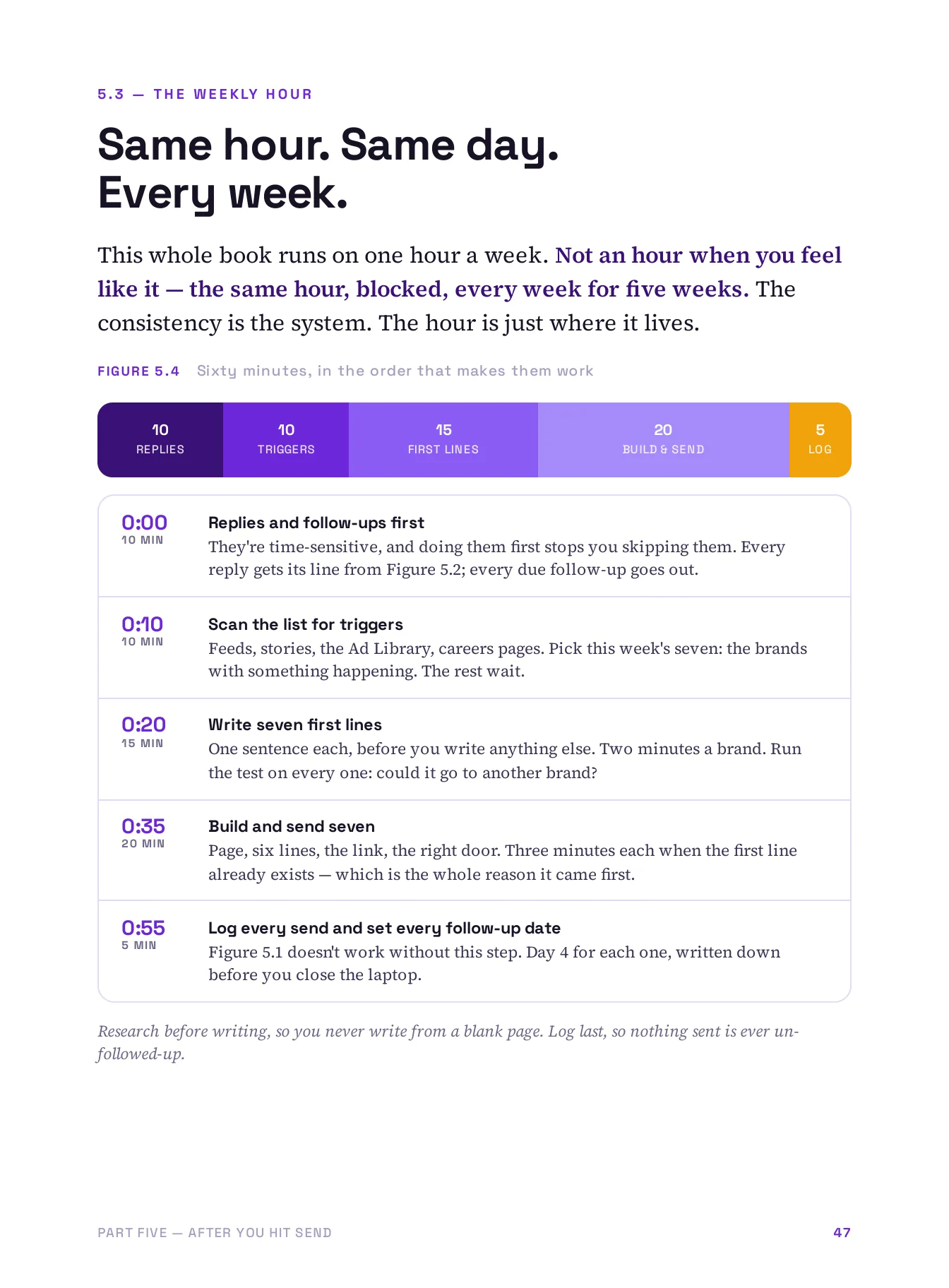
Part five: after you hit send. Five touches on email, one on DM, and where they cross. The reply playbook: twelve things a brand says, what each actually means, and the exact next line, including the two replies that decide what you earn. The weekly hour, minute by minute. Four numbers to track, and which one to fix first.
The short version of the DM chapter
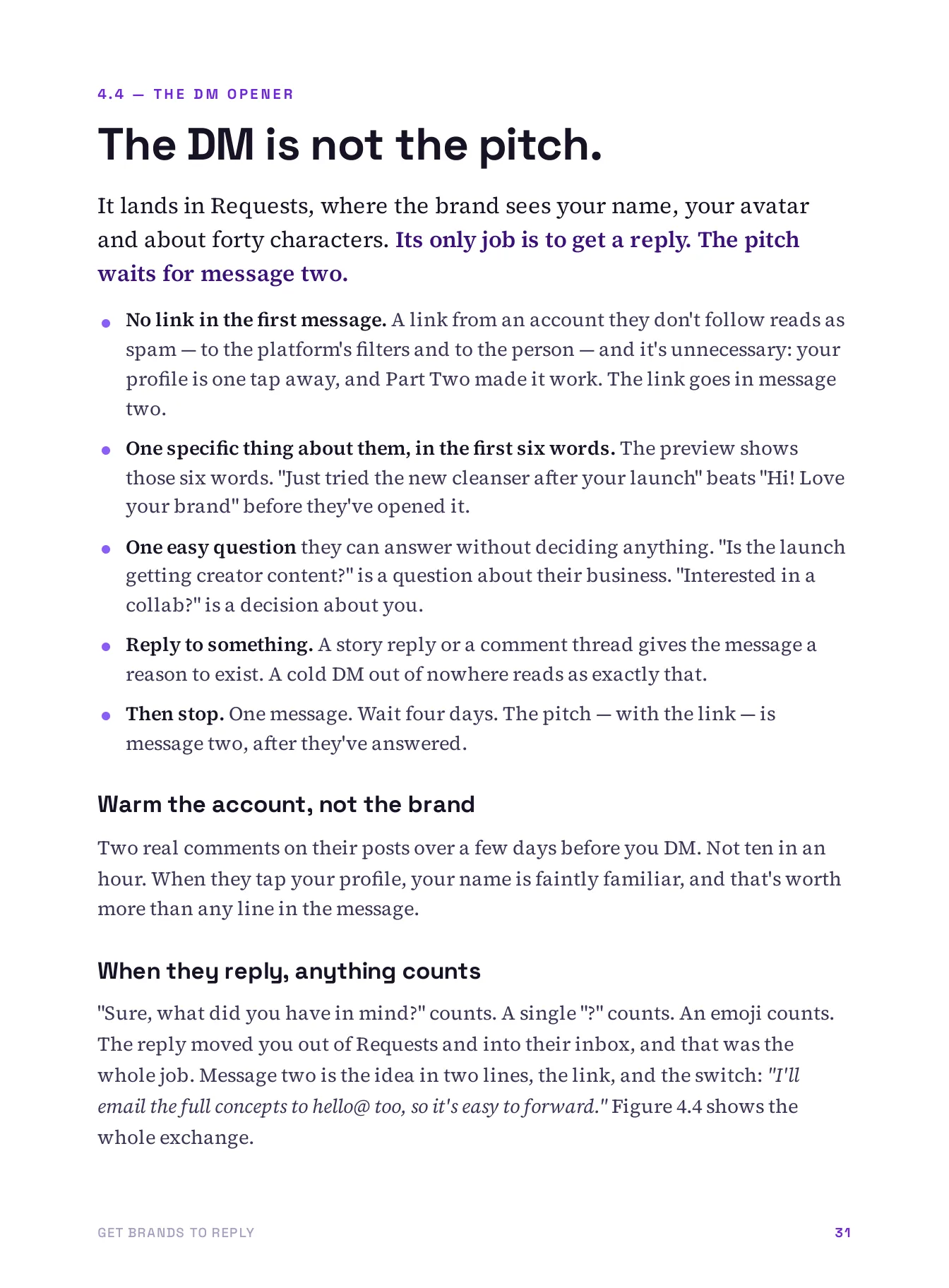
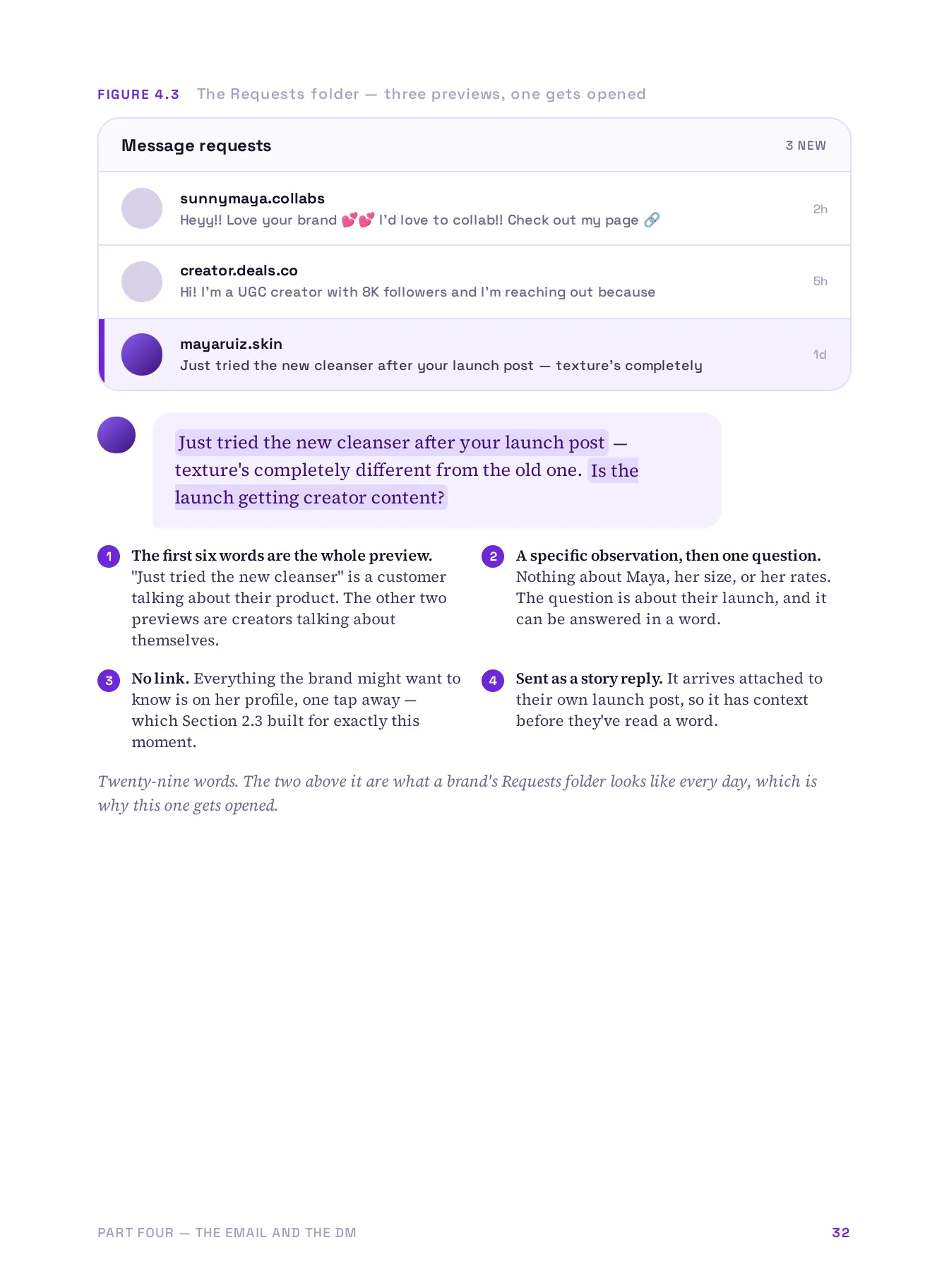
The DM is not the pitch. It lands in Requests, where the brand sees your name, your avatar, and about forty characters. Its only job is to get a reply.
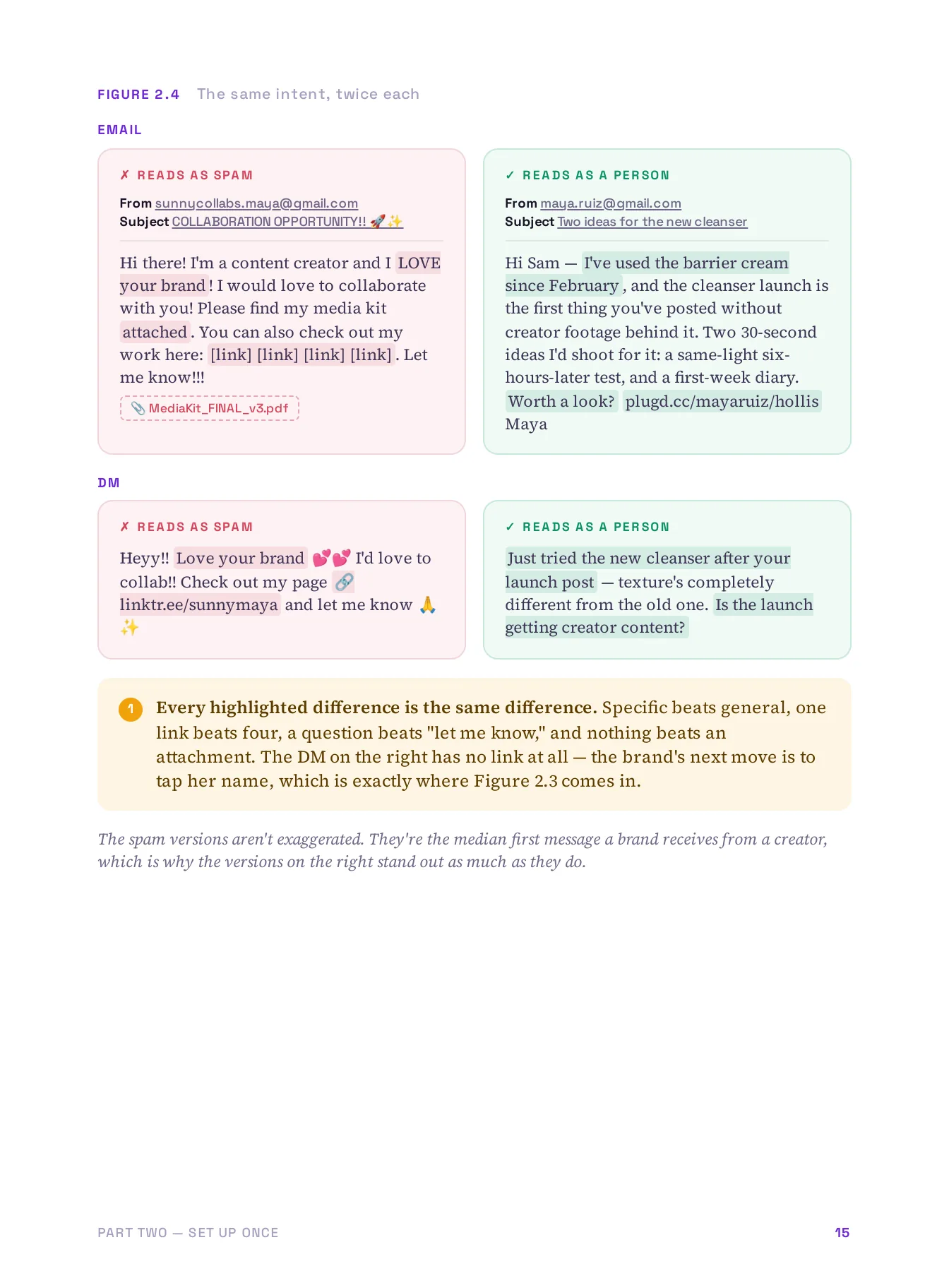
- No link in the first message. A link from a non-follower is the strongest spam signal there is, and your profile is one tap away.
- One specific thing about them in the first six words. The preview shows those six words. "Just tried the new cleanser after your launch" beats "Hi! Love your brand" before they have opened it.
- One easy question about their business. "Is the launch getting creator content?" is answerable. "Interested in a collab?" is a decision about you.
- Reply to something. A story reply gives the message a reason to exist.
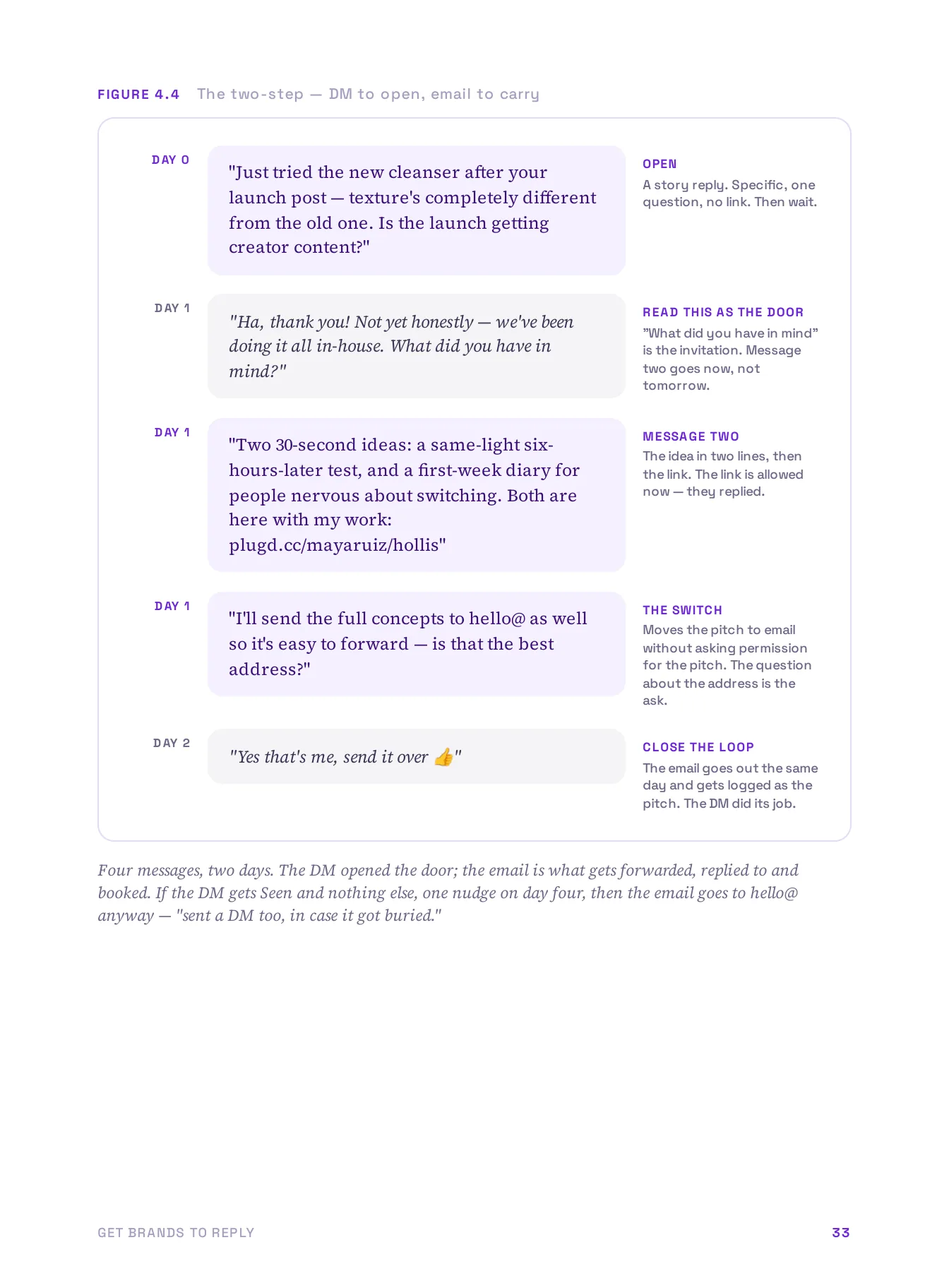
- Then stop. One message, wait four days. The pitch, with the link, is message two, after they answer, followed by the switch: "I'll email the full concepts to hello@ too, so it's easy to forward."
The follow-up is the switch. "Sent you an email too, in case DMs get buried" is the single most effective nudge in the book, and it only exists because you are working both channels. Three follow-ups on email reads as organised; three on a DM reads as pushy.
Take it
Download the guide (PDF, 51 pages)
Share it with anyone you like. We would rather it reached the creator who needs it than sat in one person's downloads folder.
Nothing in the guide is legal, tax or financial advice. Reply rates, rates and calendar windows are illustrative starting points, not promises, and platform behaviour changes; if something stops matching what you see, trust what you see.