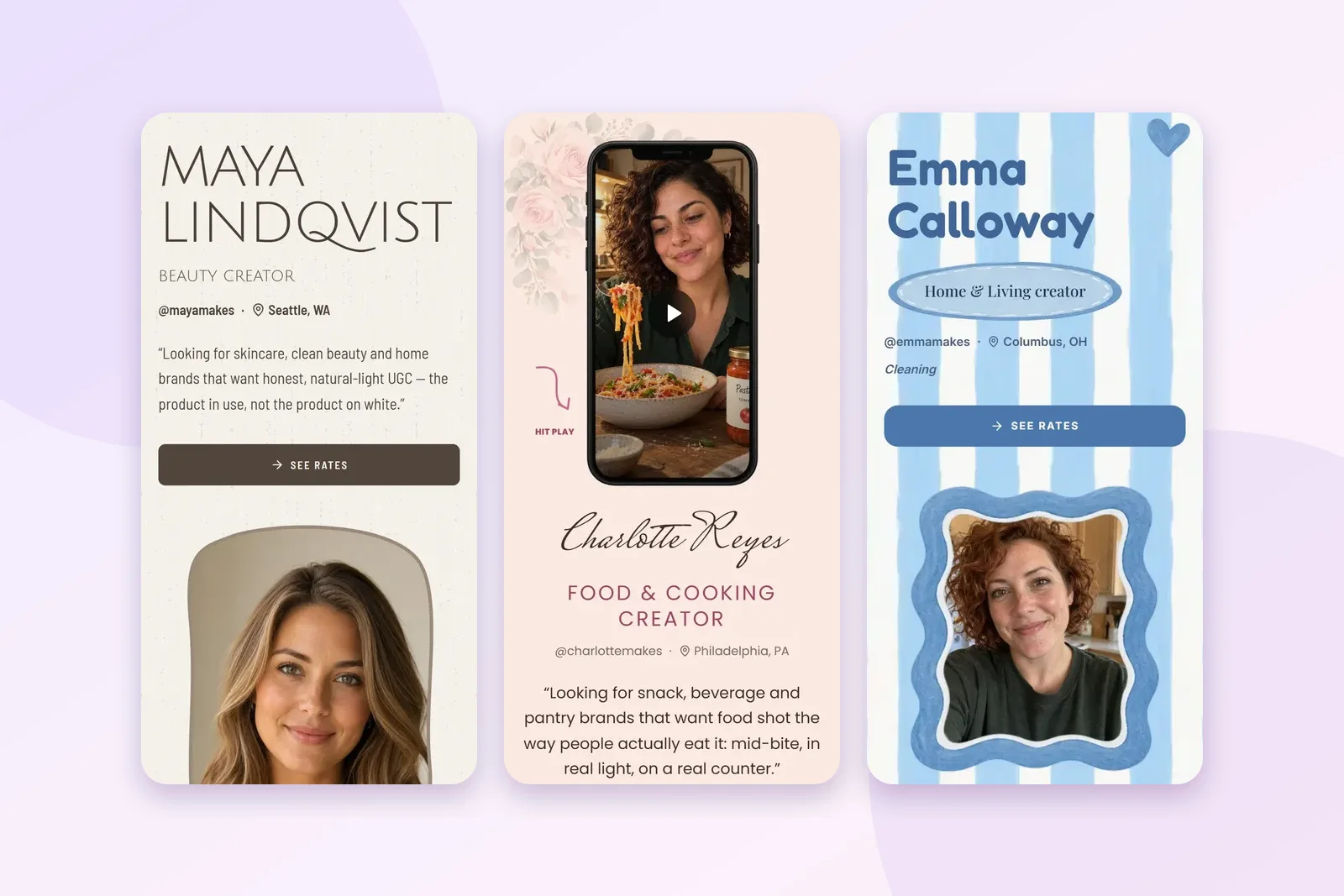
Everyone's first UGC portfolio is built with zero clients. Nobody hires you to make your first video, so you make it yourself and put it on a page. That's the whole trick, and it's completely normal.
If the word is new: UGC means user-generated content, short, natural videos of a real person using a product. Brands pay creators to make them and run them on their own accounts and ads. That's why you don't need followers. The brand is buying the video, not your audience.
Spec samples: the honest way to start
A spec sample is a video you make on your own, with a product you already own, to show a brand what you can do. Designers, photographers and copywriters all do spec work when they start. UGC is no different.
Brands look at a spec sample the same way they'd look at a paid one. Is it clear? Does the product look good? Would this work as an ad? Nobody's asking whether you were paid for it.
The one rule: a spec video must never look like a brand hired you. Don't write "my client", "partnered with" or "#ad" on it, and don't use a brand's logo in a way that suggests a deal. Show the product, be honest about it, and if anyone asks, say it's a sample you made on your own.
Three samples you can film this week
You don't need a ring light or a new phone. Stand near a window, prop your phone on something, and use what's already in your kitchen or bathroom.
1. The unboxing
Film yourself opening something you recently bought. Show the box, the first look, and one honest reaction. Fifteen to thirty seconds. Brands love unboxings because they show the product the way a customer first sees it.
2. The three-step demo
Pick something you use every day and show how in three quick steps. Moisturizer: pump, warm it in your hands, press it in. Coffee: grind, pour, first sip. Keep each step to a few seconds. This proves you can make a product look easy to use, which is most of what an ad needs to do.
3. The talking-to-camera review
Hold the product, look at the lens, and say why you like it in under thirty seconds. Start with the problem it solves ("my skin gets tight by noon"), then the product, then one thing you'd tell a friend. This is the hardest of the three and the one brands pay most for, because it shows you can hold attention with your face and voice.
Make them look like you meant it
A beginner sample doesn't need to be fancy. It needs to be clear. Four things do most of the work:
- Light from the front. Face the window, don't stand with your back to it. Daylight is free and flattering.
- Sound you can hear. Film in a quiet room, close to the phone. Bad audio makes a brand click away faster than a shaky shot.
- Vertical, steady, close. Hold the phone upright, prop it on a stack of books, and fill the frame with you and the product.
- A hook in the first two seconds. Start with the most interesting moment, like the product in your hand or the problem it fixes. Not "hey guys".
When you post each sample on your page, give it a short caption that says what it is: "Three-step morning routine" or "Unboxing a new water bottle". A brand skimming your page should know what each video shows before they press play.
Film all three in one sitting, in the same light. That's your first portfolio. If you want help with the filming itself, the UGC video guide goes deeper.
What to say instead of past clients
You don't have a client list. Good. Don't fake one. Write about the work instead.
- Say what you make. "Short skincare demos and talking-to-camera reviews."
- Say who it's for. "For clean beauty brands that want their product shown in real life."
- Say how you film. "Natural light, real bathroom, no studio."
A brand reading that knows exactly what they'd get. A list of famous logos wouldn't tell them that anyway.
You can also skip the follower count. It's not what a brand is buying, and on a UGC portfolio it's usually better left off.
Put it on one page
Once you have one sample, you have enough to publish. One page, one link, with your samples, your line, and a way to reach you. That link goes at the end of every pitch.
The first-page guide covers exactly what that first page needs, so I won't repeat it here. And if you want the full build from start to finish, how to make a UGC portfolio walks through all five steps.
On Plug Pro, every layout is free (you can browse them in the template gallery). A couple of them, like Mosaic, are built to look full with just two or three pieces. Free pages show up to six pieces of work, which is more than you need for a while.
What changes after your first deal
Once a brand pays you, you can show that video too, if your agreement lets you post it. Over time the spec samples get swapped out for paid work. But plenty of creators keep their best spec video on the page for good, because it's still their best video.
Start with the three samples above. Film them this week, put them on a free UGC portfolio, and send your first pitch with the link at the end. The no-followers playbook covers what to do after that.